Showing posts with label Aircraft. Show all posts

Friday, November 3, 2017

I'm A Classical Minimalist (or) Play To Your Strengths, Not The Other Guy's

(Today, in lieu of a theology related post, please enjoy this random rant on aircraft while I finish refreshing myself on the history of Rome.  We will return to our irregularly scheduled shenanigans soon.)

By now everyone should know I might be a bit mental when it comes to World War 2 aircraft.  Especially regarding my opinions.

Well, get ready for a doozy.

If I had been a pilot in WW2 for the Army, I'd have picked the Curtiss P-40 over the P-51.
(Obviously, if I'd have been Navy, I would have picked something better.)

Don't mind me, I'll show my self out to find the nearest straight jacket.

(An original Curtiss P-40B, in original colors.  If I remember right, this one was at Pearl that fateful Sunday.)

Seriously, though, you can't tell me that the Hawk doesn't look good.  On looks alone she beats the Mustang.  Now, I'm not bashing the P-51 (I already wrote about her, and she's great).  But thanks to hindsight, and knowing where I'd prefer to serve, the P-40 is better (and more readily available).

Mustangs were late to the Med, the Pacific, China, and India - all more "fun" and interesting that Europe in my opinion.  Who wants to babysit thirteen guys in a truck from Seattle anyway?

(A bit of a study in anachronism.  A later model Warhawk, with early US roundel.  It looks like a "K" or "M" due to the longer looking tail, though it might be an "E."  Probably should look up the tail number and find out officially.)

Compared to the Mustang, the P-40 was a brute.  And looked ready for a fight, even without the teeth.  With them... you get an iconic image no one forgets.  But the legend didn't start so boldly.

(The Seversky P-35 [well, technically an AT-12 trainer] and the Curtiss P-36 Hawk in period colors.)

The Army was looking for new fighters in the mid-30s.  They wanted something more European: monoplane, retractable landing gear, enclosed canopy.  Curtiss and Seversky both submitted aircraft. The P-35 was more expensive and underpowered, yet the Army bought almost 80 of them.  But the Army also ordered 210 Curtiss P-36 Hawks by 1937.

The P-36 (sometimes called the Mohawk), had a very low wing loading: 23.9 pounds per square foot.  In comparison the Spitfire Mk.V had 27 pounds, the Bf 109G had 40 pounds, and the Dewoitine D.520 had 34 pounds.  This meant the little Hawk, while still a bit underpowered, could out turn the best Europe could field in 1939.  (By comparison, the P-40 had 35 pounds and the P-51 had 39 pounds.)

Michale Bay, I really hope you read this post, 'cause you got it so very wrong.

The French ordered a bunch of the new Hawks, model number 75, and rather liked them.  They had range, firepower, armor, and agility.  The only complaint was they were a little short on power.  The Brits felt the same way.  So Curtiss looked to fit a V-type engine to their plane.

Now, it may seem kinda dumb to do this, simply swap an engine to improve a plane, especially when parts of the plane are still canvas and "old school" building styles.  But they did that with the Mustang.  And the Wildcat.  And cloth-covered control surfaces were the norm until late war.

The first attempts to fight the Allison V-1710 lead to a futuristic looking XP-37.

(Hmm... slick.  Paint it black and let Batman fly it.)

Putting the radiator behind the engine, next to a turbocharger, both of which are feed by air scoops on the nose did not work very well.  But work led to a successful fighter: Curtiss model number 81.

From the firewall aft the plane was identical to the P-36.  This was smart, since it would allow Curtiss to get to capacity quicker.  The nose was brand new and fitted with the V-1710 and the radiators in a chin scoop.  Originally this was beneath the wing, but was moved forward to allow better airflow based on NACA findings (though I heard a rumor that the marketing department suggested it, whichever you want to believe).

(They just can't get the nose right.)

Curtiss started cranking them out.  While the Allison didn't have the higher altitude power the Rolls Royce or the Daimler-Benz had, it was more than sufficient at low and medium altitude.  And having inherited the P-36's wing loading (though a bit higher thanks to more weight) the P-40 could out turn most opponents in all theaters except the Pacific.  There, her speed, firepower, and armor were of more use, since most of her opponents there had no armor, carried only two guns, and topped out between 300 and 350 mph.

The Warhawk (or Tomahawk or Kittyhawk, depending which Brit version was there) had a very high dive speed, and was considered a plane with "almost no vices" according to the top ace in the type Clive Caldwell.  The P-40 was designed to be rugged.  Its five-spar wing could take a beating, including mid-air collisions.  She was optimal for rough field operations, such as North Africa, Russia, and the Pacific islands, places where maintenance was limited.  Even transporting the plane was easy, since Curtiss made it easy (relatively speaking) to break down and put back together.

The P-40 did have a somewhat narrow landing gear, which due to being of rear-retracting design was a little flimsy.  The long nose was difficult to see past on the ground, leading to a number of accidents.  But, this was the best plane the US could field in any substantial number in 1941, and she was adequate to the task.  The P-40 wouldn't remain that way, and was probably produced for too long without substantial improvement, but planes were needed.  And a dozen P-40s on the front were better than a couple of P-51s at the factory.

The P-40s were part of America's first response to the attack on Pearl Harbor, with George Welch and Kenneth Taylor being the most notable.  They were also the plane of choice for the American Volunteer Group.

(The "old man" himself - Col. Clair Lee Chennault, commander of the AVG.)

The American Volunteer Group, under leadership of Clair Chennault, was "officially" in China to train pilots to fight Japan.  In reality, they took command of one hundred P-40B and P-40C fighters originally meant for the RAF.  The "B" wasn't too well liked for a number of reasons, including a lack of radio, no external tank, no bomb racks.  The "C" had the external tank, but was the slowest of the Hawks.  Chennault didn't like the liquid cooled, non-supercharged engine.  Worst of all, spare parts were not available.  But the Tomahawks of the AVG were rugged, faster than the Imperial Japanese Army Air Force fighters, better armed, and had better rate of roll.

In a slow speed dogfight (low end of 200-300 mph) the P-40 could not out maneuver the Nakajima Ki-27 "Nate" or Ki-43 Hayabusa "Oscar" favored by the IJAAF in China.  The same was true against the Mitsubishi A6M Reisen "Zero."
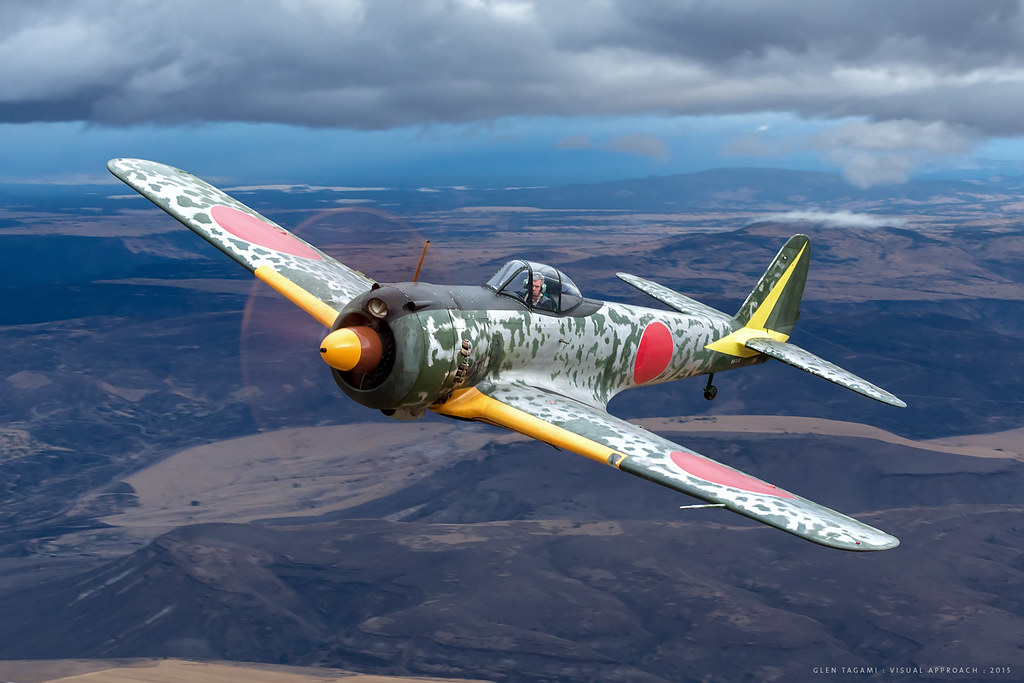
(The Nakajima Ki-43 - one of the many prey of the Flying Tigers.  Technical specs here.)

But at higher speeds, the Warhawk could outmaneuver them.  The problem was convincing the Japanese to play a game where they were at a disadvantage.  This is what hamstrung US pilots for a few years.  Americans kept trying to fight a "classic" turning dogfight a low speeds against aircraft sometimes half their weight.  In fact, the rigid 3-ship formation and slow turning dogfight was standard taught.

They were playing the other guy's game.

That's why P-39s were seen as lemons.  Why the P-38 was seen as too big for the job of day dogfighter.  Why the F4F was seen as unable to outturn a cloud on a windless day.  Why were we playing to the strengths of the other guys?

Chennault realized this, before the war even started, and his view was reinforced once he got to observe the Japanese in their attacks in China.  What he taught, and what got him in some hot water with the Army a few years before, was the diving attack.  British test pilot Eric Brown had this as one of his marks of a good fighter.  The tactic is simple: get above the enemy, dive and shoot, speed away, repeat.  Sometimes called "boom-and-zoom" tactics, this method worked in World War 1 and works even today.

"Never dogfight with a Zero."
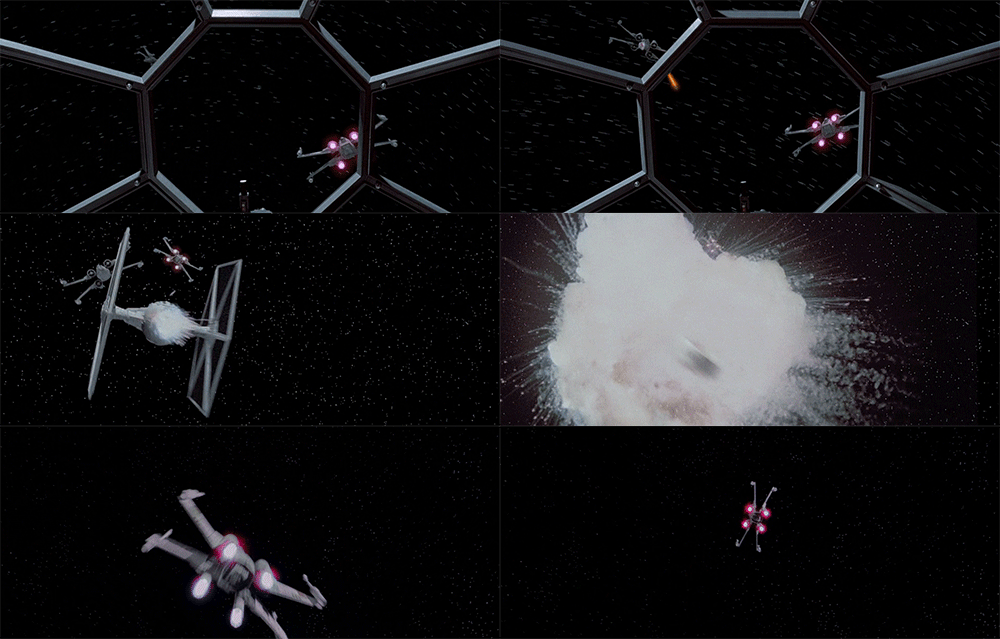
(Or a Tie fighter, as Wedge Antilles demonstrates.)

Play to your strengths.

The P-40 would be an exceptional craft in a number of "lower profile" theaters, such as the Mediterranean.  There the Warhawk would do battle against Bf 109s and various Italian craft, such as the Fiat CR.42 and the Macchi MC.202.  Against these she was a fox in a chicken coop.  The rugged design lent itself to the forward operations of the Desert Air Force.  Sometimes I wonder what would have happened if the British had sent P-40s to Malta instead of Hurricanes or Spitfires.  (Maybe I'll write that story someday.)

Throughout the Pacific, the P-40 did yeoman's work, especially in the China-Burma-India theater.  Again, the rough conditions (jungles, swamps, lots of heat and humidity) didn't overwhelm the P-40.  Operating from cut-jungle strips and coral runways were no big deal.

The P-40 (or at least her reputation) ended up being on the chopping block of Congress after the war.  Truman's investigation rightfully questioned Curtiss's practices during the war, and for reasons like that, people started viewing the P-40 as less than stellar.  After all, who thinks recycling a ten year old design is a good idea.  (Remember, the P-36 was two years old when WW2 broke out.)  Her abilities compared with late war craft was less than stellar, but that's like comparing a present day Ford Mustang with one from the 1970s.  The new one should be much better.  So, yes, things like the P-51, the F4U, and others were superior.  But we needed planes, and a decent plane is better than no plane.

The air war in 1939 or 1940 was nothing like what it was in 1944 and 1945.  Of course, the P-40 would not have survived the legendary attack on Y-29, nor would it have been able to escort B-29s over Japan.  But her inability to serve in the more vicious environment later in the war should not detract from her success earlier.

That would be like comparing the F-4 Phantom to the F-22 Raptor and saying the former must have always been a "lemon" and how could they fly those things in Vietnam?  In the 1960s, the Phantom was cutting edge.  Today, she's been passed by thanks to better designs.  As it should be.   The Mustang wasn't king of the sky forever.  Not even five years after the war, the P-51 had to bow out and let the F-86 take the throne.  That's how progress works.

Yet some of us still think fondly back to simpler times, when you didn't need all the fancy bells and whistles.  When grit and guts meant more than graphs and algorithms.  A time when tenacity beat technology.

That's what the P-40 represents for me, and why she's my first choice for USAAF if I'd been there.

Granted, the Lockheed P-38 Lightning is a very close second.  Next time.

Monday, October 23, 2017

Classic Curves Beat Modern Angles (or) Newer Doesn't Mean Better

"She may not look like much, but she's got it where it counts."

Ah, the North American P-51 Mustang.  The poster child of World War 2 fighter aviation (deservedly).  The favorite of armchair aces nationwide.  But why?

(Hard to say no to a red-tail.)

To be honest, a more than decent chunk of the Mustang's popularity is thanks to the car.  Ford wisely chose to name their sporty teenage dream car after the "cool plane dad flew during the War."  Because of that, the name is one everyone recognizes, whether they are a history buff or not.

The Mustang is one of the few aircraft from WW2 that the average person knows (along with B-17, Spitfire, and Zero).  And this is for good reason.  The Mustang flew in Europe (bigger civilian population), where its primary role was escorting bombers and providing close air support for troops (lots of guys seeing them in action).  And with the polished bare metal they wore in the last years of the war, the P-51 was the knight in shining armor, doing battle against evil.  A slick, curvy sportster with flashing paint.

But this classic wasn't an instant success.  And if you know anything about me, its that I like to wander through the history and details of something.

The powerhouse that became the P-51D Mustang began life as a request from the British for the North American Aviation company of Inglewood, CA, to build P-40 Hawks.

The date was 1940.  Britain was desperate for military equipment.  Thousands of small arms were abandoned in the escape at Dunkirk.  Hundreds of aircraft were destroyed in the Battle of Britain.  Uncountable tons of shipping were lost to the U-Boats.  The British were hurting for everything from rifles to boots and tanks to morphine.

And the United States had the industrial muscle to provide.

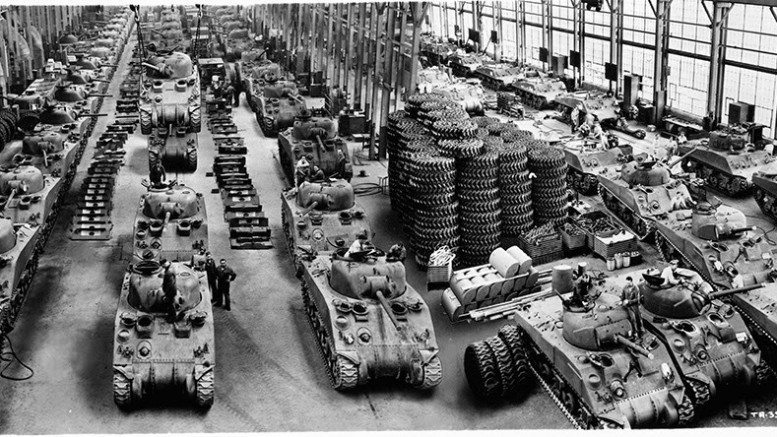
(Looks like we're gonna have a bumper crop of Shermans this year.)

So the British Purchasing Commission went about looking for equipment.  Aircraft specifically, of all types.  While the US had bomber, patrol, and cargo aircraft that met or exceeded needs, America's available fighter choices were not quite up to par.  The P-38 Lightning was too complex with its turbochargers.  The P-39 did not have the reliability of engine, main gun, or flight characteristics.  (At least, not in the style of fight used in Europe.  She did well to exceptional in other theaters.)  The only remaining choice to replace the lost Spitfires and Hurricanes wast the P-40.  And she wasn't good enough.  But she could be built fast.

Now, the P-40 isn't a bad plane, even when compared with the Bf 109 and Spitfire.  In 1940 she was just a hair faster a low level, and could turn better than the 109 at most altitudes.  Her armament was on average better than theirs, with the new P-40E having six machine guns.  The B/C model wasn't half bad, either, though didn't quite have the punch or acceleration.  And the upcoming F model would have a Rolls-Royce, putting her more on par with the European types.  The problem was two-fold.

One, its gonna take a while to get enough RR Merlin engines, since the factories in England were at capacity and all the engines were needed already, and the Packard factory in the US would take time to get up to speed making them.

The P-40 had a good engine already, the Allison V-1710.  The problem is the Allison isn't as good above 20,000 feet compared to the Merlin or the German DB 601.

And fighting over Europe tended to take place above 20,000 feet.

The second problem was Curtiss.  Their factories were already at capacity building P-40s (for the US), C-46 Commandos, and a handful of Navy scout and bomber types.  They were running full tilt just to fill the orders from the US, British, French, and Russians already.  Taking on more wasn't physically possible.

The solution was simple: the British wanted North American Aviation (NAA) to build P-40s under license.  They needed planes, any planes, and the P-40 was competent.  It could be used to free up Spitfires for the higher up work, and its range and ruggedness meant it could do attack work.  And they were more at home in the far-flung theaters than the Spitfire.

But NAA had a counter proposal: they could build a better plane with the same engine quicker than it would take to set up the assembly line for the P-40.  With nothing to lose, the Brits took the bet.

In September of 1940, a mere 102 days after the British approached them, NAA rolled out NA-73X, the prototype.

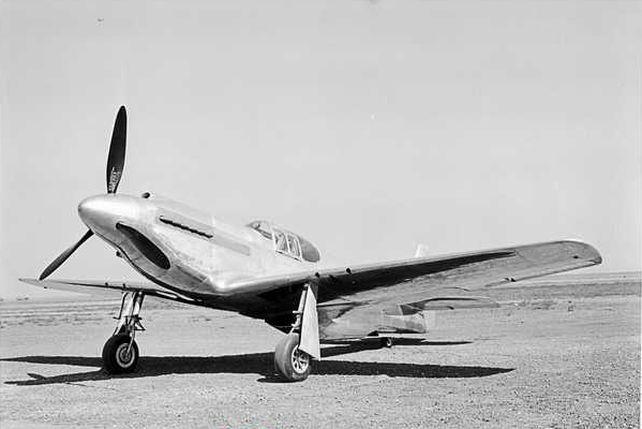
(The NA-73X - where it all began.)

Slick, curvy, and ready.  Other than a few tweaks that would come from testing, she was ready.  And, in British tradition, the fighter received a name, rather than a numerical designation.  The name they chose was taken from American heritage: Mustang.  A wild, untamed horse.  Perfect name for a fighter.

The Mustang I and Ia were the first ones, improvements on NA-73X.  They looked very similar, too.  The carburetor scoop was longer, the radiator intake a little different in shape and size (to better use the Meredith Effect), and the canopy was less racer style.  Being powered by an un-turbocharged Allison, the Mustang I was used at low levels, with recon being a primary role.  At this point, the US wasn't yet interested in the plane, but that would change after the attack on Pearl Harbor.

The Army Air Corps called the plane the P-51, with the nickname "Apache" being attached.  Like the Brits, the US put the P-51 in as a lower level fighter and recon bird.  A good role; a needed role.  Especially in areas like Southeast Asia and the Mediterranean.  The follow-on P-51A (Mustang II to the Brits) had improved armaments, switching from four .50s and four .30s (with two .50s in the nose and the rest in the wings) to four .50s in the wings.  A few of these early Mustangs were armed with four 20 mm cannon, but they were specifically the recon version.

(The P-51A: in my opinion the prettiest Mustang.  Ever.)

The Army Air Corps/Force even took some and made some of them into dive bombers.  A little envious, perhaps, of the Stuka?  The A-36A Apache was a decent attacker, but was better as a fighter.  Go figure.

Neither the Brits nor the Americans were happy with the lackluster performance of the Allison at altitude.  So they fitted a few with Merlins, which led to the P-51B/Mustang III.  A few other mods went in, like a redesigned radiator.

What resulted was a war-winner.

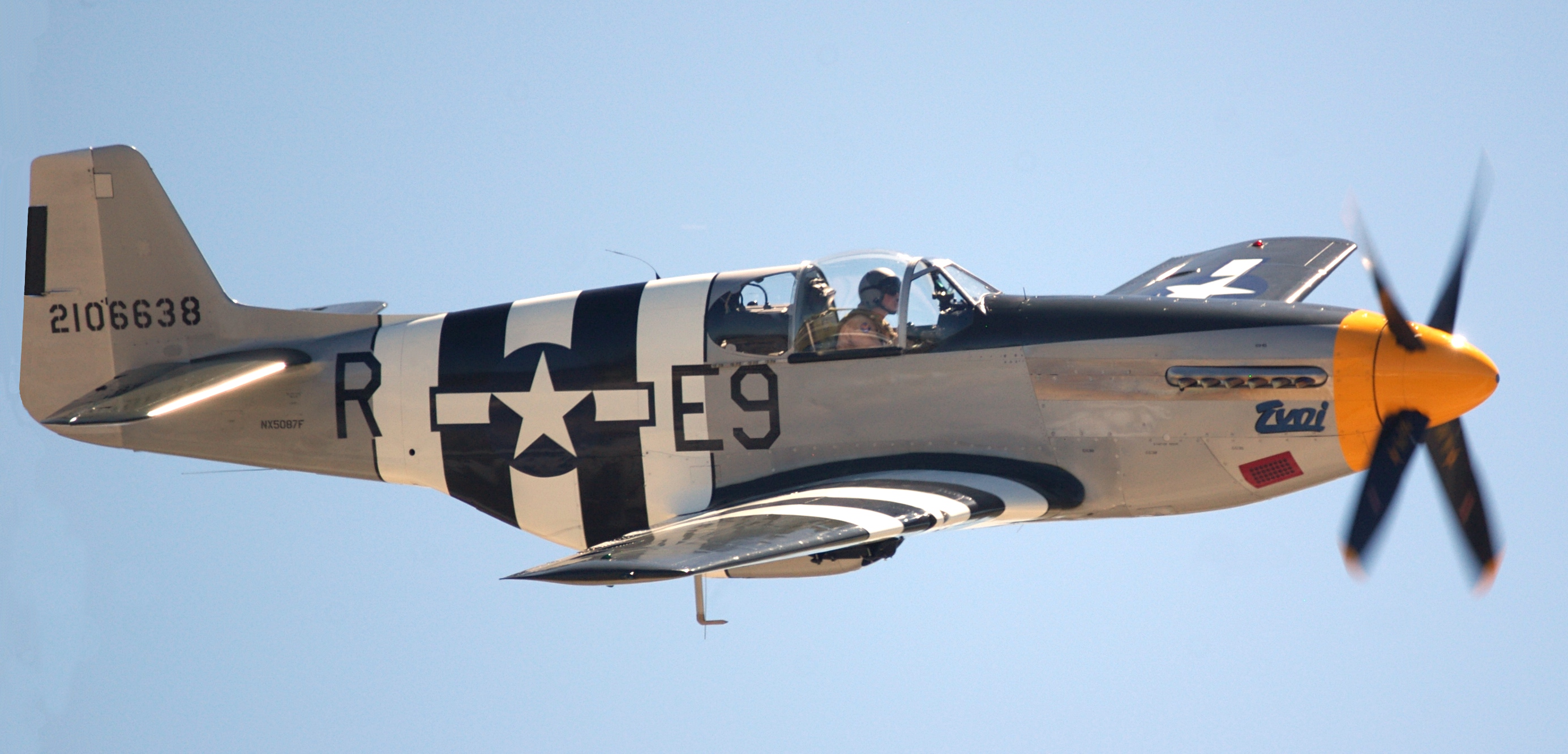
(If I had to be a Mustang pilot over Europe, this is the one I'd want.)

She had the range, the speed, the altitude, the firepower.  Every box that needs to be checked on a "best fighter checklist" she checked.  (And yet I still put the F4U as better, but I already explained why.)  The "B" was the best Mustang.

Now, a few of you who are aviation buffs are possibly shouting at your computer screen: "What about the D, you muppet!  The D was the ultimate Mustang!  Thousands were build, all the aces flew them!  Aaargh!"

Yeah, yeah, whatever.  The "B" was better than the "D" in most ways, and I'll get to that, but first, the quirks both marks shared.

Trading out a better engine in a Mustang (car) is easy.  Trading out a better engine in a Mustang (plane) really goofs stuff up.  Stability.  Thats why a strake or fillet was added to the stabilizer with most of the "Ds" and retrofitted to many "Bs" and "Ds."

(Notice the difference between with and without the fin.)

Apparently, trading out a different shaped engine messed with the stability of the plane, so a relatively simple fix was made.  This was easier than other issues, at least.

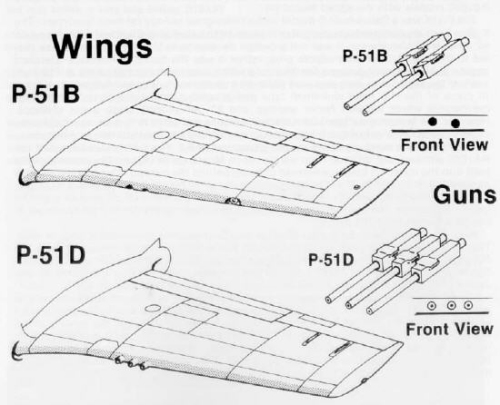
One of the few drawbacks of the "B" was the wing.  You see, NAA used a slick, thin wing to improve speed.  Unfortunately, that meant less space in the wing for the guns, so, to make sure everything fit, they were put in at an angle.


This lead to jamming, thanks to the ammo belts being kinked a little.  Simply uprighting the guns wasn't that easy, since the wing was thin.  So on the "D" a thicker wing was installed.  While this meant the guns had more space (allowing less jamming, and an additional gun), it did mean a slight loss of speed and agility.  And, more ammo wasn't added.  So, same number of bullets for 50% more guns means less time to shoot.

In an attempt to improve visibility, the "D" was given a teardrop "bubble" canopy.  The Brits had been working with frameless canopies on a few planes, like the Typhoon, and even the Spitfire.  But, to accommodate that on the P-51 required trimming down the back half of the body.  That contributed to the instability fixed by the added fin.  The new canopy did improve visibility upward, compared to the previous clamshell type framework, but it wasn't the best.  The few "Bs" modified with Malcom hoods (which look like fishbowls) were better.  They could see behind as well, and, due to the "bulging out" had a little visibility downward.

But the biggest quirk that the "D" had, which makes the "B" better, was the fuselage.  By cutting down the turtledeck, the "D" lost capacity in its main tank, thus reducing range.  Not that the "D" didn't still have gobs of range, especially with the external tanks.

In fact, that is what made the Mustang a war-winner.  Not her speed or handling, but her "seven league boots," allowing the Mustang to escort bombers from England all the way to Berlin and back.  All Mustangs had that phenomenal range.  Some Mustangs were used late war escort over Japan, flying round-trip missions of nearly 10 hours.  It lead to an interesting role reversal, with a single B-29 escorting a squadron of Mustangs on a fighter sweep, since the bomber had the navigation equipment for long overwater flights.

Did you know that early Mustangs were occasionally shot down by Allied gunners?  Why?  Because from certain angles she looks a bit like the Messerschmitt.  That's why a lot of Mustangs, especially early on, had yellow stripes on the wings, and why they painted such bright colors on the nose and tail.  The more you know.

Now, this has been a really long wander about a plane that isn't in my "Top 5."  But its hard not to like the old bird.  A classic that's still making a good performance at airshows and races worldwide.  I just wish there were a few more "A" and "B" models in flying condition.

(See what I did there, DAR?)

Tuesday, October 17, 2017

Pirates And Horses (or) I Think I May Have Over Thought This

For no reason at all, I am going to give my opinion of the aircraft match up no one asked for.  Why?  Because I like planes, and it was somewhat fun comparing the Star Wars craft earlier.  And comparing actual aircraft is both easier and harder, since there are real stats and accounts to consider.

I'm going to compare the best plane of World War 2 with the one most think is the best.

The Vought F4U Corsair (top) and the North American P-51 Mustang (bottom).
(fittingly placed)

Now, maybe I'm biased since I prefer Navy, but I think I can back up my opinion with fact.  So, at the risk of alienating numerous aviations buffs, here goes...

The Vought F4U Corsair was the best single seat piston fighter of World War 2 overall.


For those of you who are reacting like our Jedi friend here, let me explain.

First, please note, I said "overall."  Not "fastest," or "most firepower," or "most agile," or "best of 1939/1940/1941/1942/1943/1944/1945."  I wasn't specific which nation, or military, or theater.  Because that is the problem with comparing aircraft, especially from '39-'45: context matters.

Let me ask a test question: what was the best British plane?

Obvious answer is "Spitfire," but is that correct?  The Spit wasn't their best bomber, that would be the Lancaster (for the heavy work) or the Mosquito (for everything else).  And regarding naval work, the Brits really didn't have an optimal carrier based fighter.

So, back to the best overall.  Remember, WW2 was an extremely dynamic conflict that was everywhere.  A weapon or vehicle that was sufficient in Europe may not perform as well in the Pacific.

Case in point: the Lockheed P38 Lightning.

("Two planes, one pilot.")

She was an exceptional interceptor and heavy fighter.  Even a good fighter-bomber and recon bird.  But in Europe, her delicate turbochargers caused trouble.  The Lightning never quite lived up to expectations there, at least never fully.  But in the Mediterranean and Pacific regions, she was superb.  The warmer air didn't play heck with her engines, and the opposition was more manageable.  Not that the P-38 couldn't go toe-to-toe with the BF 190 or FW 190, but she was a fox among chickens with Italian and Japanese craft.

Even more complex is how each nation had a "best" at various points.  The best the US could field in 1940 was the P-40 Hawk, a bird that deserves greater respect than it is given.

(Ain't nothing prettier than an early P-40 Hawk.)

In comparison, though, the Brits had the Spitfire and the Germans the Bf 109, both of which could out-fight the Warhawk.  In part due to training and experience, but in part due to design.  The Warhawk was more rugged, and had better range than her European counterparts.  Even better firepower, in general.  But she couldn't climb as high, and wasn't as fast in straight line acceleration.  And since combat above Europe was determined by altitude performance and acceleration, the P-40 was deemed "lack luster."  But in China, the AVG ran wild with them.

So the concept of "best" is a little subjective.  Which makes "best overall" difficult to nail down.  Which requires a few requisites.  I'll defer to experts for some of this.  To call any aircraft "best overall" would require it to be a "game changer."

Certainly some battles were influenced by the abilities of an aircraft type.  Without the Swordfish, the hunt for the Bismarck would've gone differently.  No SBD Dauntless bombers changes the Battle of Midway.  But this is "tactical" level.  To be "best overall" the plane needs to be a game changer on "strategic" level.  The Ilyushin Il-2 was such an example, though not a fighter.  This flying-tank of a ground attack bird was so produced that it still holds the record for most military aircraft built; over 36,000 for the Il-2 version, with a grand total of 42,000+ when you include the improved model.

(Ugly mug, ain't she?)

Same holds true with the B-17, the C-47, the Ju 88, the Mosquito, and more.  In niche roles, at specific times, and in various theaters, some planes were superior.  The most noteworthy were those that changed strategies.  The only three in the fighter world to ever hold this distinction were the P-51, the F6F Hellcat, and the A6M Zero.  Their range is what made the most difference, combined with numbers built, firepower, and utility.

And yet I pick the F4U "ensign killer" over the classic Mustang?  Am I mad?

No, not at all.  Just taking a more "holistic" approach to the topic.

Here's the issue.  The three "obvious" answers are not best "overall."  The Zero was not rugged enough for the type of fighting going on power '43, nor for ground attack.  The Hellcat was, but wasn't "hot" enough (this would be fixed with the F8F Bearcat), though she wasn't a slouch.  The Mustang was a "hot ship," and had great range, but could be a bit of a glass cannon or fragile speedster in the ground attack arena.  Enough hits to the radiator and the engine overheats.

So, the P-51 is top-billing for "overall" of the previous three, due to being best at the majority of abilities (speed, range) or equal (firepower).  And she had plenty of uses and variants, like a recon bird and a dive bomber.  There was even talk of a navy version.

But what about other options?
  • The P-38?  Too temperamental with her engines, too complex to build in numbers.
  • The P-47?  Got the muscle, but can't dance.
  • The P-40?  Not enough growth potential.
  • The F4F?  Can't get enough engine in her.
  • The Spitfire?  Short legged, weak landing gear, not enough bomb-toting skill.
  • The Typhoon?  Sluggish and buggy.
  • The Yak-3?  A bit weak structurally and underarmed for attack.
  • The Ki-61?  Faulty engine build.
  • The Ki-84?  Not enough, low quality.
  • Italian?  Too few and flimsy, often without enough gun.
  • Bf 109?  Short range, cramped canopy, too light.
  • FW 190?  Never given priority.
  • The Me 262?  Buggy with engines that catch on fire.
What's that leave us with?  The Corsair.

Over 12,500 build from '42-'53.  Able to hit almost 450 mph.  Armed with six guns (or four cannon) and up to two tons of bombs.  A naval craft with a huge engine, huge wings, and muscle to spare, the Corsair was part of the last war to use piston engined fighters.

Granted, the Mustang was in that war, too.  And like the Corsair, served in Korea and with a number of air forces post-war.  Over 15,000 Mustangs were built (that number includes the A-36A and early models).  It served everywhere (like the F4U) in WW2.  Topped out at 440 mph, and carried six guns and 1000 pounds of ordinance.  A number were even modded post-war with turboprop engines and used as ground attackers.

And in the "Football War" of 1969, one of the only three confirmed aircraft kills was a Mustang.  A pilot from Honduras shot down two Salvadoran Corsairs and a Mustang.  He was flying a Corsair.

Checkmate.

Now, obviously its more complex even than that.  The Mustang has a better kill/loss ratio than the Corsair, and produced more aces.  (Though the Hellcat beats both.  Even the "lemon" F2A Buffalo has a better win/loss in the hands of the Finns.  But that's for another time.)  Part of why the P-51 did better is environment.  Escorting bombers and waiting for bad guys to show up means more targets.

Skill is a big factor, and one that means nothing comparing these two.  Like I mentioned, the Finns used the Buffalo very well against the Russians.  And the Soviets loved the equally maligned P-39 Airacobra.  The Flying Tigers were phenomenal with the P-40.  And a quartet of Gladiator biplanes defended Malta against the entire Italian air force.  Skill matters.

But so does range, visibility, speed, rate of turn, rate of climb, etc.  If you need to, go back to my post on the X-Wing v. ARC-170 and see what high-time pilot Eric Brown, FAA, thought was needed for the best fighter.  Then, compare the two yourself.  Wiki's got good articles on them both here and here.  Which one checks more of Brown's boxes?

Does that mean its better, objectively?  Maybe.  The way I read and interpret it, the F4U Corsair is superior to the P-51 Mustang.  (Though I'll always prefer the look of the early Mustangs, but that's for another day.)

Now, I'm going to finish my Fanta and get back to working on a controversial post hoping to drop on y'all later this week.

Wednesday, September 13, 2017

Lies, Darned Lies, and Statistics (or) I Think I Over Thought This One, But I'm Too Far To Stop Now

Yeah, this one's kinda long.  Sometimes having access to a blog is a dangerous thing.  So, if you like tangental discussions of aircraft, military history, and Star Wars, stick around.  Otherwise, maybe I'll be back tomorrow with something "normal."

Well, normal for me, at least.

There are a few things that I like that have no real usage in the profession I seek.  I am a fan of Star Wars. ("oh really?" you snark say)  I like World War 2 aircraft (well, actually, any aircraft, but 1939-45 had a lot of great planes).

What?  You're surprised I'm a nerd?  Clearly you've not been paying attention if this comes as a shock.

Anyway, being a nerd, I enjoy kibitzing the discussion regarding the ships of SW, and the aircraft from whenever.  So I was happy to have found a number of people on the interwebs who make videos about such things.  One is EckhartsLadder, who compares sci fi ships, most notably Star Wars.

What EL does is a "who would win" scenario, comparing two craft in "firepower," "defenses," and "intangibles" in a 1v1 with equal skilled pilots without mods or backup.  Best out of 10 wins.

The one that caught my attention was the Incom T-65 X-Wing vs. Incom/Subpro ARC-170. (here if you are interested)

Before I say anything else, I think if fair to say his method is flawed and shortsighted, but not a bad start.  Why?  Eric "Winkle" Brown and the Wildcat.

(insert Tim "the Toolman" Taylor questioning grunt here)

Captain Eric Brown, Fleet Air Arm, served during WW2 as a pilot.  Most notably he served with N. 1426 Flight: the RAF enemy aircraft testing squadron.  This mean that Brown got the opportunity to fly a lot of types of aircraft.  487 types.

Let that sink in a moment.  487 types.  Not 487 aircraft, but aircraft types.  This is a record that will never be broken.  Especially if you count the individual marks, not just types.  For example: Brown flew 14 versions of the Spitfire during his career, yet the record only lists Spitfire once.

Brown also has the most carrier landings ever: 2,407, in 20 different types.  Including the first tricycle undercarriage and first jet.

And he was the only Allied pilot to ever fly the Me 163 Komet rocket interceptor.  You know, the one with the corrosive fuel that would melt pilots, and if the plane hit a bump during takeoff it might explode.

He was a fan of the de Havilland Hornet and the F-86E Sabre, thinking both to be exceptional aircraft and his favorite regarding their engines.

Because of this vast experience, Brown was able to quantify what made for a good fighter plane.  He came up with six characteristics that an effective fighter should have.  They were:
  1. Speed
  2. Rate of climb
  3. Firepower
  4. Armor protection
  5. Pilot visibility
  6. Maneuverability (though he would stress "don't dogfight")
Corky Meyer, test pilot for Grumman during WW2 and beyond, listed four missions any "best" fighter should be able to perform.  These were:
  1. Fighter vs. fighter
  2. Bomber escort
  3. Ground attack
  4. Photoreconnaissance
Add on "easy to fly" (200-flight hour pilots can handle it) and built in numbers above 10,000 for a long duration.  Now, Corky claimed the P-47 Thunderbolt was best in Europe, and the F6F Hellcat was tops in Pacific.

What does any of this have to do with Star Wars?  Well, unless you were asleep in history class, or are not a nerd (even a little), it will come as no surprise that Mr. Lucas used a lot of inspiration from WW2.  Hey, if you've got good material, use it.

So, the Incom T-65B X-Wing vs. the Incom/Subpro ARC-170... who would win?  The X-Wing.

How frequently?  About 90+%, assuming we have a trained pilot in the seat.

So, to break it down, the X-Wing meets Brown's criteria better than the ARC.  It has the speed, and climb, sufficient firepower and armor/shields, and maneuverability.  All it lacks is an advantage in visibility.  Based on Corky's mission lineup, the X-Win does it all.  Perhaps not as well as a dedicated craft, but it is a "swing role" fighter.

Usually "jack of all trades" don't come out on top frequently.  But, bear with me a second while I take and replace the Star Wars craft with their 1940s doppelgängers.  (This is where EL missed some important items in his 1v1.)

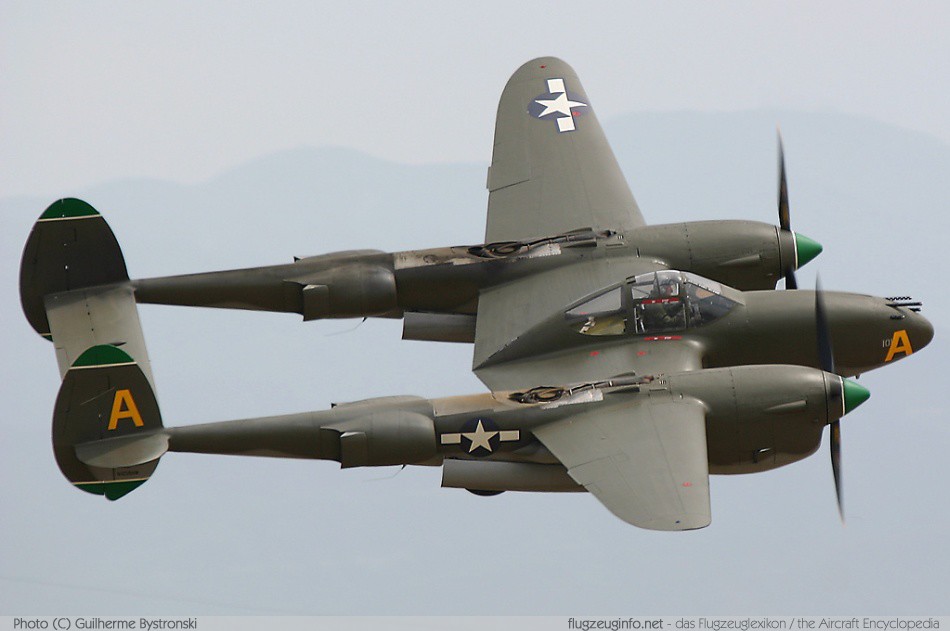
The X-Wing is comparable to the P-38 Lightning, while the ARC-170 is the P-61 Black Widow.

If you're still wondering who wins, just look at the to planes for a second.


the Lockheed P-38G Lightning


the Northrop P-61 Black Widow
Any questions?

Oh, still aren't sure.  Well, consider, one is a twin engine single seat interceptor, the other is a twin engine three place night fighter... that is the size of a medium bomber.

Now, I ain't knocking the P-61.  She was designed as a purpose build radar equipped night fighter.  Heavily armed with 4x 20 mm cannon and 4x .50 cal machine guns in a turret.  Powered by two R-2800s, and able to tote around 3 tons of bombs, she was a powerful plane.  Very agile for how big she was, too, thanks to Northrop's clever spoilers.  A little late to prove itself, but, that's not the point.

The Lightning's a bit of an oddball.  Designed as a heavily armed interceptor, found to have great range, respectable agility, decent armor, and ridiculer versatility.  Four .50 cal machine guns and a 20 mm cannon, backed by up to a ton of bombs.  And her twin V-1710s made her one of the fastest planes of the early portion of the war.

So, who wins in a dogfight?  Well, first is the need to acknowledge the caveat to Brown's 6th characteristic: don't dogfight.  Why are speed and climb first?  Because the pilot who has the altitude and speed picks when the fight starts, and when it ends.  Diving attacks trump spinning and loops.  See the work of the Flying Tigers, or Red 2's interception over Yavin.

We have this notion that fighters are all about dogfighting and that goes back to the "romantic" depictions of the Great War.  Watching men like Ball, Bishop, Barker, Guynemer, Voss, and Richthofen dueling in chivalric arial joust makes for great stories.  Its not the truth.  Check out Oswald Boelcke's dicta:
  1. Try to secure advantages before attacking. If possible keep the sun behind you.
  2. Always carry through an attack when you started it.
  3. Fire only at close range and only when your opponent is properly in your sights.
  4. Always keep your eye on your opponent and never let yourself be deceived by ruses.
  5. In any form of attack it is essential to assail your opponent from behind.
  6. If your opponent dives on you, do not try to evade his onslaught but fly to meet him.
  7. When over the enemy's line never forget your own line of retreat.
  8. (For the Squadron) Attack on principle in groups of four or six. When the fight breaks up into a series of single combats take care that several do not go for one opponent.
Reading through the dicta it is clear that altitude and speed, employed in a slashing attack, are better than trying to "mix it up" with classic dogfights.

Okay, so performance is kinda the keystone factor.  If the fighter doesn't have enough get-up-and-go winning won't be likely.  But what about the other factors?

Firepower is self-evident.  You can have all the speed in the world, but without enough punch, it doesn't matter.  The MiG-3 found that out the hard way.

Armor protection should be obvious as well.  You need a strong, rugged craft to ride into battle.  There are plenty of stories of American planes shrugging off lots of hits.  Robert S. Johnson's P-47 taking all the ammo from an FW 190 is a paramount example.  But if your ship has the heft to shrug it off, it had better have the power to move.  Hence the order.  The A-4 Skyhawk is a great case study in how to correctly build a fighter.  First, find the limits of your size and weight, then pick a powerful engine, finally don't exceed the limits.

Pilot visibility is one that is easily forgotten and taken for granted.  The Bf 109 had a narrow canopy that made turning your head difficult.  The F-4 Phantom had heavy frames that limited view, especially for the rear canopy.  The F-8 Crusader had a lot of stuff in the windscreen, which made landings especially "fun."  Having visibility is majorly important for pilots, especially combat pilots.  The one who sees the target first wins.  Modern technologies, like radar, IR, long-range cameras, all improve situational awareness.

Lastly, again, is maneuverability.  If having the ability to "zoom-boom" is top, then agility isn't important, right?  Not at all.

The agility then is for defense, avoiding an attack, as seen in #6 of Dicta Boelcke.

So then, back to the P-38/P-61 debate.  In a straight up 1v1, who wins?

Answer: the pilot who sees his opponent first and has the altitude to start a diving attack, most likely.  But lets be "fair" for the argument.  In an equal level fight, where they meet at the merge, who wins . The P-38.  All the time.

Why?  Size is not the P-61's friend, and all that firepower is useless if you can't get it pointed at the target.  At this point some table-top gamer will be like "aha, what about the turret?"

You mean the turret that didn't work in the initial marks?  The turret that was there primarily for bomber interception?  The turret that added weight and complexity which degraded performance?  The turret that was a throwback to the turret fighters of the early 40s (the Defiant, Roc) and the two seat fighters of WW1?

Yes, in WW1 many of the early attempts at building a working fighter resulted in a pilot flying the plane, and the main armaments being manned by a gunner.  Care to guess how well it worked?  Well enough that one of the best fighters of the war, the Bristol F2A, was shot down a lot when flown like a two seater.

You see, the idea of the turret guns was a symptom of not paying attention to reality.  This exemplified itself in the phrase "the bombers will always get through."  Who needs escorts when the bombers are literal flying fortresses, bristling with guns?  The 8th Air Force, that's who.

What does any of this have to do with the X-Wing/ARC-170?  A lot.  EL assumed, like many do, that the numbers can lead to the answer.  This is what has lead to the X-Wing table top game.  People think that if you have a quantifiable amount more of speed, or agility, or aggression, you can win.  Which is where EL's idea of "intangibles" makes sense.

So, who wins, the X-Wing or the ARC-170?  With exceptional pilots in both, the X-Wing.  With average pilots in both, the X-Wing.

Why?  Well, four cannon is more weight-of-fire than two, meaning greater chance of hitting the target.  While the ARC does have more torpedoes, not enough to make a difference in a dogfight.  In an attack mission, different story.  The ARC is the better attack bomber.  (And, by the way, torpedoes are guided in the SW universe.)  Better acceleration, and the ability to keep that speed means the X-Wing determines when, and where, the fight starts and ends.  The X-Wing's smaller size means its harder to see, therefore harder to evade.

Of course the swing-role fighter beats the high-performance attacker in a dogfight.

Yeah, this one kinda got away from me.