Okay, so a few months ago I started fiddling around with discussing the Two Kingdoms concept (for lack of better term off the top of my head), the Armor of God, and Heresies.
Yeah, that's being shelved for a while.
The initial "why" is because my family and I are moving before the end of the month. We are (finally) moving to Fort Wayne, Indiana, and I am enrolled at Concordia Theological Seminary.
(It's official. Yay!)
The summer Greek class at Seminary starts in June, so I'll be quite busy for the next few years (and after, to be honest). That probably means less content here, at least until I figure out the balance of work. That also means working on how I teach and preach. But I've already invested a lot in the "knight" and "soldier" metaphors as teaching tools, so I won't be tossing everything away, but some readjustments are likely needed.
What this all means is I'll be dialing back on the "original" theological content, except for weekly devotions and thoughts on the readings and possibly posting essays and papers from class. I intend on weekly "reports from the frontline" as I progress through seminary, as well.
Once I get a better handle on stuff, I'll be back with "big stuff," like the Two Kingdoms, Three Estates, and Soldiers. They'll be teasers, prototypes, and table scraps along the way, especially since I'm trying to figure out how to set up a podcast on Church history, especially early Church history. More on that when I get things worked through and get more of the history under my belt.
*Other randomness I post here, like aircraft and Star Wars, may or may not be effected by this move.
Showing posts with label Knighthood. Show all posts
Showing posts with label Knighthood. Show all posts
Tuesday, May 8, 2018

Wednesday, November 29, 2017
The Forge - Lesson 2.1: The Metaphor
Now that I've got everyone sufficiently up to speed, at least regarding the historical background, lets start taking apart the metaphor.
But before I get into that, let's review the text first:
There should be no doubt (especially after everything we've gone through) that the image St. Paul is using is of the classic Roman soldier, though pared down. Why? Well, lets look at why I think he listed what he did.
And, yes, this is just opinion. I've really got nothing other than my overactive imagination and a healthy dose of military history to back up my hypothesis.
What do we have in the kit of the "Christian soldier?"
But why would the illustrious writer of half the New Testament not advocate for greater armaments and armor in spiritual warfare. After all, this is the guy who wrote "we do not wrestle against flesh and blood, but against the rulers, against the authorities, against the cosmic powers over this present darkness, against the spiritual forces of evil in the heavenly places." v. 12
The answer is simple: the war is over.
The war, which began in the Garden at the roots of a tree, ended on the branches of a tree placed on a hill just outside Jerusalem.
We live in occupied territory. Since the fall, the "prince of this world" has held sway over us, with collaboration from our own nature. But the enemy was defeated, yet still holds control over at least this small territory. Which means we, who know the rightful king, are not members of the regular military, but resistance fighters.

Now, I'm not saying we are to be performing combat against the enemy. We are not that well armed or armored. A better parallel would be the White Rose, a non-violent anti-Nazi protest in Germany during WW2. They "fought" with words, images, publications, and even graffiti.
The Greek word κῆρυξ - "proclaimer, herald" - fits our duties better than soldier. We are not to be liberators, combat engineers, or warriors. Instead, our duty is to run town-to-town with news of the victory. Think the first marathon runner, just without the pass-out-dead ending.
Consider the final verse of the song "In Christ Alone," especially the second to last line.
Back to the metaphor, and more specifically why St. Paul chose the pieces he did to represent the aspects listed.
We'll start passively, with defensive gear and work up to the "fun stuff." And, since the order Paul used basically follows that, I'll stick to it.
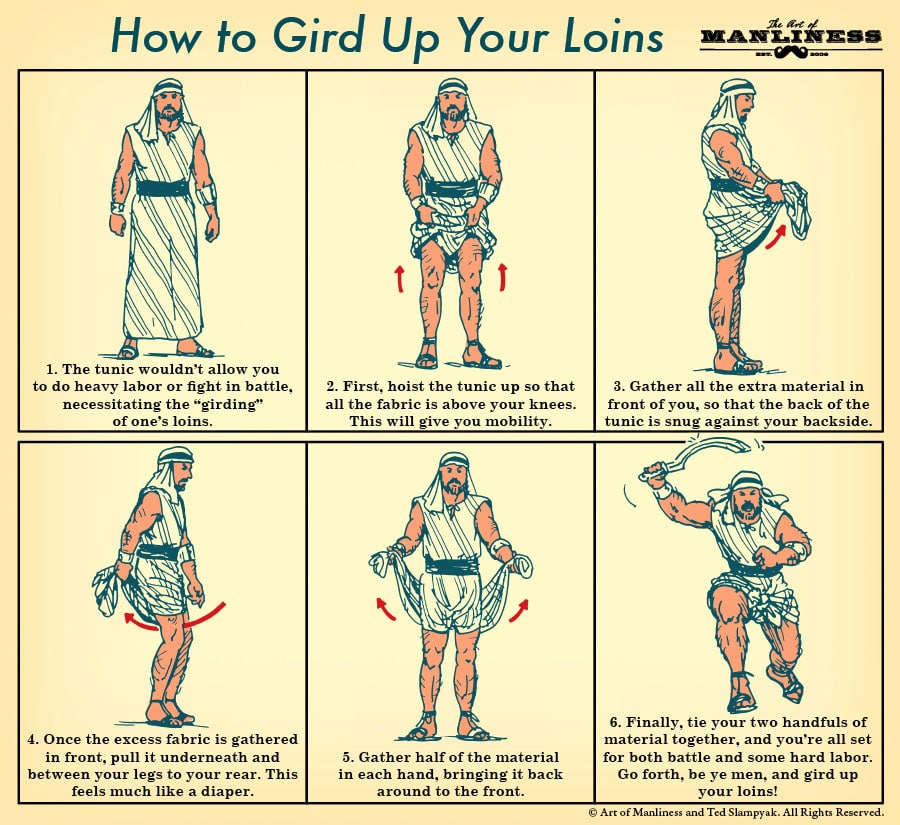
The "Belt of Truth" is first. We've looked at the leather belt-like device worn by the Romans and Greeks, as well as the "lower extremity" armor from the Middle Ages. The purpose and concept of this piece of kit in part falls under the same sort as, to be blunt, the jock strap and the cup worn by male athletes. The other major purpose is mobility. Remember, most people wore floor-length tunics in St. Paul's time. When going into battle, soldiers would "gird their loins:" pulling the extra material up to create shorts. The Art of Manliness has a short little blurb on it, along with a decent step-by-step image on how.
So why is "truth" protecting a soldier's soft bits? Consider. As a Christian, we are to adhere to the Truth. By turning from said Truth, we risk our most vulnerable assets taking control: our Emotions.
(Okay, enough giggling, lets move on.)
Next in the kit is the "Breastplate of Righteousness." This is the only piece of armor Paul allows us (unless you count the helmet and shield, and I'll get to why I'm not). And nothing says its a full torso armor, the cuirass. Which means we only have armor protecting our front half from the waist up. That's not a lot of protection. How does Paul expect us to fight like that? Oh, that right, we're not the ones fighting.
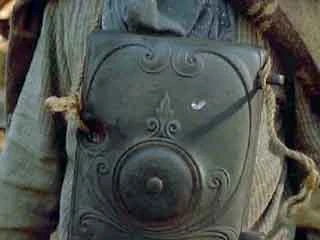
So the breastplate is only for defense, and passive at that. And what does it protect? Our heart. Now, we are not saved by our righteousness, but it works in conjunction with the Law to keep us "in line." That would be the Third Use: the curb. As a Christian we are now free to be able to follow God's Law, though due to our sin we will continue to fail. And that is where the righteousness comes in. It isn't our's that we wear, but Christ's.
The "readiness provided us by the Gospel" rounds out the apparel side of the kit. Boots can be argued to be the most important piece of a soldier's uniform. Being able to protect your feet is spectacularly important, especially to infantry. Think about it. Marching, running, standing patrol. You feet take a beating, and need protecting. Not just from combat, but terrain, injury, and disease. And you need the right footgear for different scenarios. Flip-flops are for the coast of Hawaii, not the coast of Norway, for example.

This is the one that connects back into the legendary founding of the marathon. Think about it. To prepare for the race, you need good running gear. The whole story of the first man to run 26.1 miles was to deliver a message of hope and victory. Likewise, we are equipped by the Gospel to go out into the world and proclaim the news that Christ is risen, victorious over death.
Next up: the "Helmet of salvation." As anyone who's ever worked in construction can tell you, wearing protective gear on your head is more than just a good idea or fashion statement. Cowboys wear stetsons to keep from getting sunburn on their squinted eyes. Bikers wear helmet to keep from looking like they're in South Dakota. NFL players wear helmets so you don't see their dumb haircuts. (Seriously, why do football players have hair that would make Rapunzel jealous?) Clearly headgear is important. Why? Because it protects your brain-box from getting squished.

I feel like this one should be really obvious as to why Paul picked it. The helmet protects the mind. Salvation is what we need after relying on our reason and strength. Remember, it was a human mind that thought the idea of being smarter than God was a good idea. Hence our need for Christ to come.
You may have noticed I skipped the "Shield of Faith" in the line-up order. Why?
Because its important.
The "Shield of Faith" is the actual defense. Remember, St. Paul is using a metaphor, based on the military of his time. How did the armies of Rome enter battle? In a line, shoulder to shoulder, with shields up. Our faith is not just a individual, but corporate (group) as well. Hence why we confess the Apostles' or Nicene Creeds at each worship service.

Think about it. How powerful a defense is a single shield? Quite a bit, especially in the hands of a trained warrior. But how powerful is a wall of such shields? No horde will be breaking through that line when someone calls "red rover."
And finally we come to the only offensive weapon in our arsenal (or rather, Christ's arsenal, since we are His servants): the "Sword of the Spirit." You probably already noticed this one is explained by Paul as the Word of God. So its the Bible.
Or is it...
The "Word of God," or, as is clearly expressed in the first chapter of John's Gospel, Christ Jesus, is the Sword of the Spirit. Wait, Jesus is the sword? But doesn't the Bible describe Him wielding a double edge sword (which may or may not be in His mouth)?
Well, yes. Because the words are the weapon. And if Indiana Jones has taught us anything, its that the pen is mightier than the sword. Or at least mightier than Nazi eyes when you spray ink in their faces.

But, remember, Jesus is the Living Word of God, so, Jesus is the Sword. And since the Word of God is Scripture, the Bible is the Sword.
So the only weapon is Scripture. Now that doesn't mean there are not other "weapons" in the Christian's arsenal, but that's for my metaphor, which is not inspired and inerrant, like St. Paul's is. And I'll delve more into that later. Be aware, it's my teaching tool, not official doctrine of any particular denomination, not necessarily guaranteed to be 100% in line with Scripture. I hope it is, but I'll concede ahead of time a screw up is likely.
And there's my take/understanding on St. Paul's "Armor of God." My spin on it soon to come.
(And, yes, it'll be multi-part, so I can focus on some aspects I think are of particular importance to the Christian Knight serving his King in this modern and depraved age.)
But before I get into that, let's review the text first:
Finally, be strong in the Lord and in the strength of his might. Put on the whole armor of God, that you may be able to stand against the schemes of the devil. For we do not wrestle against flesh and blood, but against the rulers, against the authorities, against the cosmic powers over this present darkness, against the spiritual forces of evil in the heavenly places. Therefore take up the whole armor of God, that you may be able to withstand in the evil day, and having done all, to stand firm. Stand therefore, having fastened on the belt of truth, and having put on the breastplate of righteousness, and, as shoes for your feet, having put on the readiness given by the gospel of peace. In all circumstances take up the shield of faith, with which you can extinguish all the flaming darts of the evil one; and take the helmet of salvation, and the sword of the Spirit, which is the word of God, praying at all times in the Spirit, with all prayer and supplication. To that end keep alert with all perseverance, making supplication for all the saints, and also for me, that words may be given to me in opening my mouth boldly to proclaim the mystery of the gospel, for which I am an ambassador in chains, that I may declare it boldly, as I ought to speak. Eph 6:10-20 (ESV)Ready? Let's go.
There should be no doubt (especially after everything we've gone through) that the image St. Paul is using is of the classic Roman soldier, though pared down. Why? Well, lets look at why I think he listed what he did.
And, yes, this is just opinion. I've really got nothing other than my overactive imagination and a healthy dose of military history to back up my hypothesis.
What do we have in the kit of the "Christian soldier?"
- Belt of truth
- Breastplate of righteousness
- Readiness given by the gospel of peace (as shoes)
- Shield of faith
- Helmet of salvation
- Sword of the Spirit (the word of God)
But why would the illustrious writer of half the New Testament not advocate for greater armaments and armor in spiritual warfare. After all, this is the guy who wrote "we do not wrestle against flesh and blood, but against the rulers, against the authorities, against the cosmic powers over this present darkness, against the spiritual forces of evil in the heavenly places." v. 12
The answer is simple: the war is over.
The war, which began in the Garden at the roots of a tree, ended on the branches of a tree placed on a hill just outside Jerusalem.
When Jesus received the sour wine, He said, "It is finished," and He bowed His head and gave up His spirit. John 19:30
But the angel said to the women, "Do not be afraid, for I know that you seek Jesus who was crucified. He is not here, for he has risen, as he said." Matthew 28:5-6a
And while they were gazing into heaven as He went, behold, two men stood by them in white robes, and said, "Men of Galilee, why do you stand looking into heaven? This Jesus, who was taken up from you into heaven, will come in the same way as you saw Him go into heaven." Acts 1:10-11So, then, the war is over. Why then do we need armor? The war may have ended, but the enemy still prowls about. What we have is an odd mix of "stay-behind" operations, collaborators, and occupation force.
We live in occupied territory. Since the fall, the "prince of this world" has held sway over us, with collaboration from our own nature. But the enemy was defeated, yet still holds control over at least this small territory. Which means we, who know the rightful king, are not members of the regular military, but resistance fighters.

(Its kinda like that, except the enemy is hyper-competent, and none of the guards can be bribed with pastries.)
Now, I'm not saying we are to be performing combat against the enemy. We are not that well armed or armored. A better parallel would be the White Rose, a non-violent anti-Nazi protest in Germany during WW2. They "fought" with words, images, publications, and even graffiti.
The Greek word κῆρυξ - "proclaimer, herald" - fits our duties better than soldier. We are not to be liberators, combat engineers, or warriors. Instead, our duty is to run town-to-town with news of the victory. Think the first marathon runner, just without the pass-out-dead ending.
Consider the final verse of the song "In Christ Alone," especially the second to last line.
Our duty is to stand firm, at all times, as St. Paul extols in his letter to Timothy.No guilt in life, no fear in death—This is the pow’r of Christ in me;From life’s first cry to final breath,Jesus commands my destiny.No pow’r of hell, no scheme of man,Can ever pluck me from His hand;Till He returns or calls me home—Here in the pow’r of Christ I’ll stand.
Preach the word; be ready in season and out of season; reprove, rebuke, and exhort, with complete patience and teaching. For the time is coming when people will not endure sound teaching, but having itching ears they will accumulate for themselves teachers to suit their own passions, and will turn away from listening to the truth and wander off into myths. As for you, always be sober-minded, endure suffering, do the work of an evangelist, fulfill your ministry. 2 Timothy 4:2-5As a side note, Paul is telling young pastor Timothy that he is to (1) preach the Gospel at any and all times, (2) keep from bending to society's whims, (3) keep from telling people what they want to hear, (4) stand firm in the truth taught in Scripture.
Back to the metaphor, and more specifically why St. Paul chose the pieces he did to represent the aspects listed.
We'll start passively, with defensive gear and work up to the "fun stuff." And, since the order Paul used basically follows that, I'll stick to it.
The "Belt of Truth" is first. We've looked at the leather belt-like device worn by the Romans and Greeks, as well as the "lower extremity" armor from the Middle Ages. The purpose and concept of this piece of kit in part falls under the same sort as, to be blunt, the jock strap and the cup worn by male athletes. The other major purpose is mobility. Remember, most people wore floor-length tunics in St. Paul's time. When going into battle, soldiers would "gird their loins:" pulling the extra material up to create shorts. The Art of Manliness has a short little blurb on it, along with a decent step-by-step image on how.
So why is "truth" protecting a soldier's soft bits? Consider. As a Christian, we are to adhere to the Truth. By turning from said Truth, we risk our most vulnerable assets taking control: our Emotions.
(Okay, enough giggling, lets move on.)
Next in the kit is the "Breastplate of Righteousness." This is the only piece of armor Paul allows us (unless you count the helmet and shield, and I'll get to why I'm not). And nothing says its a full torso armor, the cuirass. Which means we only have armor protecting our front half from the waist up. That's not a lot of protection. How does Paul expect us to fight like that? Oh, that right, we're not the ones fighting.
("I mean, sure, its a bit boilerplate, but the darn thing works like a charm. Gonna split the royalties with Marty once we get the patent." - Dr. E. Brown, 1885)
So the breastplate is only for defense, and passive at that. And what does it protect? Our heart. Now, we are not saved by our righteousness, but it works in conjunction with the Law to keep us "in line." That would be the Third Use: the curb. As a Christian we are now free to be able to follow God's Law, though due to our sin we will continue to fail. And that is where the righteousness comes in. It isn't our's that we wear, but Christ's.
The "readiness provided us by the Gospel" rounds out the apparel side of the kit. Boots can be argued to be the most important piece of a soldier's uniform. Being able to protect your feet is spectacularly important, especially to infantry. Think about it. Marching, running, standing patrol. You feet take a beating, and need protecting. Not just from combat, but terrain, injury, and disease. And you need the right footgear for different scenarios. Flip-flops are for the coast of Hawaii, not the coast of Norway, for example.
(Having breathable clothing makes sense in the desert, but not so much a few miles away from Siberia.)
This is the one that connects back into the legendary founding of the marathon. Think about it. To prepare for the race, you need good running gear. The whole story of the first man to run 26.1 miles was to deliver a message of hope and victory. Likewise, we are equipped by the Gospel to go out into the world and proclaim the news that Christ is risen, victorious over death.
Next up: the "Helmet of salvation." As anyone who's ever worked in construction can tell you, wearing protective gear on your head is more than just a good idea or fashion statement. Cowboys wear stetsons to keep from getting sunburn on their squinted eyes. Bikers wear helmet to keep from looking like they're in South Dakota. NFL players wear helmets so you don't see their dumb haircuts. (Seriously, why do football players have hair that would make Rapunzel jealous?) Clearly headgear is important. Why? Because it protects your brain-box from getting squished.
(Especially is your friends ever elect to use you as a battering ram in a rescue attempt.)
I feel like this one should be really obvious as to why Paul picked it. The helmet protects the mind. Salvation is what we need after relying on our reason and strength. Remember, it was a human mind that thought the idea of being smarter than God was a good idea. Hence our need for Christ to come.
You may have noticed I skipped the "Shield of Faith" in the line-up order. Why?
Because its important.
The "Shield of Faith" is the actual defense. Remember, St. Paul is using a metaphor, based on the military of his time. How did the armies of Rome enter battle? In a line, shoulder to shoulder, with shields up. Our faith is not just a individual, but corporate (group) as well. Hence why we confess the Apostles' or Nicene Creeds at each worship service.
(You! Shall not! Pass!)
Think about it. How powerful a defense is a single shield? Quite a bit, especially in the hands of a trained warrior. But how powerful is a wall of such shields? No horde will be breaking through that line when someone calls "red rover."
Or is it...
The "Word of God," or, as is clearly expressed in the first chapter of John's Gospel, Christ Jesus, is the Sword of the Spirit. Wait, Jesus is the sword? But doesn't the Bible describe Him wielding a double edge sword (which may or may not be in His mouth)?
Well, yes. Because the words are the weapon. And if Indiana Jones has taught us anything, its that the pen is mightier than the sword. Or at least mightier than Nazi eyes when you spray ink in their faces.
(Things Indy hates: 1- being called "Junior" 2- Grammar Nazis 3- Regular Nazis 4- Snakes)
But, remember, Jesus is the Living Word of God, so, Jesus is the Sword. And since the Word of God is Scripture, the Bible is the Sword.
So the only weapon is Scripture. Now that doesn't mean there are not other "weapons" in the Christian's arsenal, but that's for my metaphor, which is not inspired and inerrant, like St. Paul's is. And I'll delve more into that later. Be aware, it's my teaching tool, not official doctrine of any particular denomination, not necessarily guaranteed to be 100% in line with Scripture. I hope it is, but I'll concede ahead of time a screw up is likely.
And there's my take/understanding on St. Paul's "Armor of God." My spin on it soon to come.
(And, yes, it'll be multi-part, so I can focus on some aspects I think are of particular importance to the Christian Knight serving his King in this modern and depraved age.)
Tuesday, November 21, 2017
The Forge - Lesson 1.3: A Knights Tale
So I finally got those pesky Romans out of the way, only to trade them for the Holy Roman Empire. Up next we're going Medieval.
But before I get into that, let's review the text first:
Granted, I am skipping some historic examples, such as the heritage of Japan, and the Renaissance-era. That's in part for simplicity and in part because I'm sticking to the iconic and stereotypical image for later use. And even then, I'm aiming for a narrow portion of the Middle Ages, since this is a thousand years (give or take) of dynamic history and if I don't I'll end up writing a doorstopper. (Not that I'm opposed to that, but I've got other stuff to tackle too, and no one wants a "tl;dr" situation.)
Then again, I could just toss you over to the work of Mike Loades (among others) who researches this era almost exclusively. (Link to his special, Going Medieval, is here.) His series on weapons will be used as resource later on as we dissect the image. But enough of that, let's do this.
The Medieval period. The Middle Ages. The Dark Ages. Whatever you call it, it was anything but boring. This era saw:
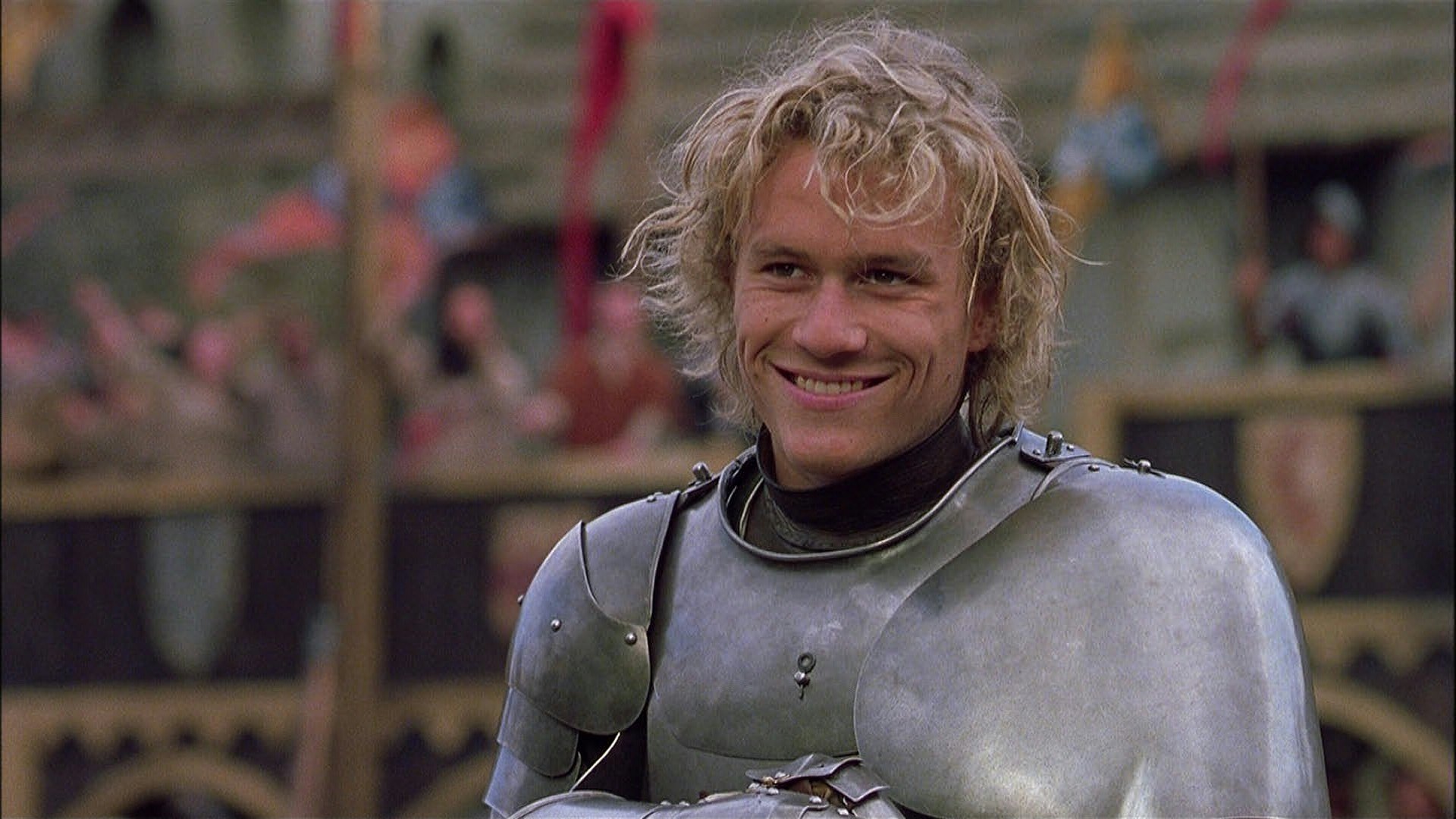
In spite of being relegated (unfairly) to the trash bin of history as a backward and unintelligent age, the Medieval period still conjures up images of chivalric heroes fighting insurmountable odds to save the honor of a young maiden. Our sense of honor, romance, and adventure lead us back to this time, at least in fiction. Guided by giants like Tolkien, we see the lone knight on horseback as the apex of what a hero is. And it is for this reason that I'm using it as a metaphor overall. (If Fisk can have ninjas, and Rosebrough can have pirate, I can have knights.)
But before I dive into that, lets see if I can give y'all an explanation of 500-800 years of history.

Conventionally and classically speaking, the Middle Ages focuses on the so called "western world." This means all the stuff from the border of the old Soviet Union to Spain, Sicily up to Sweden. It it was once owned by France, Spain, Britain, Germany, Denmark, or Italy it is part of the "western world."
(Now that's not to say the "western world" doesn't encompass more area. Poland, Ukraine, Greece, even Russia are the "western world," as opposed to the Middle East, the New World, Africa, or the Orient. However, since the classic knight didn't live in these areas, we'll ignore them for today.)
With the fall of Rome in 476 to the Ostrogoths, everything east of the Oder river fell into tribal warfare and chaos. The only unifying feature at that time, and the only authority that most were willing to follow was the Church. The Christian world was divided into bishoprics, much like the Roman Catholic church today has diocese. Above all the bishops (around 350 in the 4th century) were five archbishops in the five largest cities: Alexandria, Antioch, Constantinople, Jerusalem, and Rome. Four of these were in the "Eastern Roman Empire" (caused by Constantine's administrative decision to divide the empire). The bishop in Rome was in charge of the churches in Italy, Germany, Gaul (France), Iberia (Spain), and some of North Africa. With this much power (for good or ill), it was clear that whoever wanted to control the western Roman world would need the bishop of Rome to be supportive.
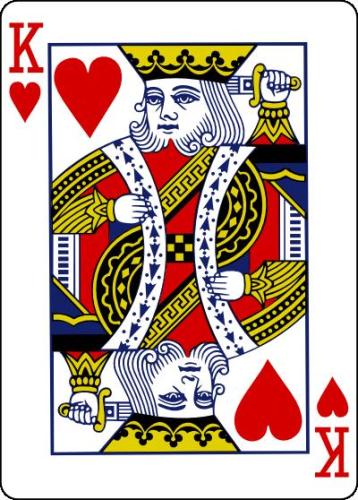
The man who ultimately found that support was Charles the Great - Charlemagne.
Now, before I get to Chuck, who gets his start in the 800s (ish), let me briefly set up a pair of substantial influences of the era: Islam and monasticism.
Islam was founded in the 600s by a failed and illiterate merchant in present day Saudi Arabia. By the 800s the Umayyad caliphate controlled everything from Morocco to Pakistan. All of North Africa and the whole Middle East except for Turkey. This would put pressure on the Christian world in places like Spain, Sicily, and the Empire Formerly Known As The Eastern Roman Empire (the Byzantines, in Greece). This international threat would culminate in the Crusades. But that mess is after Charlemagne, so be patient.
Monasticism should be a little familiar: monks living in austere conditions teaching secret and mystical things.

Okay, so what I described was a more "eastern" style of monasticism (which did influence the Star Wars universe). In Christendom the idea of monasticism was fairly early, with Anthony being the "founder." Certain people saw fit to remove themselves from society to spend time studying, praying, and providing works of service. Quickly, though, this became a form of works-righteousness. People began seeing monks (and nuns) as holier than thou, because they spent their whole lives praying and fasting. A number of orders would be founded: Augustinians, Benedictines, Cistercians, Dominicans, Franciscans, Hospitallers, Jesuits, Templars. Some set up schools, while others worked hospitals. Some would preach on street corners, while a few would fight pagans. People would even "donate" children to the monastery. The church became an industry and a world power thought this build-up.
This is the world of Charlemagne.
Gaul had been divided into three kingdoms, with plenty of in-fighting, back-stabbing, and horse-trading/stealing. Princes, dukes, earls, counts, and other petty nobility ruled territories within. The world was divided into manors, and each little town, territory, and county was as if its own small nation-state. This is a very complex game of thrones that ends on Christmas Day, 800 AD, with the coronation of Charles the Great as the first Holy Roman Emperor. He is seen as the father of Europe, and this is the turning point of the Medieval era. Europe was united (mostly) and a renaissance of art and learning occurred.
The Carolingian empire would last until 888, when Europe was divided again, essentially into France and Germany.
In the British isles the Angles and the Saxons fought with the Picts and Celts, only to be fought off by the Norse, and later the Normans. A lot of what is thought of as "knight classic" in England and America comes from the histories of the British isles (coconuts not included).
The Norse (better known by us as Vikings) played quite a role, and were very influential on history. I'll probably do just a history post on them, since it is very interesting, and much less barbaric than we've been led to believe. (They were still very barbaric, though, but they did have a reasonably sophisticated society.)
Things get complicated between 900 and 1100. The number of kingdoms is greater, the Muslims (sometimes called Saracens or Mohammedans in older resources) had taken control of Spain and Sicily, the Viking threat was diminished but had damaged northern Europe (not to mention they'd explored all the way to Vinland). The Byzantine empire was in dire straights, and sought help, even though the Great Schism had occurred in 1054 (which I alluded to earlier). To aid fellow Christians, and defend the holy city of Jerusalem, not to mention get those knights doing something useful instead of pillaging like a bunch of gang members in a low-riding Cadillac, the papacy supported and even sanctioned crusades.

Now, I'm gonna take the lazy way out regarding the Crusades. Not because it isn't an interesting and important topic, but because if I don't we'll never get to the kit of the classic knight. So I'll defer to one of my old professors, Dr. Matthew Phillips, one of the history professors at Concordia University in Seward, NE (my school). He was on Issues ETC discussing the Crusades and gave a very good primer covering them. (It should be good, he teaches an entire course on the topic.) So, if you've got the time or desire, give them a listen. The Crusades (five parts)
The Middle Ages after the Crusades was dominated by the French, the British, and the Holy Roman Empire. The French and British spent a lot of time fighting over what is now west France, which is why you see a bunch of Brits wandering around France in "A Knight's Tale." This is the Hundred Years War. It is this era, and the dynamic and rapid changes in technology, society, and even language, that brought about the Renaissance and Reformation. If you've seen a Renaissance fair, or watched any of Mike Loades work, then you've at least a decent visual of what the era looked like. Things like "The Tournament."
The Black Death was probably the "last straw" in the transition from the Middle Ages to the "modern era." At that point things weren't going back. The plague was brought into Europe due to the influx of trade, which had become the next "big thing." Marco Polo is the most commonly seen instigator of the Age of Discovery, which ended up with a lost Italian in the Caribbean starting the Spanish conquest of the New World.
And in the midsts of all this was war.
Castles, archers, sieges, trebuchets ("which can launch 90kg projectiles over 300m"), jousts, and, most of all, knights.
So, I'm just gonna get right to it and skip all the other fun stuff. (Don't worry, I'll probably revisit it later. Or you can just do some digging yourself.)

But before I get into that, let's review the text first:
Finally, be strong in the Lord and in the strength of his might. Put on the whole armor of God, that you may be able to stand against the schemes of the devil. For we do not wrestle against flesh and blood, but against the rulers, against the authorities, against the cosmic powers over this present darkness, against the spiritual forces of evil in the heavenly places. Therefore take up the whole armor of God, that you may be able to withstand in the evil day, and having done all, to stand firm. Stand therefore, having fastened on the belt of truth, and having put on the breastplate of righteousness, and, as shoes for your feet, having put on the readiness given by the gospel of peace. In all circumstances take up the shield of faith, with which you can extinguish all the flaming darts of the evil one; and take the helmet of salvation, and the sword of the Spirit, which is the word of God, praying at all times in the Spirit, with all prayer and supplication. To that end keep alert with all perseverance, making supplication for all the saints, and also for me, that words may be given to me in opening my mouth boldly to proclaim the mystery of the gospel, for which I am an ambassador in chains, that I may declare it boldly, as I ought to speak. Eph 6:10-20 (ESV)Now, on to the historic reality.
Granted, I am skipping some historic examples, such as the heritage of Japan, and the Renaissance-era. That's in part for simplicity and in part because I'm sticking to the iconic and stereotypical image for later use. And even then, I'm aiming for a narrow portion of the Middle Ages, since this is a thousand years (give or take) of dynamic history and if I don't I'll end up writing a doorstopper. (Not that I'm opposed to that, but I've got other stuff to tackle too, and no one wants a "tl;dr" situation.)
Then again, I could just toss you over to the work of Mike Loades (among others) who researches this era almost exclusively. (Link to his special, Going Medieval, is here.) His series on weapons will be used as resource later on as we dissect the image. But enough of that, let's do this.
The Medieval period. The Middle Ages. The Dark Ages. Whatever you call it, it was anything but boring. This era saw:
- the chaos of the fallen Roman Empire in the west,
- the legends of the King of the Britons: Arthur,
- the histories (both real and mythical) of Charlemagne,
- the schism of the Eastern and Western church,
- the "game of thrones" as the Holy Roman Empire coalesced in Germany,
- the campaigns to conquer and reconquer the Holy Lands,
- the attacks of the "northmen:" the Vikings,
- the threat of the Mongols to the far east,
- the incursion of the caliphate in Spain, Italy, and the Near East,
- the War of the Roses,
- the "duel of fates" that the English and French were locked in for centuries,
- the joust,
- the might of the castle,
- the beauty of the cathedral,
- the feudal system of government and agriculture,
- the rise of Shakespeare,
- the dark legacy of tyrants like Vlad III: the "Impaler,"
- the voyages of Marco Polo,
- the legacy and riches of the Silk Road,
- the power and prestige of the Church,
- and most ominous of all, the Black Death.
(The cheeky grin may not be historically accurate, but "A Knight's Tale" is still a good movie.)
In spite of being relegated (unfairly) to the trash bin of history as a backward and unintelligent age, the Medieval period still conjures up images of chivalric heroes fighting insurmountable odds to save the honor of a young maiden. Our sense of honor, romance, and adventure lead us back to this time, at least in fiction. Guided by giants like Tolkien, we see the lone knight on horseback as the apex of what a hero is. And it is for this reason that I'm using it as a metaphor overall. (If Fisk can have ninjas, and Rosebrough can have pirate, I can have knights.)
But before I dive into that, lets see if I can give y'all an explanation of 500-800 years of history.
Conventionally and classically speaking, the Middle Ages focuses on the so called "western world." This means all the stuff from the border of the old Soviet Union to Spain, Sicily up to Sweden. It it was once owned by France, Spain, Britain, Germany, Denmark, or Italy it is part of the "western world."
(Now that's not to say the "western world" doesn't encompass more area. Poland, Ukraine, Greece, even Russia are the "western world," as opposed to the Middle East, the New World, Africa, or the Orient. However, since the classic knight didn't live in these areas, we'll ignore them for today.)
With the fall of Rome in 476 to the Ostrogoths, everything east of the Oder river fell into tribal warfare and chaos. The only unifying feature at that time, and the only authority that most were willing to follow was the Church. The Christian world was divided into bishoprics, much like the Roman Catholic church today has diocese. Above all the bishops (around 350 in the 4th century) were five archbishops in the five largest cities: Alexandria, Antioch, Constantinople, Jerusalem, and Rome. Four of these were in the "Eastern Roman Empire" (caused by Constantine's administrative decision to divide the empire). The bishop in Rome was in charge of the churches in Italy, Germany, Gaul (France), Iberia (Spain), and some of North Africa. With this much power (for good or ill), it was clear that whoever wanted to control the western Roman world would need the bishop of Rome to be supportive.
The man who ultimately found that support was Charles the Great - Charlemagne.
(Yes, he's on your playing cards. That's how influential he was.)
Now, before I get to Chuck, who gets his start in the 800s (ish), let me briefly set up a pair of substantial influences of the era: Islam and monasticism.
Islam was founded in the 600s by a failed and illiterate merchant in present day Saudi Arabia. By the 800s the Umayyad caliphate controlled everything from Morocco to Pakistan. All of North Africa and the whole Middle East except for Turkey. This would put pressure on the Christian world in places like Spain, Sicily, and the Empire Formerly Known As The Eastern Roman Empire (the Byzantines, in Greece). This international threat would culminate in the Crusades. But that mess is after Charlemagne, so be patient.
Monasticism should be a little familiar: monks living in austere conditions teaching secret and mystical things.
(I'm not sure if you are serious... or if you are trolling me.)
Okay, so what I described was a more "eastern" style of monasticism (which did influence the Star Wars universe). In Christendom the idea of monasticism was fairly early, with Anthony being the "founder." Certain people saw fit to remove themselves from society to spend time studying, praying, and providing works of service. Quickly, though, this became a form of works-righteousness. People began seeing monks (and nuns) as holier than thou, because they spent their whole lives praying and fasting. A number of orders would be founded: Augustinians, Benedictines, Cistercians, Dominicans, Franciscans, Hospitallers, Jesuits, Templars. Some set up schools, while others worked hospitals. Some would preach on street corners, while a few would fight pagans. People would even "donate" children to the monastery. The church became an industry and a world power thought this build-up.
This is the world of Charlemagne.
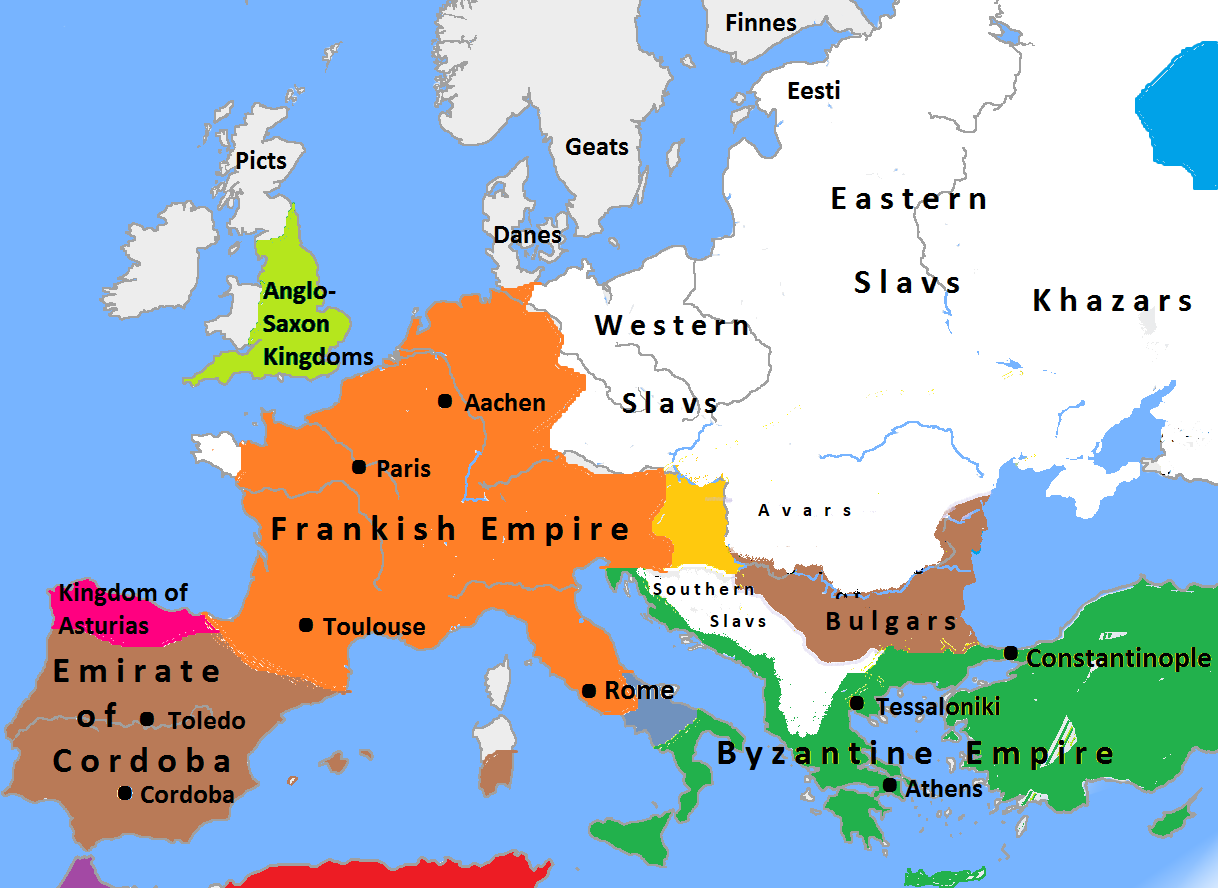
Gaul had been divided into three kingdoms, with plenty of in-fighting, back-stabbing, and horse-trading/stealing. Princes, dukes, earls, counts, and other petty nobility ruled territories within. The world was divided into manors, and each little town, territory, and county was as if its own small nation-state. This is a very complex game of thrones that ends on Christmas Day, 800 AD, with the coronation of Charles the Great as the first Holy Roman Emperor. He is seen as the father of Europe, and this is the turning point of the Medieval era. Europe was united (mostly) and a renaissance of art and learning occurred.
(Charlemagne owned the orange stuff.)
The Carolingian empire would last until 888, when Europe was divided again, essentially into France and Germany.
In the British isles the Angles and the Saxons fought with the Picts and Celts, only to be fought off by the Norse, and later the Normans. A lot of what is thought of as "knight classic" in England and America comes from the histories of the British isles (coconuts not included).
The Norse (better known by us as Vikings) played quite a role, and were very influential on history. I'll probably do just a history post on them, since it is very interesting, and much less barbaric than we've been led to believe. (They were still very barbaric, though, but they did have a reasonably sophisticated society.)
Things get complicated between 900 and 1100. The number of kingdoms is greater, the Muslims (sometimes called Saracens or Mohammedans in older resources) had taken control of Spain and Sicily, the Viking threat was diminished but had damaged northern Europe (not to mention they'd explored all the way to Vinland). The Byzantine empire was in dire straights, and sought help, even though the Great Schism had occurred in 1054 (which I alluded to earlier). To aid fellow Christians, and defend the holy city of Jerusalem, not to mention get those knights doing something useful instead of pillaging like a bunch of gang members in a low-riding Cadillac, the papacy supported and even sanctioned crusades.
(He belongs in a museum.)
Now, I'm gonna take the lazy way out regarding the Crusades. Not because it isn't an interesting and important topic, but because if I don't we'll never get to the kit of the classic knight. So I'll defer to one of my old professors, Dr. Matthew Phillips, one of the history professors at Concordia University in Seward, NE (my school). He was on Issues ETC discussing the Crusades and gave a very good primer covering them. (It should be good, he teaches an entire course on the topic.) So, if you've got the time or desire, give them a listen. The Crusades (five parts)
The Middle Ages after the Crusades was dominated by the French, the British, and the Holy Roman Empire. The French and British spent a lot of time fighting over what is now west France, which is why you see a bunch of Brits wandering around France in "A Knight's Tale." This is the Hundred Years War. It is this era, and the dynamic and rapid changes in technology, society, and even language, that brought about the Renaissance and Reformation. If you've seen a Renaissance fair, or watched any of Mike Loades work, then you've at least a decent visual of what the era looked like. Things like "The Tournament."
The Black Death was probably the "last straw" in the transition from the Middle Ages to the "modern era." At that point things weren't going back. The plague was brought into Europe due to the influx of trade, which had become the next "big thing." Marco Polo is the most commonly seen instigator of the Age of Discovery, which ended up with a lost Italian in the Caribbean starting the Spanish conquest of the New World.
And in the midsts of all this was war.
Castles, archers, sieges, trebuchets ("which can launch 90kg projectiles over 300m"), jousts, and, most of all, knights.
So, I'm just gonna get right to it and skip all the other fun stuff. (Don't worry, I'll probably revisit it later. Or you can just do some digging yourself.)
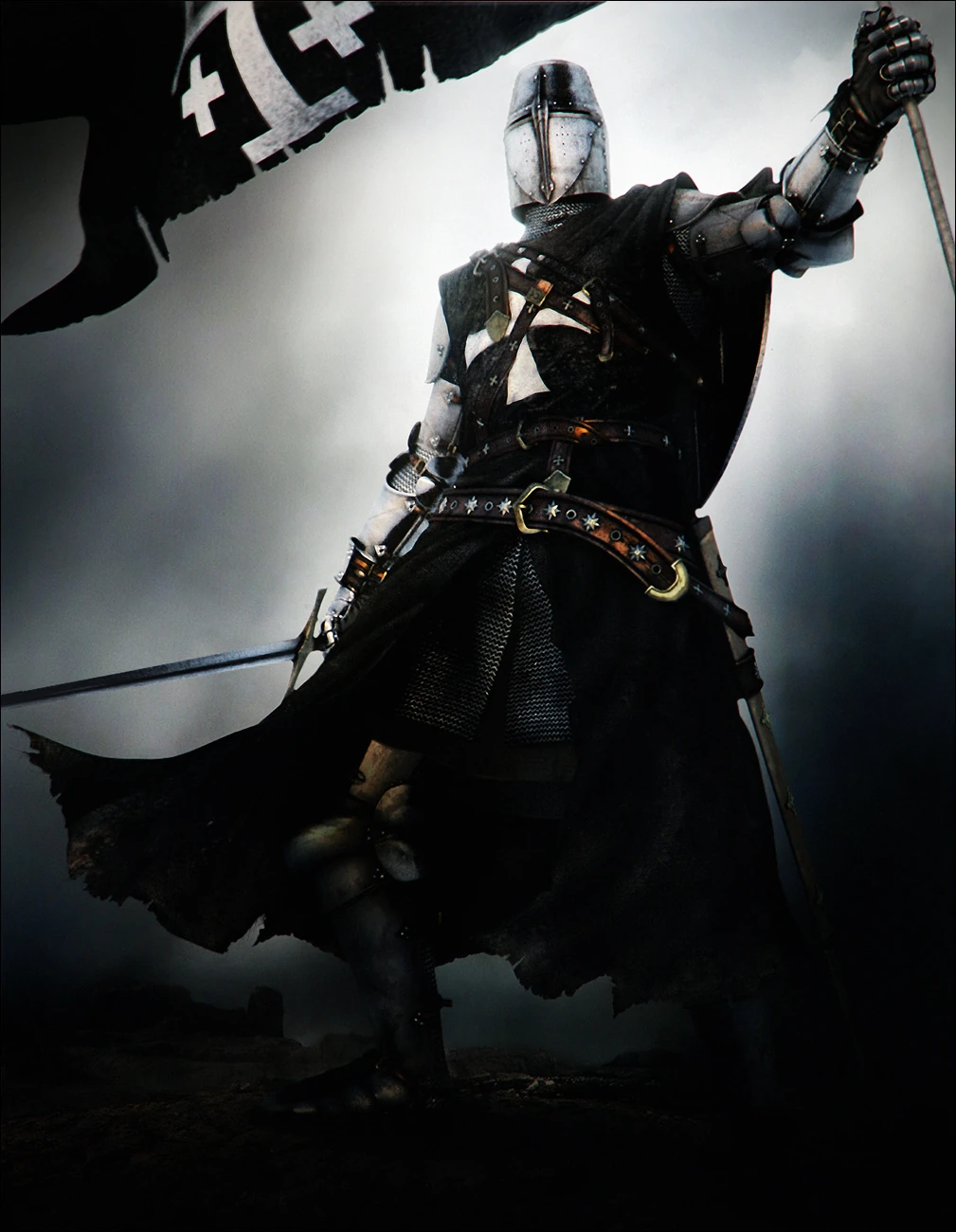
(An example of a knight hospitaller from the Crusades.)
Where to start? Weapons or armor? Weapons or armor? Well, being germanic of heritage, I'm nothing if not consistent. So I'll let my compulsive Italian side lead the way. Weapons it is.
The sword.
Oh, you wanted more? Okay, then.
There are swords and knives (like the seax, dirk, dagger, longsword, short sword, claymore, arming sword, bastard sword, saber, falchion, and viking sword), pole arms (like the spear, halberd, pike, lance, glaive, and scythe), melee weapons (mace, morning star, flail, battle axe, quarter staff, maul, and war hammer), and ranged weapons (like the longbow, recurve bow, Mongol bow, crossbow, sling, francisca, javelin, and musket). This doesn't include siege weapons (like trebuchets), warships (like carracks), and fortifications (like castles). And that's just from Europe. There's still all sorts of unique and interesting arms from every other continent (things like the katana, the atlatl, and the leiomano).

Since swords are the iconic weapon of a knight, I could (and probably should) go into great detail about them now, but I'll save that for later. Same with shields, even though they took on a variety of roles in this era (heraldry, anyone?).
But the armor is where its at. I will be going into greater detail as I dissect the metaphor (and take my own spin on it), but how about some "bird's eye view" history? Ya know, since suits of armor haven't been in style since the 17th century. (Unless you're a frequenter of Renaissance fairs.)
(The basic components of a classic suit of armor.)
Plate armor, specifically steel plate, wasn't easy to build early on. Mail (worn over a gambeson or aketon) and scale armor shirts (called a brigandine or jack of plates) were the "cheap" version. Padded shirts, like aketons, would be worn under later plate armor as well. If you've watched "The Two Towers," specifically when Aragorn is getting ready for the battle, the way he dresses and the armor he wears is actually petty accurate, especially for the 10th-11th centuries.
Mail and scale were not defense against pierces, but blunt force and shrapnel. Plate armor was developed to halt arrows, spears, and swords. Late versions were designed to halt bullets as well. In fact armorers would take practice shots against armor, then mark where the armor was proof against bullets. (Bulletproof... get it?)
Not all plate armor was the same. The armor on the chest and head was stouter than on the arms and lower legs. The shoulders, elbows, and hands had multiple joints and bends to allow for movement, but these were also weak points. And armor was heavy, but not so heavy as to make the knight immobile if knocked down. Not more than the average total carried by the average American soldier (about 75 lb), though the weight was better distributed, instead of being primarily in a rucksack.
But, like past armors, this stuff was costly. In the high Middle Ages (late 1200s until 1600s-ish) there were two types: Gothic and Italian. The Gothic style was much more detailed, with Maximilian style being the most intricate and artistic. Italian was simpler, thus a little less expensive. Despite this, and the advancements made in metallurgy, the only people who could afford such military kit were the nobility. Most soldiers would be lucky to have mail. Few would have had swords, at least if the were peasants. That's not to say all knights were of great wealth. Many were what we would today call "upper middle class." They can afford the new iPhone and a mortgage and go out of a fancy restaurant a couple times a month, but they don't drive Aston Martins to their third home in Beverly Hills. Some knights would go on to become the nouveau riche who would provide substantial influence in the Age of Discovery, the Age of Enlightenment, and the Victorian Era.
I could go on, but then I'd just repeat myself when I over-analyze this stuff later. And I will, since I'm taking the metaphor of "the Armor of God" and running with it. So explaining the various parts of the kit, in detail, will be in the future. Near future? Maybe.
Friday, November 17, 2017
The Forge - Lesson 1.2: They Are The Legion
We got those pesky Greeks out of the way, now lets head to the center of the civilized* world: Rome.
(*snicker* "civilized...")
But before I get into that, let's review the text first:


Like the Greeks, the Romans present a very long, very convoluted, very colorful history. A kingdom, then a republic, then an empire, then a divided empire, then it collapsed, with at least one successor state claiming the title. Most of us are probably at least passingly familiar with "classic Rome" (republic through empire). I'll try to encapsulate the history, then sum up the military, since this is the visual that St. Paul was working with. After all, the soldiers were standing outside his cell when he wrote it.
There are three parts to Rome's history, though the last portion, the Empire, can be divided into multiple sections. I'll deal with that kerfuffle when we get there.
The Kingdom of Rome ran from 753 to 509 BC. The Roman Republic 509-27 BC. The Roman Empire lasted from 27 BC - 480/1453 AD (depending on which version of the empire we're considering).
Rome's founding (not the myth regarding twins raised by wolves) was before 700 BC. Greek historian Timaeus places its founding in the year 814 BC (38 years before first Olympics). Others place it in the 750s. So I'll just say the city of Rome was established between 850 and 700 BC. The hilly location of a ford on the Tiber River made building a fortified city logical. And anyone who controlled such a city would be guaranteed to grow and be powerful.
The Kingdom of Rome had (surprise, surprise) a king. It wasn't a hereditary title, but rather elected for life. But this king did have a lot of power. There was also a chief priest, a chief judge, and a chief legislator. The kingdom also had a senate, but don't go thinking that automatically means "democracy." The senate had little power, and was comprised of noblemen appointed by the king. So much for transparency or checks and balances. There were six kings (not counting Romulus, who may or may not have been real) before the kingdom ended. The story (how much is history and what is legend I'm not sure right now, I'll have to dig more) is that the son of the last king (Lucius Tarquinius Superbus) raped a noblewoman, who then begged her father and other noblemen of Rome to seek vengeance (then committed suicide, so as to give Shakespeare something to work with). The senate then voted to abolish the monarchy and exile the king and his family. In its place a republic was founded.
While the deposed king attempted a number of times to overthrow the new government, the Roman Republic would last nearly 500 years. Instead of a king, elected for life, the citizens would elect two counsels each year. In a way it was a form of proto-presidency. The very same powers the king had, the counsels now had. The senate was still a non-elected and weak body, but later they would gain in influence.

The very chaotic nature of Republic politics led to a few prominent men to form an alliance to try to gain control. (Hmm, sounds a bit familiar... to all of government history.) The first triumvirate consisted of Pompey the Great, Marcus Licinius Crassus, and Julius Caesar. The goal was simple: support each other to gain power and influence. With Crassus's death in 53 BC, the triumvirate ended. Pompey and Caesar started becoming more of rivals than partners. With Caesar gaining popularity in the military, the senate picked Pompey to stand against him. In 49 BC, Caesar crossed the "line in the sand" on his way to besiege and capture Rome.

Julius Caesar became a dictator, restoring order to the government. In 44 BC, on the Ides of March, Julius was assassinated by a group of senators who feared (among other things) he'd reestablish a monarchy and take power away from land owners. Their plan failed, since Julius's great-nephew Octavian teamed up with Marcus Antonius and Marcus Lepidus to take control of the government. The senate remained basically powerless. Lepidus wasn't as big a player in this trio. Mark and Gus (Antonius and Octavian) would go on to fight for control. If you want to know how that all went down, I know there's a documentary written by some Englishman named Willy. Its supposed to be pretty good (even if the lead love interest wasn't that pretty).

Octavian took the name Augustus, and the cognomen Caesar became a title synonymous with "emperor." In fact, the title emperor in a number of languages, including German and Russian, is the name caesar (kaiser and tsar, respectively). And from 27 BC until the fall of Rome to the Goths in 476 AD, the empire reigned supreme.

Because of how especially long and complex the history of the Empire is (especially if we include the division set up by Constantine), I'm gonna take the lazy way out and skip it... for now. I may deal with it later, especially if I want to talk about the Middle Ages, the Holy Roman Empire, and so forth. Our goal here is the metaphor: the Roman soldier.

I wish I could say that just looking at the Roman legions and their history simplifies things, but it doesn't. The campaigns, techniques, and reforms are just as complicated as the rest of this train-wreck. On the surface there seems to be no way to simplify this topic without leaving something important out. But if I don't want to write a thousand page doorstopper on this, I'll have to find a way.
(Is it terrible that I want to write way too much on this since the history helps formation of fictional stories? Is it terrible I don't care?)
For the sake of simplicity (in a way) and reducing the potential "tl;dr" commenting, I'll just stick to the army of the Roman Empire proper (27 BC - 400-ish AD).
The army was centered around the legion. Similar to divisions or regiments in modern armies, the legion had between 3000 and 5500 men (give or take, depending on era). Early on the legions were divided into centuria, each with 100 men and soldiers, and commanded by a centurion. The legions were the elite heavy infantry soldiers, while the remainder of the army was made up of auxiliaries. The auxiliaries were made up of non-citizens (unlike the legions) and provided a large portion of infantry and much of the cavalry force in Rome. Other units existed throughout the history of Rome, performing different tasks and missions.
A decent comparison between the two is the US Army vs. the US Marines; how they fight, deploy, organize, and even train are different. One is designed for hard-hitting, shock-and-awe expeditionary work, while the other is optimized for endurance fights, sieges, occupations and invasions using large stockpiles and resources. Maybe a better parallel would be from Star Wars. The Empire had the Army and the Stormtrooper Corps. The stormtroopers were elite, loyal only to the emperor, and the most visible representation of the Empire's might. The Army vastly outnumbered them, and had the resources (like AT-AT walkers) to back up that size. The "bucket-heads" even were divided into legions, such as the 501st.

(Incidentally, the 501st has a pretty cool story, both the in-universe version and the real one. That one from that galaxy far, far away is known for being Vader's personal legion, while the real one is even cooler thanks to being the inspiration for the fictional one, all while being a charitable organization. And make movie-worth costumes. Check them out here.)
(And, yes, I realize that this post is oddly Star Wars heavy despite not being about Star Wars. Blame Mr. Lucas for that, since the history of Rome influenced his story. I'll use more Star Wars metaphor in later posts on this subject anyway, since its such an easy visual to swipe.)
But we're here to focus on the "armor of God" metaphor, so we need to focus in on the kit of the average soldier. Yes, yes, I've done a little of this already, but one of the winning teaching methods is repetition.
Soldiers that were equipped with armor wore lorica hamata (mail), lorica segmantata (the stereotypical armor that looks like a lobster), or lorica squamata (scale armor). Officers often wore cuirass, the classic "muscled" breastplate, which was more costly than the other options and had less mobility to more protection.
The galea helmet was pretty well standard, with detail variations based on rank. Other helmet were worn, too, but the classic helm is the one we think of, horsehair crest and all.
Arm and leg armor would be worn too. The legs were protected by greaves, much like shin guards from football (better known as soccer in the States). A variety of arm armor was available, from full metal sleeves to forearm guards and gauntlets. Around the waist of the Roman soldier was the pteruges: a "skirt" of leather straps, which protected their upper legs and other sensitive bits.
The soldiers carried a sarcina, a rucksack, much like the MOLLE packs modern troops use to carry all their equipment.
A couple types of shields were common: the scutum and the parma. The parma was a three-foot wide circular shield, built on an iron frame of wood construction with metal reinforcements. They were replaced by the scutum, the classic shield we think of when we think of Rome. They were three and a half foot by a foot and a half (on average) and curved slightly. Lighter than the aspis, and providing larger protection, at the cost of strength, the scutum made the phalanx formation nigh unbeatable. If you've seen a modern riot shield, you've seen a scutum, basically.
At this point the guys in the audience are probably shouting "just get to the fun stuff already!" Obviously an army without weapons is just a group of men all dressed the same.
Spears were the main weapon (as you should see by now is the norm), and there were a few versions throughout history. The hasta was basically Rome's version of the Greek doru. There were javelins, which were the intended throwing spear. But the stereotypical spear was the pilum, with its extended iron shaft making it so that once it was thrown, it could not be recycled by an enemy soldier (due to the shaft bending once it hit something, like a shield or a Celt).
Bows, crossbows, darts, and slings were used as well. Often, as seen in other armies both before and after, these were used by "specialized" troops, though the sling was carried as a back-up weapon by all soldiers. The ammo was made of lead, and often stamped with slogans, much like how pilots in WW2 would "personalize" bombs.

But what about the stuff that goes "stabbity stab stab?" Well, obviously the spear should probably be here, since they stab, but I mean the close-in stuff. Swords. Rome had three kinds; well, technically two types of swords and a dagger. Though if you're a hobbit, the pugio dagger would make a fine short broadsword. The pugio was the dagger used by the conspirators who killed Julius Caesar. I'll admit, I think it looks like a trowel. Most of us have never heard of it, but we've probably heard of the gladius and the spatha.
The gladius is the traditional two edged short sword of the Roman Empire. About 24 to 30 inches long, it looks very similar to Bilbo Baggins's sword Sting. And, yes, Tolkien fans, I know that Sting is actually a dagger used as a sword. Notice what I said earlier about the pugio. But my comparison to Sting is mostly appearance.
The spatha, which seems to also be the generic term for "sword," describes a longer sword, about 30 to 40 inches. The design of the spatha led directly to the Migration Period swords (think what LOTR's Rohan carried) and the classic swords of knights and crusaders. I will go into detail later on those.
At the end of the day, the sword in the Roman army was for short range work. It was for times the fighting was so close you could smell your opponent's breath.

There is one last piece of kit to mention. And not because there aren't more items the average Roman soldier would carry, or because there aren't more weapons. The last, and arguably most important, piece of Roman military technology was the caliga: boots.

Healthy feet are extremely important in the army, especially the infantry. These things were pretty sophisticated. Designed to reduce blisters while on march, the thicker sole had hobnails to act as cleats, and the open design kept the soldier from getting trench foot. In fact, the patter the hobnails were placed in is almost exactly the same as the cleat pattern on cross country running shoes.
As a side note, Roman emperor Gaius Caesar, who reigned from 37 to 41 AD, is better known as "Caligula." He gained this nickname when he was two or three while spending time with his father, a general, and the soldiers made him small boots. He didn't like the name.
We'll look at Rome again once we dig back into the metaphor itself and try to discern why (or at least why I think) Paul used the details he did. And, yes, I think each was intentional.
And there you have it. Next up: the era of classic knights.
(*snicker* "civilized...")
But before I get into that, let's review the text first:
Finally, be strong in the Lord and in the strength of his might. Put on the whole armor of God, that you may be able to stand against the schemes of the devil. For we do not wrestle against flesh and blood, but against the rulers, against the authorities, against the cosmic powers over this present darkness, against the spiritual forces of evil in the heavenly places. Therefore take up the whole armor of God, that you may be able to withstand in the evil day, and having done all, to stand firm. Stand therefore, having fastened on the belt of truth, and having put on the breastplate of righteousness, and, as shoes for your feet, having put on the readiness given by the gospel of peace. In all circumstances take up the shield of faith, with which you can extinguish all the flaming darts of the evil one; and take the helmet of salvation, and the sword of the Spirit, which is the word of God, praying at all times in the Spirit, with all prayer and supplication. To that end keep alert with all perseverance, making supplication for all the saints, and also for me, that words may be given to me in opening my mouth boldly to proclaim the mystery of the gospel, for which I am an ambassador in chains, that I may declare it boldly, as I ought to speak. Eph 6:10-20 (ESV)Now, on to the historic reality. This one is at least easier to grasp, maybe, since there are more fictionalized accounts of Rome.

(Is that not why you are here?)
Like the Greeks, the Romans present a very long, very convoluted, very colorful history. A kingdom, then a republic, then an empire, then a divided empire, then it collapsed, with at least one successor state claiming the title. Most of us are probably at least passingly familiar with "classic Rome" (republic through empire). I'll try to encapsulate the history, then sum up the military, since this is the visual that St. Paul was working with. After all, the soldiers were standing outside his cell when he wrote it.
There are three parts to Rome's history, though the last portion, the Empire, can be divided into multiple sections. I'll deal with that kerfuffle when we get there.
The Kingdom of Rome ran from 753 to 509 BC. The Roman Republic 509-27 BC. The Roman Empire lasted from 27 BC - 480/1453 AD (depending on which version of the empire we're considering).
Rome's founding (not the myth regarding twins raised by wolves) was before 700 BC. Greek historian Timaeus places its founding in the year 814 BC (38 years before first Olympics). Others place it in the 750s. So I'll just say the city of Rome was established between 850 and 700 BC. The hilly location of a ford on the Tiber River made building a fortified city logical. And anyone who controlled such a city would be guaranteed to grow and be powerful.
The Kingdom of Rome had (surprise, surprise) a king. It wasn't a hereditary title, but rather elected for life. But this king did have a lot of power. There was also a chief priest, a chief judge, and a chief legislator. The kingdom also had a senate, but don't go thinking that automatically means "democracy." The senate had little power, and was comprised of noblemen appointed by the king. So much for transparency or checks and balances. There were six kings (not counting Romulus, who may or may not have been real) before the kingdom ended. The story (how much is history and what is legend I'm not sure right now, I'll have to dig more) is that the son of the last king (Lucius Tarquinius Superbus) raped a noblewoman, who then begged her father and other noblemen of Rome to seek vengeance (then committed suicide, so as to give Shakespeare something to work with). The senate then voted to abolish the monarchy and exile the king and his family. In its place a republic was founded.
While the deposed king attempted a number of times to overthrow the new government, the Roman Republic would last nearly 500 years. Instead of a king, elected for life, the citizens would elect two counsels each year. In a way it was a form of proto-presidency. The very same powers the king had, the counsels now had. The senate was still a non-elected and weak body, but later they would gain in influence.
(The senate, in all its glorious chaos.)
The very chaotic nature of Republic politics led to a few prominent men to form an alliance to try to gain control. (Hmm, sounds a bit familiar... to all of government history.) The first triumvirate consisted of Pompey the Great, Marcus Licinius Crassus, and Julius Caesar. The goal was simple: support each other to gain power and influence. With Crassus's death in 53 BC, the triumvirate ended. Pompey and Caesar started becoming more of rivals than partners. With Caesar gaining popularity in the military, the senate picked Pompey to stand against him. In 49 BC, Caesar crossed the "line in the sand" on his way to besiege and capture Rome.
(Hey, Julius! I dare you to cross this Rubicon.)
Julius Caesar became a dictator, restoring order to the government. In 44 BC, on the Ides of March, Julius was assassinated by a group of senators who feared (among other things) he'd reestablish a monarchy and take power away from land owners. Their plan failed, since Julius's great-nephew Octavian teamed up with Marcus Antonius and Marcus Lepidus to take control of the government. The senate remained basically powerless. Lepidus wasn't as big a player in this trio. Mark and Gus (Antonius and Octavian) would go on to fight for control. If you want to know how that all went down, I know there's a documentary written by some Englishman named Willy. Its supposed to be pretty good (even if the lead love interest wasn't that pretty).
(After Octavian took over, the streets were crawling with legions of soldiers.)
Octavian took the name Augustus, and the cognomen Caesar became a title synonymous with "emperor." In fact, the title emperor in a number of languages, including German and Russian, is the name caesar (kaiser and tsar, respectively). And from 27 BC until the fall of Rome to the Goths in 476 AD, the empire reigned supreme.
(An archive image of the caesar declaring the formation of the empire.)
Because of how especially long and complex the history of the Empire is (especially if we include the division set up by Constantine), I'm gonna take the lazy way out and skip it... for now. I may deal with it later, especially if I want to talk about the Middle Ages, the Holy Roman Empire, and so forth. Our goal here is the metaphor: the Roman soldier.

(Venimus. Videmus. Vincimus.)
I wish I could say that just looking at the Roman legions and their history simplifies things, but it doesn't. The campaigns, techniques, and reforms are just as complicated as the rest of this train-wreck. On the surface there seems to be no way to simplify this topic without leaving something important out. But if I don't want to write a thousand page doorstopper on this, I'll have to find a way.
(Is it terrible that I want to write way too much on this since the history helps formation of fictional stories? Is it terrible I don't care?)
For the sake of simplicity (in a way) and reducing the potential "tl;dr" commenting, I'll just stick to the army of the Roman Empire proper (27 BC - 400-ish AD).
The army was centered around the legion. Similar to divisions or regiments in modern armies, the legion had between 3000 and 5500 men (give or take, depending on era). Early on the legions were divided into centuria, each with 100 men and soldiers, and commanded by a centurion. The legions were the elite heavy infantry soldiers, while the remainder of the army was made up of auxiliaries. The auxiliaries were made up of non-citizens (unlike the legions) and provided a large portion of infantry and much of the cavalry force in Rome. Other units existed throughout the history of Rome, performing different tasks and missions.
A decent comparison between the two is the US Army vs. the US Marines; how they fight, deploy, organize, and even train are different. One is designed for hard-hitting, shock-and-awe expeditionary work, while the other is optimized for endurance fights, sieges, occupations and invasions using large stockpiles and resources. Maybe a better parallel would be from Star Wars. The Empire had the Army and the Stormtrooper Corps. The stormtroopers were elite, loyal only to the emperor, and the most visible representation of the Empire's might. The Army vastly outnumbered them, and had the resources (like AT-AT walkers) to back up that size. The "bucket-heads" even were divided into legions, such as the 501st.
(Members of the legion escorting emperor Lucas.)
(Incidentally, the 501st has a pretty cool story, both the in-universe version and the real one. That one from that galaxy far, far away is known for being Vader's personal legion, while the real one is even cooler thanks to being the inspiration for the fictional one, all while being a charitable organization. And make movie-worth costumes. Check them out here.)
(And, yes, I realize that this post is oddly Star Wars heavy despite not being about Star Wars. Blame Mr. Lucas for that, since the history of Rome influenced his story. I'll use more Star Wars metaphor in later posts on this subject anyway, since its such an easy visual to swipe.)
But we're here to focus on the "armor of God" metaphor, so we need to focus in on the kit of the average soldier. Yes, yes, I've done a little of this already, but one of the winning teaching methods is repetition.
Soldiers that were equipped with armor wore lorica hamata (mail), lorica segmantata (the stereotypical armor that looks like a lobster), or lorica squamata (scale armor). Officers often wore cuirass, the classic "muscled" breastplate, which was more costly than the other options and had less mobility to more protection.
The galea helmet was pretty well standard, with detail variations based on rank. Other helmet were worn, too, but the classic helm is the one we think of, horsehair crest and all.
Arm and leg armor would be worn too. The legs were protected by greaves, much like shin guards from football (better known as soccer in the States). A variety of arm armor was available, from full metal sleeves to forearm guards and gauntlets. Around the waist of the Roman soldier was the pteruges: a "skirt" of leather straps, which protected their upper legs and other sensitive bits.
The soldiers carried a sarcina, a rucksack, much like the MOLLE packs modern troops use to carry all their equipment.
A couple types of shields were common: the scutum and the parma. The parma was a three-foot wide circular shield, built on an iron frame of wood construction with metal reinforcements. They were replaced by the scutum, the classic shield we think of when we think of Rome. They were three and a half foot by a foot and a half (on average) and curved slightly. Lighter than the aspis, and providing larger protection, at the cost of strength, the scutum made the phalanx formation nigh unbeatable. If you've seen a modern riot shield, you've seen a scutum, basically.
At this point the guys in the audience are probably shouting "just get to the fun stuff already!" Obviously an army without weapons is just a group of men all dressed the same.
Spears were the main weapon (as you should see by now is the norm), and there were a few versions throughout history. The hasta was basically Rome's version of the Greek doru. There were javelins, which were the intended throwing spear. But the stereotypical spear was the pilum, with its extended iron shaft making it so that once it was thrown, it could not be recycled by an enemy soldier (due to the shaft bending once it hit something, like a shield or a Celt).
Bows, crossbows, darts, and slings were used as well. Often, as seen in other armies both before and after, these were used by "specialized" troops, though the sling was carried as a back-up weapon by all soldiers. The ammo was made of lead, and often stamped with slogans, much like how pilots in WW2 would "personalize" bombs.

(Because "take that" is always in style.)
But what about the stuff that goes "stabbity stab stab?" Well, obviously the spear should probably be here, since they stab, but I mean the close-in stuff. Swords. Rome had three kinds; well, technically two types of swords and a dagger. Though if you're a hobbit, the pugio dagger would make a fine short broadsword. The pugio was the dagger used by the conspirators who killed Julius Caesar. I'll admit, I think it looks like a trowel. Most of us have never heard of it, but we've probably heard of the gladius and the spatha.
The gladius is the traditional two edged short sword of the Roman Empire. About 24 to 30 inches long, it looks very similar to Bilbo Baggins's sword Sting. And, yes, Tolkien fans, I know that Sting is actually a dagger used as a sword. Notice what I said earlier about the pugio. But my comparison to Sting is mostly appearance.
The spatha, which seems to also be the generic term for "sword," describes a longer sword, about 30 to 40 inches. The design of the spatha led directly to the Migration Period swords (think what LOTR's Rohan carried) and the classic swords of knights and crusaders. I will go into detail later on those.
At the end of the day, the sword in the Roman army was for short range work. It was for times the fighting was so close you could smell your opponent's breath.
(General Pompous Maximus preferred a more "personal touch" to subjugating barbarian tribes.)
There is one last piece of kit to mention. And not because there aren't more items the average Roman soldier would carry, or because there aren't more weapons. The last, and arguably most important, piece of Roman military technology was the caliga: boots.
Healthy feet are extremely important in the army, especially the infantry. These things were pretty sophisticated. Designed to reduce blisters while on march, the thicker sole had hobnails to act as cleats, and the open design kept the soldier from getting trench foot. In fact, the patter the hobnails were placed in is almost exactly the same as the cleat pattern on cross country running shoes.
As a side note, Roman emperor Gaius Caesar, who reigned from 37 to 41 AD, is better known as "Caligula." He gained this nickname when he was two or three while spending time with his father, a general, and the soldiers made him small boots. He didn't like the name.
We'll look at Rome again once we dig back into the metaphor itself and try to discern why (or at least why I think) Paul used the details he did. And, yes, I think each was intentional.
And there you have it. Next up: the era of classic knights.
Saturday, October 28, 2017
The Forge - Lesson 1.1: The Greeks
Now, last week I began my dabbling with St. Paul's metaphorical armor and I teased discussing the classic Greco-Roman style that directly inspired.
But before I get into that, let's review the text first:
We'll look at the Greeks first, since, well, they were first in the Greco-Roman style. I'll try to be brief, but this is covering something like 2000-3000 years of battles, tactics, and military technology. But, then again, some things never change. Like the phalanx.

Before I look at the armor, I'll look at the warfare style, since that is what drove the development of shields, weapons, and other tech. Regardless of era, that is the norm. The need drive the next invention, not the other way around.
Now I'm going to try to run a primer on the Greeks, their culture, and their history, at least up to the rise of Caesar Augustus and specifically focusing on the more martial side. That's a lot of culture, and history, and warfare, some of which the average American is familiar with (thanks to Disney for making "Hercules") while some is quite obscure. But be patient. Remember that I am trying to provide background so we better understand the metaphor in its context (The 1st, 2nd, 3rd rule of Biblical Exegesis).
An added bonus to this endeavor is that we will get a better understanding of the world that Christ was born into. While the Greeks were no longer the great power in the 1st century, their culture and history was a massive foundation. So, putting in the grunt work here will be well rewarded later down the line.
But before we can to the rippling pectorals of a number of larger than life characters, we've got to find a starting point. (Kit Kat points and a Fanta to whomever "lol" at that joke.) That means a little time travel to the the 26th century BC.
I'm starting at the Minoan civilization, then through the Mycenaeans, the Dark Ages, Archaic period, the Classical era, and the Hellenistic period. Its a lot of ground to cover, especially if I dig into the empire of Alexander and the follow-up kingdoms. Don't worry, the Roman empire will make Greece look more comprehendible. Or at least less soap opera. If you wish, you can skip/scan the next few indented paragraphs. It helps better understand the context, but isn't needed for the armor metaphor.
Well, the Greeks, still recovering from the Dark Ages nearly five hundred years before, didn't have the numbers to fight this way. Especially with the Persians breathing down their necks. Now the wars with the Persians were more than just land battles, and the techniques and tactics used developed earlier during wars between the city-states, but we're distilling this down to the base essentials. Especially as the world moved from bronze to iron.
The development of iron was a technological leap similar to the move from single-shot muzzle loaders to breach-loading magazine fed rifles. A game changer. There are stories of iron swords cleaving through bronze ones, and I've seen video to support this, to a degree. Worse, what the sharper, stronger iron weapons did to the lightly armored warriors of the late Bronze Age. Leather armor, if thick enough, could stop a blow from a bronze sword. But not against iron. Especially as the weapons moved from being short curved blades to longer straighter swords. But even before this, the use of bronze had trumped other metals, like copper, for weapons. Technology and technique for countering these arms was needed.
Shields and phalanx: the Hoplite.
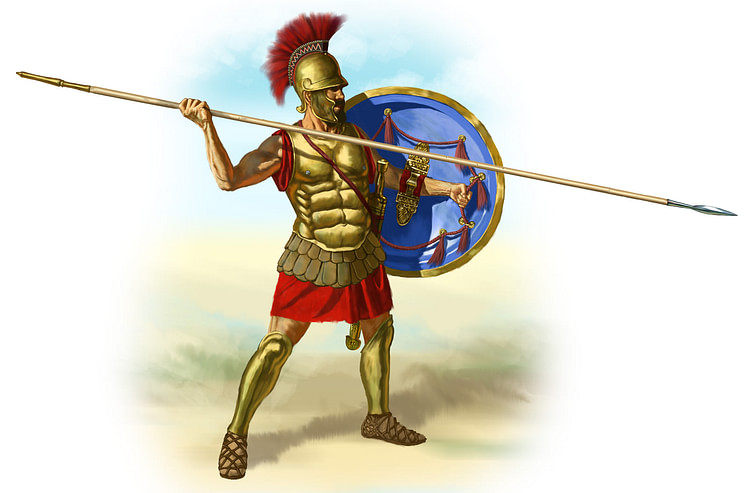
The Greeks were actually quite brilliant in their choice of warfare style. They had an entire group of infantry, the hoplite, who were the core of the armies. The hoplite gained its name from a word for armor, hoplon, which is often used to describe the soldier's most obvious piece of armor: the shield. Now, as I'd mentioned in previous posting, the shield is what this all focuses on. If you've seen 300 (which I have numerous mixed feelings regarding), and recall Ephialtes's attempt to join the Spartans, you may see their logic. The core of the fight for the Greeks was the shield wall. If a soldier could not bear a shield properly, there was a weak point in the wall, and a breakthrough may be exploited.
Essentially, the phalanx with its shields was a mobile fortress. When their men would go off to war, the wives and mothers of Spartans would tell them "With it or on it." (Ἢ τὰν ἢ ἐπὶ τᾶς, pronounced "ae taan ae epi taas") Fighting without a shield was impossible. Retreating and discarding your shield was unthinkable, and the hight of cowardice.
The individual hoplite did have armor. Breastplate and helmet were frequent, with arm and leg armor being occasional, from what I can gather. These were expensive pieces of kit, and often passed down from father to son. Leather or linen were cheaper, and used by poorer soldiers, who functioned as skirmishers and scouts. But at the end of the day, the shield was the chief defense.
The Greeks preferred spears as the main weapon. The doru spear was over eight feet long, allowing them to reach an incoming enemy long before the charge reached the shield wall. Later Alexander's army would use the sarissa, which was over 14 feet long. However, unlike the sarissa, the doru wasn't just an emplacement pole arm. It was used one handed and thrusted. But St. Paul doesn't mention a spear, and we'll look at why I think he didn't later.
The end result of the nearly 3000 year history of the Greeks was a military style that would be immensely successful until being adopted, adapted, and superseded by the Romans. And that is for next time.
But before I get into that, let's review the text first:
Finally, be strong in the Lord and in the strength of his might. Put on the whole armor of God, that you may be able to stand against the schemes of the devil. For we do not wrestle against flesh and blood, but against the rulers, against the authorities, against the cosmic powers over this present darkness, against the spiritual forces of evil in the heavenly places. Therefore take up the whole armor of God, that you may be able to withstand in the evil day, and having done all, to stand firm. Stand therefore, having fastened on the belt of truth, and having put on the breastplate of righteousness, and, as shoes for your feet, having put on the readiness given by the gospel of peace. In all circumstances take up the shield of faith, with which you can extinguish all the flaming darts of the evil one; and take the helmet of salvation, and the sword of the Spirit, which is the word of God, praying at all times in the Spirit, with all prayer and supplication. To that end keep alert with all perseverance, making supplication for all the saints, and also for me, that words may be given to me in opening my mouth boldly to proclaim the mystery of the gospel, for which I am an ambassador in chains, that I may declare it boldly, as I ought to speak. Eph 6:10-20 (ESV)Now, on to the historic reality that we as 21st century westerners seem to have trouble picturing. (Admit it, when you read this passage you picture something more like King Arthur than Hercules. That's okay, because that's more the direction I'll be taking this later.)
We'll look at the Greeks first, since, well, they were first in the Greco-Roman style. I'll try to be brief, but this is covering something like 2000-3000 years of battles, tactics, and military technology. But, then again, some things never change. Like the phalanx.
(The phalanx, as performed by the popular "big band era" group "Leonidas King and the Thermopylae 300.")
Before I look at the armor, I'll look at the warfare style, since that is what drove the development of shields, weapons, and other tech. Regardless of era, that is the norm. The need drive the next invention, not the other way around.
Now I'm going to try to run a primer on the Greeks, their culture, and their history, at least up to the rise of Caesar Augustus and specifically focusing on the more martial side. That's a lot of culture, and history, and warfare, some of which the average American is familiar with (thanks to Disney for making "Hercules") while some is quite obscure. But be patient. Remember that I am trying to provide background so we better understand the metaphor in its context (The 1st, 2nd, 3rd rule of Biblical Exegesis).
An added bonus to this endeavor is that we will get a better understanding of the world that Christ was born into. While the Greeks were no longer the great power in the 1st century, their culture and history was a massive foundation. So, putting in the grunt work here will be well rewarded later down the line.
But before we can to the rippling pectorals of a number of larger than life characters, we've got to find a starting point. (Kit Kat points and a Fanta to whomever "lol" at that joke.) That means a little time travel to the the 26th century BC.
I'm starting at the Minoan civilization, then through the Mycenaeans, the Dark Ages, Archaic period, the Classical era, and the Hellenistic period. Its a lot of ground to cover, especially if I dig into the empire of Alexander and the follow-up kingdoms. Don't worry, the Roman empire will make Greece look more comprehendible. Or at least less soap opera. If you wish, you can skip/scan the next few indented paragraphs. It helps better understand the context, but isn't needed for the armor metaphor.
Now, technically I can argue that the Minoans are not Greek, since they are on Crete and not Greece proper. But the cultures that would grow into Greece started there, and they were among the first organized civilizations in Europe.
Now, if you know your mythology, you'll be familiar with the legend of the minotaur and the labyrinth. They are from Crete. The eruption at Thera (modern day Santorini) was a major contributing factor of the collapse of the Minoans. This made conquest by the Mycenaeans the definitive. The Minoans are pretty interesting, but a decent amount of their culture is unknown, due to the fact that the Minoan language, along with their alphabets Linear A and Linear B, isn't deciphered.
The Mycenaeans era took place in during the Bronze Age. While parts of their culture will be familiar to people familiar with Greek history or mythology, it won't be too familiar. The classic "city-state" we think of when thinking of Greece didn't exist quite yet. There is not a satisfactory explanation for why the Mycenaeans collapsed. Regardless, the "Dark Ages" followed.
The Greek Dark Ages were a two-three hundred year period before the ancient Greece we know. Major stone buildings were not constructed. The use of Linear B ceased. The economy crashed as trade routes were forgotten. Towns were abandoned and the population decreased. This was a more true dark age than the one in Europe following the collapse of Rome (which we will get to some day). We just don't know much outside of what is found at burial sites. But the Archaic period, as part of the Iron Age, changed all that.
The Archaic period saw the rise of the city-state (the polis), the Peloponnesian and Delian leagues, the rise of cities like Sparta and Athens, and the rise of tyrannical rule. I'd like to note that the classic Athens, seen as the origin and home of democracy, was most frequently ruled by either mob democracy or by a tyrant. Now a tyrant isn't necessarily a bad thing, but absolute power is a dangerous thing. But in this era trade began again, as did colonization. Thanks to the Phoenicians the Greeks developed a new alphabet. And literature grew; this is the era of Homer.
The Classic era followed, and it had, and still has, a heavy influence on history, society, and government. Its a short period, but a lively one, culminating in Alexander the Great. The battle of Thermopylae happened in this era. The ideals of democracy, and of numerous philosophies, got their root here. For the purpose of our discussion, it is in this era that we'll end up focusing, since this is when the shift in tactics occurred most drastically.
It was in this era that the preeminence of Sparta ended, with the rise of Athens. I suspect this is why Athens is seen as the pinnacle of ancient Greek history: they wrote their own propaganda. Since much of our knowledge of the previous eras originates out of the Classic era, their assumptions and biases gave the accounts a certain perspective. Athens was also the center of political and philosophical thought. Aristotle, Plato, and Socrates were at large in this time period, as were the writers Euripides and Sophocles, and the historians Herodotus and Xenophon. The world was turning more toward the complex and intellectual pursuits, instead of simple subsistence and contentment (which were among Sparta's ideals). An article of consideration for this thought can be found on the Art of Manliness website: Courage vs. Boldness.
Regardless of your opinions, it is impossible to deny the effect this era has. Aristotle is still taught in philosophy classes. And for good reason, whether he was right or not. That is how education should work: building on already existent foundation. But for the Christian, this era is most especially noteworthy since a number of the philosophies that the Early Church encountered got their start or inspiration here. Thinks like the Stoics, Cynics, and Epicureans (though they would not truly start until the Hellenistic era), and the Gnostics.
The era saw the rise of Athens, their defeat by the Spartans, their collapse, then the entrance of the armies of Philip of Macedonia. It was a complicated era, setting up an even more complicated period.
Rounding out our romp through history is the Hellenistic period. The boom of philosophy, art, science, literature, and politics continued. The theologian in me is quite interested in this period, one for the Seleucids, and two for the development of Koine Greek. While the Hellenistic period politically ended with the Roman's conquest of the region, but the cultural period continued into the reign of Constantine.So, lets backtrack to the Classic period, and warfare in particular. Before this, most armies were used as large mobs, charging straight at enemies, and that side that went "stabbity-stab-stab" best won. Sometimes this tactic is also known as a Zerg Rush, and it results in lots of KIA.
Well, the Greeks, still recovering from the Dark Ages nearly five hundred years before, didn't have the numbers to fight this way. Especially with the Persians breathing down their necks. Now the wars with the Persians were more than just land battles, and the techniques and tactics used developed earlier during wars between the city-states, but we're distilling this down to the base essentials. Especially as the world moved from bronze to iron.
The development of iron was a technological leap similar to the move from single-shot muzzle loaders to breach-loading magazine fed rifles. A game changer. There are stories of iron swords cleaving through bronze ones, and I've seen video to support this, to a degree. Worse, what the sharper, stronger iron weapons did to the lightly armored warriors of the late Bronze Age. Leather armor, if thick enough, could stop a blow from a bronze sword. But not against iron. Especially as the weapons moved from being short curved blades to longer straighter swords. But even before this, the use of bronze had trumped other metals, like copper, for weapons. Technology and technique for countering these arms was needed.
Shields and phalanx: the Hoplite.
The Greeks were actually quite brilliant in their choice of warfare style. They had an entire group of infantry, the hoplite, who were the core of the armies. The hoplite gained its name from a word for armor, hoplon, which is often used to describe the soldier's most obvious piece of armor: the shield. Now, as I'd mentioned in previous posting, the shield is what this all focuses on. If you've seen 300 (which I have numerous mixed feelings regarding), and recall Ephialtes's attempt to join the Spartans, you may see their logic. The core of the fight for the Greeks was the shield wall. If a soldier could not bear a shield properly, there was a weak point in the wall, and a breakthrough may be exploited.
Essentially, the phalanx with its shields was a mobile fortress. When their men would go off to war, the wives and mothers of Spartans would tell them "With it or on it." (Ἢ τὰν ἢ ἐπὶ τᾶς, pronounced "ae taan ae epi taas") Fighting without a shield was impossible. Retreating and discarding your shield was unthinkable, and the hight of cowardice.
The individual hoplite did have armor. Breastplate and helmet were frequent, with arm and leg armor being occasional, from what I can gather. These were expensive pieces of kit, and often passed down from father to son. Leather or linen were cheaper, and used by poorer soldiers, who functioned as skirmishers and scouts. But at the end of the day, the shield was the chief defense.
The Greeks preferred spears as the main weapon. The doru spear was over eight feet long, allowing them to reach an incoming enemy long before the charge reached the shield wall. Later Alexander's army would use the sarissa, which was over 14 feet long. However, unlike the sarissa, the doru wasn't just an emplacement pole arm. It was used one handed and thrusted. But St. Paul doesn't mention a spear, and we'll look at why I think he didn't later.
The end result of the nearly 3000 year history of the Greeks was a military style that would be immensely successful until being adopted, adapted, and superseded by the Romans. And that is for next time.
Friday, October 27, 2017
Heresy Reporting Names Master List
Taking up the Sword is a dangerous task. The art requires a studious mind, and a willingness to accept the proper authority. When people have tried to "use their own ideas" to interpret Scripture things have gone wrong.
That is how heresies are born.
The early Church dealt with a lot of heresies. A teacher could simply show up, claim to have some sort of knowledge about the Bible that brought him to the understanding that, for example, God is really a eight foot tall purple giraffe. Other teachers, though, would check Scripture and call this false teacher out. Everyone realized pretty quickly that there needed to be a universal answer, so councils would form to deal with hot-button issues. These ecumenical councils are key in the formation of the Christian Church in the first thousand years.
Now, not all things called heretical are heresy, and not everything accepted as Christian is sound Scripturally. So, lets first define a heresy.
Thomas Aquinas defined a heresy "as a species of infidelity in men who, having professed the faith of Christ, corrupt its dogmas." (Now, I'm not always in agreement with Aquinas, but he was a doctor of the church, and this definition is a solid one.)
To be more modern in our understanding, a heresy is a teaching that looks Christian on the outside but has none of the foundation. One of the most well known is Arianism, which taught that Jesus wasn't divine but a creation of God the Father. It's the poster child of heresies mostly due to the Nicene and Athenasian Creeds, which means almost every Christian has heard it or its teachings refuted.
The frustrating part of heresies today is the Protestant Reformation. Now, protestantism is listed as a heresy by the Roman Catholic Church, and condemned at the Council of Trent (1545-1563). While heresies are to be condemned at ecumenical councils, the meeting at Trent was not ecumenical, that is, the whole church. It was only the RCC calling out opposition, some of whom were merely schismatic not heretical. Some "reformers" did adopt heretical views (and we will, in time, be taking pot shots at them), but some did truly want to discuss issues that were leading people astray. Ironically, this means sections of the Roman Church may be labeled "heretical," though heterodox (doctrines that are non-conformal to official teachings) may be more accurate.
My intent is to call out the ones that are prevalent today, kind of a "target recognition" list. Below is a list of heresies condemned as of the Council of Chalcedon in 1054, with notes about their beliefs.
First are the Trinitarian heresies. All of these deny the Trinity, but often in specific ways.
Adoptionism
- Belief that Jesus was born a mere human, later adopted as "Son of God" at baptism
- Denied Christ is fully God
Apollinarism
- Jesus had a human body, and a "lower soul" (seat of emotions), but a divine mind
- Denied the divinity of Christ
- Denied the Two Natures of Christ
Arabici
- Belief that the soul perishes with the body at death
Arianism
- Belief that Jesus was created by God
- Denied the divinity of Christ
Docetism
- Belief that Jesus didn't have a physical body, but that His body and death on the cross were illusions
- Denied the humanity of Christ
Macedonians / Pneumatomachians
- Belief that the Holy Spirit is a creation, and servant, of God the Father and God the Son
- Denied the Holy Spirit is God
Melchisedechians
- Belief that priest Mechisedech is incarnation of "logos" (divine word) and the Holy Spirit
- Denied the Holy Spirit is God
- Denied Christ is the Word of God
Monarchianism
- Overemphasis on "invisibility" of God
- Leads to Adoptionism or Modalism (Sabelianism)
Monophysitism / Eutychianism
- Belief that Jesus's divine nature overwhelms His human one
- Denied the humanity of Christ
- Denied the Two Natures of Christ
Monothelitism
- Belief that Christ has two natures, but one will
- Denied the humanity of Christ
- Denied the divinity of Christ
- Denied the Two Natures of Christ
Nestorianism
- Belief that Christ was a natural union between Word and Flesh, not the divine Son of God
- Denied the divinity of Christ
Patripassiansim
- Belief that Father and Son are not distinct persons, and that both suffered on the cross
- Denied the individuality of the Trinity
Psilanthropism
- Belief that Jesus was never divine
- Denied the divinity of Christ
Sabelianism (more commonly called Modalism)
- Belief that the Father, the Son, and the Holy Spirit are aspects of God, not distinct persons
- Denied the unity of the Trinity
- Denied the individuality of the Trinity
Next up are the Gnostic heresies.
Gnosticism, and its heresies, are a sticky wicket at times. The various philosophies that lead to and contribute to gnosticism predate Christ's death. There are many variations of gnosticism. The most commonly held belief is the teaching that humans are divine souls trapped in a material world created by an imperfect god. The gnostics taught that a "secret knowledge" was needed to transcend this imprisonment. A lot of philosophies, Buddhism being most obvious, teach this. In some ways, gnosticism is synonymous with mysticism, but not universally, especially since neither are so easy to nail down. To make matters worse, when a theologian speaks of gnosticism, usually he speaks of the Christian sects and cults that are heretical, not the other ideas that could be called gnostic. This just adds to the confusion brought about by false teachers like Bart Erhman. Guys like him believe, quite wrongly, that the "gnostic gospels" are older and more accurate than the New Testament. The sensational nature of such "research," coupled with books like "The da Vinci Code," have made gnosticism quite popular to consider as an "explanation" for Christianity. I will have to deal further with Erhman and others at a different time, since refuting them is easy but somewhat lengthy. Right now, lets just list the gnostic heresies.
Manichaeism
- Belief that good and evil are equally powerful, with evil being the material world
- Denied the Creation account
- Denies the humanity of Christ
Paulicianism, Priscillianism, Naassenes, Valentianism
- Dualistic gnostic sects
Sethian
- Belief that the serpent in the Garden of Eden was an agent of the true god to bring knowledge
- Denied Original Sin
- Denied the Fall
Ophites
- Belief that the serpent was the hero and god the villain
- Denied Original Sin
- Denied the Fall
Finally there are other early heresies that don't quite fit into these two categories. The ones that have stuck around today most frequently are one of these. They include:
Antinomianism
- Belief that Christians are free from the moral law
- Denied Original Sin
Audianism
- Belief that God literally has a human form, and Jesus death to be celebrated during Passover
Barallot
- Held all things, including wive and children, in common
Circumcellians
- Militant version of Donatists, who would attack people to provoke being "martyred"
Donatism* (may be a schism, not heresy)
- Taught that ministers had to be faultless so as to have the sacraments administered by them to be valid (initially as a reaction to those who betrayed the faith in the face of Roman persecution)
Ebionites
- Belief that Christians must follow Jewish laws and rites, and that Christ is not divine
- Denied the divinity of Christ
Euchites / Messalians
- Belief, among other things, that a state of perfection is achievable through prayer not sacrament
Iconoclasm
- Belief that icons were idols and should be destroyed
Marcionism
- Belief that Jesus was God and Paul the chief apostle, but the Hebrew God was separate and lower
- Denied the Trinity
- Somewhat overlapping with Gnosticism
Montanism
- Belief that new prophecy overrode apostles, that falling Christians could not be redeemed, that ecstatic prophecy was required
Pelagianism
- Belief that humanity wasn't tainted by original sin, and the human will can choose good or evil
- Denial of Original Sin
Semi-pelagianism
- Belief that the growing of faith was by God's grace while beginning of faith was man's will
- May be synonymous with Arminianism
- Denial of Original Sin
Of all of these, some are more prevalent than others. Iconoclasm was a big issue in the Middle Ages, and at times is today (thanks to John Calvin). Pelagianism and Semi-Pelagianism are rampant, as is Arianism, Modalism, and Antinomianism. A number of teachers may have incorporated Gnostic teachings as well, and the ideas of the Ebionites are very popular with the "Hebrew Roots" movement, if I'm understanding that kerfuffle correctly.
Now, I know the title says this is a "master list," but to be honest its not. There are more, and I'll probably have to amend it as I encounter. But that's not the point. The goal here is to write up little reports on what various heresies are and how to recognize them. Much like how fighter pilots are trained to recognize different aircraft and know how best to deal with them.
So that will be the next task: detailing a specific heresy and how it occurs today, as well as documenting the countermoves.
That is how heresies are born.
The early Church dealt with a lot of heresies. A teacher could simply show up, claim to have some sort of knowledge about the Bible that brought him to the understanding that, for example, God is really a eight foot tall purple giraffe. Other teachers, though, would check Scripture and call this false teacher out. Everyone realized pretty quickly that there needed to be a universal answer, so councils would form to deal with hot-button issues. These ecumenical councils are key in the formation of the Christian Church in the first thousand years.
Now, not all things called heretical are heresy, and not everything accepted as Christian is sound Scripturally. So, lets first define a heresy.
Thomas Aquinas defined a heresy "as a species of infidelity in men who, having professed the faith of Christ, corrupt its dogmas." (Now, I'm not always in agreement with Aquinas, but he was a doctor of the church, and this definition is a solid one.)
To be more modern in our understanding, a heresy is a teaching that looks Christian on the outside but has none of the foundation. One of the most well known is Arianism, which taught that Jesus wasn't divine but a creation of God the Father. It's the poster child of heresies mostly due to the Nicene and Athenasian Creeds, which means almost every Christian has heard it or its teachings refuted.
The frustrating part of heresies today is the Protestant Reformation. Now, protestantism is listed as a heresy by the Roman Catholic Church, and condemned at the Council of Trent (1545-1563). While heresies are to be condemned at ecumenical councils, the meeting at Trent was not ecumenical, that is, the whole church. It was only the RCC calling out opposition, some of whom were merely schismatic not heretical. Some "reformers" did adopt heretical views (and we will, in time, be taking pot shots at them), but some did truly want to discuss issues that were leading people astray. Ironically, this means sections of the Roman Church may be labeled "heretical," though heterodox (doctrines that are non-conformal to official teachings) may be more accurate.
My intent is to call out the ones that are prevalent today, kind of a "target recognition" list. Below is a list of heresies condemned as of the Council of Chalcedon in 1054, with notes about their beliefs.
First are the Trinitarian heresies. All of these deny the Trinity, but often in specific ways.
Adoptionism
- Belief that Jesus was born a mere human, later adopted as "Son of God" at baptism
- Denied Christ is fully God
Apollinarism
- Jesus had a human body, and a "lower soul" (seat of emotions), but a divine mind
- Denied the divinity of Christ
- Denied the Two Natures of Christ
Arabici
- Belief that the soul perishes with the body at death
Arianism
- Belief that Jesus was created by God
- Denied the divinity of Christ
Docetism
- Belief that Jesus didn't have a physical body, but that His body and death on the cross were illusions
- Denied the humanity of Christ
Macedonians / Pneumatomachians
- Belief that the Holy Spirit is a creation, and servant, of God the Father and God the Son
- Denied the Holy Spirit is God
Melchisedechians
- Belief that priest Mechisedech is incarnation of "logos" (divine word) and the Holy Spirit
- Denied the Holy Spirit is God
- Denied Christ is the Word of God
Monarchianism
- Overemphasis on "invisibility" of God
- Leads to Adoptionism or Modalism (Sabelianism)
Monophysitism / Eutychianism
- Belief that Jesus's divine nature overwhelms His human one
- Denied the humanity of Christ
- Denied the Two Natures of Christ
Monothelitism
- Belief that Christ has two natures, but one will
- Denied the humanity of Christ
- Denied the divinity of Christ
- Denied the Two Natures of Christ
Nestorianism
- Belief that Christ was a natural union between Word and Flesh, not the divine Son of God
- Denied the divinity of Christ
Patripassiansim
- Belief that Father and Son are not distinct persons, and that both suffered on the cross
- Denied the individuality of the Trinity
Psilanthropism
- Belief that Jesus was never divine
- Denied the divinity of Christ
Sabelianism (more commonly called Modalism)
- Belief that the Father, the Son, and the Holy Spirit are aspects of God, not distinct persons
- Denied the unity of the Trinity
- Denied the individuality of the Trinity
Next up are the Gnostic heresies.
Gnosticism, and its heresies, are a sticky wicket at times. The various philosophies that lead to and contribute to gnosticism predate Christ's death. There are many variations of gnosticism. The most commonly held belief is the teaching that humans are divine souls trapped in a material world created by an imperfect god. The gnostics taught that a "secret knowledge" was needed to transcend this imprisonment. A lot of philosophies, Buddhism being most obvious, teach this. In some ways, gnosticism is synonymous with mysticism, but not universally, especially since neither are so easy to nail down. To make matters worse, when a theologian speaks of gnosticism, usually he speaks of the Christian sects and cults that are heretical, not the other ideas that could be called gnostic. This just adds to the confusion brought about by false teachers like Bart Erhman. Guys like him believe, quite wrongly, that the "gnostic gospels" are older and more accurate than the New Testament. The sensational nature of such "research," coupled with books like "The da Vinci Code," have made gnosticism quite popular to consider as an "explanation" for Christianity. I will have to deal further with Erhman and others at a different time, since refuting them is easy but somewhat lengthy. Right now, lets just list the gnostic heresies.
Manichaeism
- Belief that good and evil are equally powerful, with evil being the material world
- Denied the Creation account
- Denies the humanity of Christ
Paulicianism, Priscillianism, Naassenes, Valentianism
- Dualistic gnostic sects
Sethian
- Belief that the serpent in the Garden of Eden was an agent of the true god to bring knowledge
- Denied Original Sin
- Denied the Fall
Ophites
- Belief that the serpent was the hero and god the villain
- Denied Original Sin
- Denied the Fall
Finally there are other early heresies that don't quite fit into these two categories. The ones that have stuck around today most frequently are one of these. They include:
Antinomianism
- Belief that Christians are free from the moral law
- Denied Original Sin
Audianism
- Belief that God literally has a human form, and Jesus death to be celebrated during Passover
Barallot
- Held all things, including wive and children, in common
Circumcellians
- Militant version of Donatists, who would attack people to provoke being "martyred"
Donatism* (may be a schism, not heresy)
- Taught that ministers had to be faultless so as to have the sacraments administered by them to be valid (initially as a reaction to those who betrayed the faith in the face of Roman persecution)
Ebionites
- Belief that Christians must follow Jewish laws and rites, and that Christ is not divine
- Denied the divinity of Christ
Euchites / Messalians
- Belief, among other things, that a state of perfection is achievable through prayer not sacrament
Iconoclasm
- Belief that icons were idols and should be destroyed
Marcionism
- Belief that Jesus was God and Paul the chief apostle, but the Hebrew God was separate and lower
- Denied the Trinity
- Somewhat overlapping with Gnosticism
Montanism
- Belief that new prophecy overrode apostles, that falling Christians could not be redeemed, that ecstatic prophecy was required
Pelagianism
- Belief that humanity wasn't tainted by original sin, and the human will can choose good or evil
- Denial of Original Sin
Semi-pelagianism
- Belief that the growing of faith was by God's grace while beginning of faith was man's will
- May be synonymous with Arminianism
- Denial of Original Sin
Of all of these, some are more prevalent than others. Iconoclasm was a big issue in the Middle Ages, and at times is today (thanks to John Calvin). Pelagianism and Semi-Pelagianism are rampant, as is Arianism, Modalism, and Antinomianism. A number of teachers may have incorporated Gnostic teachings as well, and the ideas of the Ebionites are very popular with the "Hebrew Roots" movement, if I'm understanding that kerfuffle correctly.
Now, I know the title says this is a "master list," but to be honest its not. There are more, and I'll probably have to amend it as I encounter. But that's not the point. The goal here is to write up little reports on what various heresies are and how to recognize them. Much like how fighter pilots are trained to recognize different aircraft and know how best to deal with them.
So that will be the next task: detailing a specific heresy and how it occurs today, as well as documenting the countermoves.
Wednesday, October 25, 2017
Step Into The Forge And Suit (Of Armor) Up! (or) Ready To Raid An Archive, Young Hoplite?
Its time.
For a while now I've been thinking about some sort of "fight book" about apologetics, the Armor of God, and such. But, I'll start with some primer work, and a sort of "test run" as I fiddle with ideas.
First, the text:
Remember the three rules of Biblical exegesis: Context; Context; Context.
So, how about some context. Since the vast majority of us live in the modern world, suits of armor haven't existed for the better part of half a millennia. Even the concept of a knight doesn't really exist anymore. Except it does. And armor does.
But, then again, the knight in shining armor isn't what Paul meant, since the concept as we think of it didn't exist yet for him.
So lets tip toe through the archives. Up for it?
Who am I kidding, of course you are! Bear with me, since we'll be having to start with some straight-up history. (Yay!)
Armor has been used in warfare since someone figured out "if I wear this stuff, then those guys can't go stabbity stab stab on me." It started with things like plates riveted or tied to cloaks, links of mail, treated leather, and even thick cloth. The Greeks were among the earliest to start using metal as armor, at least in the West, so we'll start there.

The "average citizen" Greek soldier didn't have armor, just shield, maybe helmet, and weapons. A lot of times these guys didn't stand in the phalanx, though. The hoplites were the phalanx, and they had armor. The armor (Greek word is panoply) of a hoplite weighed about 70 pounds. The richest (middle class on up, that is) could afford bronze breastplates, though leather or linthorax (linen strip based, kinda like kevlar) was common. Corinthian and Chalcidian helmet styles were the stereotype. But we'll get to the Greeks in greater detail later (maybe, depending on how far I take this).
Lets move on to the guys who one-upped the Greeks.

The soldiers of Rome had a very sophisticated kit. Heavily influenced by the Greeks, and by the army of Alexander the Great. The Legions were the logical conclusion of a few millennia of city-state conflicts and near East imperial wars.
The Romans, at various times, used plate armor, segmented armor (lorica segmentata, the stereotype), scale armor, and mail. Each had advantages, and disadvantages; were better for one type of combat or another; were easier to make or less expensive.
But it wasn't just the armor they wore, the legionnaire had substantial equipment and weapons. Their shields were what made the phalanx a force to be reckoned with. The weapons as well. Spears for throwing, or for use in the line. Short swords were the back-up weapon. Think like how the average modern soldier carries a rifle (the hasta) and a sidearm (the spatha). But, like the Greeks, we'll dig more into the Romans later, since they, and the Greeks, inspired the metaphor.
Moving onward in time, the Middle Ages, while rife with many types of warrior, was the era of armor warfare.
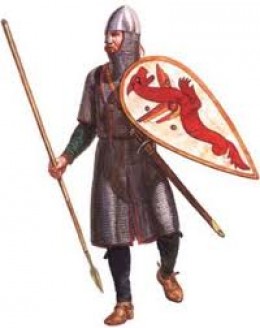


Archers, pike-men, skirmishers, knights, templars, paladins, crusaders, jaegers, vikings. If they could make a cameo in a Tolkien style work, they are here. Warfare made substantial changes from the 5th century through the Renaissance.
Armor and weapons became more sophisticated, and costly. Training was a necessity for all soldiers, not just the elite upperclass. Conflicts grew from a couple of feudal lords arguing to full on nation verses nation. If you want, there are plenty of resources on that era, but British presenter and historian Mike Loades has some of the best on the Medieval period, I think. Check out some of his work here, here, and here.
When we hear "Armor of God," we think of either the crusader or the "knight classic."

It makes sense to use this as the "jumping off" point for, not only St. Paul's metaphor, but my tangents on it. Especially since I'm hoping to stylize it like a Medieval manual on melee and martial matters. And I will, in time, once I set us up correctly. But bear with me a little bit longer, since to be able to backtrack to the proper "headspace," we need to examine the full history.
The introduction of firearms sparked the decline of armor. But what really spelled the end of the classic era was national identity. If the people were loyal to a nation, not a local lord or state, then they could build a larger power base than just a few dozen square miles. Soon conflicts between kingdoms, nations, and empire were the norm. Wars that lasted for a few years, and had fighting for most of that time.
For example, the Hundred Years War lasted just over 103 years, yet the total time of direct army-verses-army conflict was about three months. Sure there were raids and skirmishes here and there, but the times when full-fledged armies lined up to do battle were rare. That was the norm until the late Middle Ages. At that point you have kingdoms and empires, like France and England, seeking greater influence than just their little corner. The Age of Discover kicked off a paradigm shift.
This was across the board a good thing, don't get me wrong, but with tech advancing rapidly, new warfare styles arose. The musket replaced the spear and bow. The rapier replaced the longsword and shield, before the sword was dropped altogether. It was less expensive, and more effective, to train a platoon of musketeers than equip and train a half-dozen knights. Dragoons, uhlans, and hussars were better cavalrymen for this new warfare than knights, anyway. Ships became actual weapons of war. Cannon beat the trebuchet. Mobile formation warfare was the tactic of choice from around the 15th century through the American Civil War in the late 19th century.
With the new emphasis in mobility and speed, armor was dropped. Slowly at first. Pieces dropped to aid in gaining speed or mobility. Shields became smaller. Helmets cut to give more visibility. Soon the only armor seen was the curriass and helmets. This combination never went away fully, though the vast majority of armor worn by soldiers from about 1700 through 1990 was just the helmet.
Specialized armor was available for certain situations. Flak jackets for bomber gunners. Padded suits for bomb-disposal techs. Heavy cavalry still wore the breastplates through 1919. And now personal armor is making a comeback, though protection from shrapnel is the main goal, and advanced cloths and plastics are the materials.
But the replacements for the soldier that started as the hoplite, became the legionnaire, then morphed into the knight are the fighter plane and the tank. Neither of which work in this metaphor, though, neither does the modern soldier.
Why? Too much kit.
You see, the soldier that St. Paul described wasn't a "heavy infantryman," but a "skirmisher." A scout. A messenger. Someone tasked with running from the battlefield to proclaim "we have won." (Passing out and dying after sprinting 26.1 miles in full armor optional.)
I'll explain more of what I mean once I dissect the Greco-Roman style of soldier.
Hopefully I'll get other aspects of this ironed out. For example, I've been playing around with a "recognition card" for heresies, like how AA gunners would have "spotter cards" with aircraft silhouettes. But, this is all a long term project, and likely to be disjointed and revisionist as I move onward and learn more. Same with the whole armor motif I'm playing with. Maybe I'll stick traditionally, or go back in time to the Greco-Roman version, or something completely different. Whatever the case, hopefully you enjoy my efforts (even if I'm just flailing about in the dark) and learn something useful.
For a while now I've been thinking about some sort of "fight book" about apologetics, the Armor of God, and such. But, I'll start with some primer work, and a sort of "test run" as I fiddle with ideas.
First, the text:
Finally, be strong in the Lord and in the strength of his might. Put on the whole armor of God, that you may be able to stand against the schemes of the devil. For we do not wrestle against flesh and blood, but against the rulers, against the authorities, against the cosmic powers over this present darkness, against the spiritual forces of evil in the heavenly places. Therefore take up the whole armor of God, that you may be able to withstand in the evil day, and having done all, to stand firm. Stand therefore, having fastened on the belt of truth, and having put on the breastplate of righteousness, and, as shoes for your feet, having put on the readiness given by the gospel of peace. In all circumstances take up the shield of faith, with which you can extinguish all the flaming darts of the evil one; and take the helmet of salvation, and the sword of the Spirit, which is the word of God, praying at all times in the Spirit, with all prayer and supplication. To that end keep alert with all perseverance, making supplication for all the saints, and also for me, that words may be given to me in opening my mouth boldly to proclaim the mystery of the gospel, for which I am an ambassador in chains, that I may declare it boldly, as I ought to speak. Eph 6:10-20 (ESV)While I trip through all of this I will be using St. Paul's metaphor as a springboard. As always, what you read here is for consideration. It's not "thus saith the Lord." Rather, "thus saith Adam."
Remember the three rules of Biblical exegesis: Context; Context; Context.
So, how about some context. Since the vast majority of us live in the modern world, suits of armor haven't existed for the better part of half a millennia. Even the concept of a knight doesn't really exist anymore. Except it does. And armor does.
But, then again, the knight in shining armor isn't what Paul meant, since the concept as we think of it didn't exist yet for him.
So lets tip toe through the archives. Up for it?
Who am I kidding, of course you are! Bear with me, since we'll be having to start with some straight-up history. (Yay!)
Armor has been used in warfare since someone figured out "if I wear this stuff, then those guys can't go stabbity stab stab on me." It started with things like plates riveted or tied to cloaks, links of mail, treated leather, and even thick cloth. The Greeks were among the earliest to start using metal as armor, at least in the West, so we'll start there.
(The Hoplite, in Spartan livery.)
Lets move on to the guys who one-upped the Greeks.

("We. Are. The. Legion.")
The soldiers of Rome had a very sophisticated kit. Heavily influenced by the Greeks, and by the army of Alexander the Great. The Legions were the logical conclusion of a few millennia of city-state conflicts and near East imperial wars.
The Romans, at various times, used plate armor, segmented armor (lorica segmentata, the stereotype), scale armor, and mail. Each had advantages, and disadvantages; were better for one type of combat or another; were easier to make or less expensive.
But it wasn't just the armor they wore, the legionnaire had substantial equipment and weapons. Their shields were what made the phalanx a force to be reckoned with. The weapons as well. Spears for throwing, or for use in the line. Short swords were the back-up weapon. Think like how the average modern soldier carries a rifle (the hasta) and a sidearm (the spatha). But, like the Greeks, we'll dig more into the Romans later, since they, and the Greeks, inspired the metaphor.
Moving onward in time, the Middle Ages, while rife with many types of warrior, was the era of armor warfare.
(The foundational Carolingian or Norman soldier of the 6th-9th century.)
(The classic Crusader of the 11th-13th century. A Hospitaller, most likely.)
(The sophisticated knightly armor of the 14th-15th century. A pinnacle of Medieval technology.)
Archers, pike-men, skirmishers, knights, templars, paladins, crusaders, jaegers, vikings. If they could make a cameo in a Tolkien style work, they are here. Warfare made substantial changes from the 5th century through the Renaissance.
Armor and weapons became more sophisticated, and costly. Training was a necessity for all soldiers, not just the elite upperclass. Conflicts grew from a couple of feudal lords arguing to full on nation verses nation. If you want, there are plenty of resources on that era, but British presenter and historian Mike Loades has some of the best on the Medieval period, I think. Check out some of his work here, here, and here.
When we hear "Armor of God," we think of either the crusader or the "knight classic."
(Ah, how I love the classics...)
It makes sense to use this as the "jumping off" point for, not only St. Paul's metaphor, but my tangents on it. Especially since I'm hoping to stylize it like a Medieval manual on melee and martial matters. And I will, in time, once I set us up correctly. But bear with me a little bit longer, since to be able to backtrack to the proper "headspace," we need to examine the full history.
The introduction of firearms sparked the decline of armor. But what really spelled the end of the classic era was national identity. If the people were loyal to a nation, not a local lord or state, then they could build a larger power base than just a few dozen square miles. Soon conflicts between kingdoms, nations, and empire were the norm. Wars that lasted for a few years, and had fighting for most of that time.
For example, the Hundred Years War lasted just over 103 years, yet the total time of direct army-verses-army conflict was about three months. Sure there were raids and skirmishes here and there, but the times when full-fledged armies lined up to do battle were rare. That was the norm until the late Middle Ages. At that point you have kingdoms and empires, like France and England, seeking greater influence than just their little corner. The Age of Discover kicked off a paradigm shift.
This was across the board a good thing, don't get me wrong, but with tech advancing rapidly, new warfare styles arose. The musket replaced the spear and bow. The rapier replaced the longsword and shield, before the sword was dropped altogether. It was less expensive, and more effective, to train a platoon of musketeers than equip and train a half-dozen knights. Dragoons, uhlans, and hussars were better cavalrymen for this new warfare than knights, anyway. Ships became actual weapons of war. Cannon beat the trebuchet. Mobile formation warfare was the tactic of choice from around the 15th century through the American Civil War in the late 19th century.
With the new emphasis in mobility and speed, armor was dropped. Slowly at first. Pieces dropped to aid in gaining speed or mobility. Shields became smaller. Helmets cut to give more visibility. Soon the only armor seen was the curriass and helmets. This combination never went away fully, though the vast majority of armor worn by soldiers from about 1700 through 1990 was just the helmet.
Specialized armor was available for certain situations. Flak jackets for bomber gunners. Padded suits for bomb-disposal techs. Heavy cavalry still wore the breastplates through 1919. And now personal armor is making a comeback, though protection from shrapnel is the main goal, and advanced cloths and plastics are the materials.
But the replacements for the soldier that started as the hoplite, became the legionnaire, then morphed into the knight are the fighter plane and the tank. Neither of which work in this metaphor, though, neither does the modern soldier.
Why? Too much kit.
You see, the soldier that St. Paul described wasn't a "heavy infantryman," but a "skirmisher." A scout. A messenger. Someone tasked with running from the battlefield to proclaim "we have won." (Passing out and dying after sprinting 26.1 miles in full armor optional.)
I'll explain more of what I mean once I dissect the Greco-Roman style of soldier.
Hopefully I'll get other aspects of this ironed out. For example, I've been playing around with a "recognition card" for heresies, like how AA gunners would have "spotter cards" with aircraft silhouettes. But, this is all a long term project, and likely to be disjointed and revisionist as I move onward and learn more. Same with the whole armor motif I'm playing with. Maybe I'll stick traditionally, or go back in time to the Greco-Roman version, or something completely different. Whatever the case, hopefully you enjoy my efforts (even if I'm just flailing about in the dark) and learn something useful.
Subscribe to:
Posts (Atom)