Showing posts with label Reformation. Show all posts

Tuesday, October 31, 2017

Nailed It! (or) Still About Jesus

For by grace you have been saved through faith. And this is not your own doing; it is the gift of God, not a result of works, so that no one may boast.
 Ephesians 2:8-9
(emphasis added)


"Here I Stand."
(attributed to Dr. Luther at the Diet of Worms, 1521)

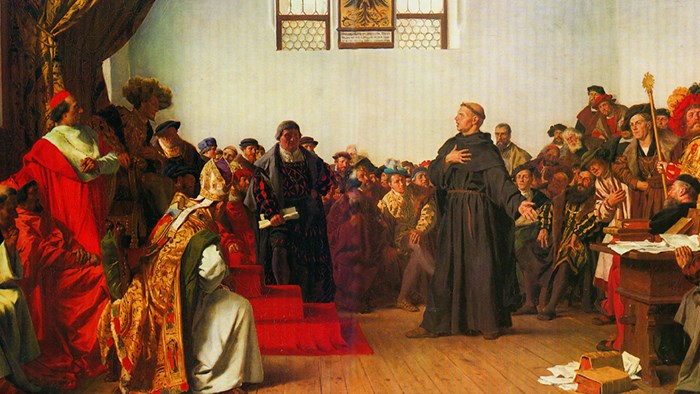
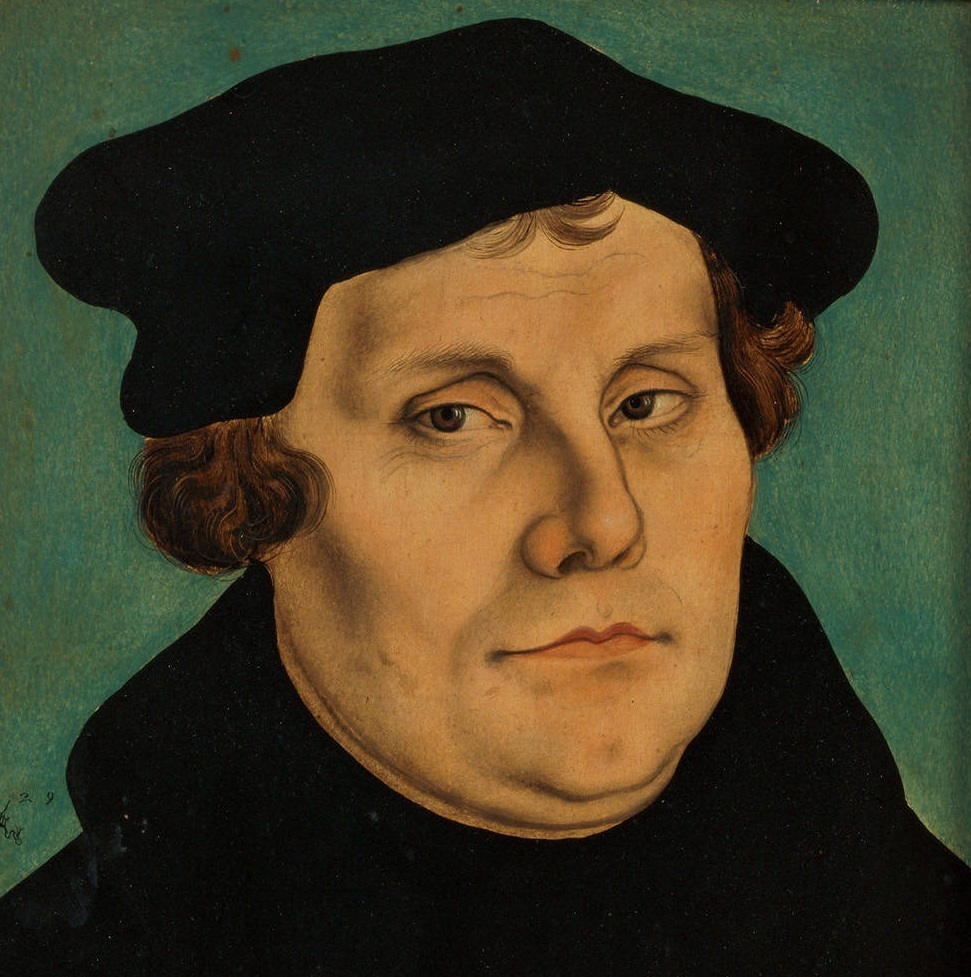
Five hundred years ago, today, an Augustinian monk serving as a professor of theology at an up-and-coming university started a conversation.

That man was Martin Luther.  The conversation was, initially, regarding indulgences and other relatively minor grievances he noted, but soon grew into a struggle to (for lack of a more evocative term at the moment) "fix" the church.

In a way, Luther was getting back to his roots.  His father was in the metalworking industry, specifically the mining of copper.  Martin, though, was a metaphorical blacksmith.  He took the material on hand, which he noted contained some flaws and impurities, and sought to refine them out.  He looked to reform the defiled billet of steal so it could be a sword again.  Luther never intended to throw out and start over, and he and those who followed did no such thing.

The more Luther learned his craft (theology) and the more he examined the Roman church and society in Europe, the more he was compelled to push for this discussion of getting back to the roots.  Ad fontes - to the sources.

From a certain point of view, the issue wasn't that the Church did not exist in 1517, but that it had been hidden by all sorts of unnecessary burden and gilding that drove the believer away from the saving grace of the Cross.  It was as if someone had taken a simple sword and covered the blade with gold plating and gemstones, then painted all that over, then covered it in stucco, then smeared with silly putty.  The implement was no longer useable, or even recognizable.  Luther and the Reformers wanted to clean away all the burdensome additions.  Not all additions were bad (sometimes we call these things adiaphora, though the term is more complex than that).

At the heart of the Reformation, the real Reformation (not the radical revisionism happening in Switzerland, Holland, and elsewhere), was one thing:

Jesus Christ

They didn't want to get rid of all traditions, or remove all authority, or tear down cathedrals, or forget the saints, or rely on reason/emotion/tradition/logic/science/authority/works to base their movement on.  The Reformers could be called minimalists, throwing off the unneeded without loosing what was required.

In some ways, it is similar to a practice done by pilots in World War 2.  Now, bear with my metaphor for a moment, 'cause it won't seem to be congruous.  If you saw the movie Pearl Harbor, my condolences.  But recall the ending, where they have the Doolittle Raid.  The crews are preparing the B-25 bombers for the mission, which includes flying farther than their safe effective range and launching from an aircraft carrier.  In the one scene the pilots are removing anything they don't need.  The bombsights were replaced with a much lighter one.  Extra guns were removed.  Even armor plate was dropped, with one mechanic saying "loose it like a skirt, son."

Now, I'm making light of a serious topic (two, technically), but hopefully you see my point.  More and more had been "tacked on" to the Church until she was unrecognizable.  Luther, thanks to his vantage point on the inside, and his deep need for reconciliation with God, started digging and worked his way to the most distilled version.  That's the intent of the Reformation: getting back to the roots of the faith.  And the roots of our faith is the Cross and Empty Tomb.

So, raise a pint of your favorite stout, ale, or Fanta, for Martin Luther, a conservationist interesting in restoring that which was misled.

(Dear internet, why don't you have more versions with these lyrics?)

Monday, October 30, 2017

Being Alone Isn't Lonely (or) Three To Five, Either Way Still True

Sola Fide + Sola Gratia + Sola Scriptura + Solus Christus + Soli Deo Gloria
(by faith alone - by grace alone - by Scripture alone - Christ alone - glory to God alone)

The Five Solae of the Reformation.

Fitting topic, given what is being remembered tomorrow.

Technically retroactively made the catchphrases of the Reformation, since none of the Reformers wrote these down explicitly.  They did write on these, either in part or in all.  But what are they?

They are Latin phrases that sum up positions or thoughts.  A sort of "theological shorthand" as it were.  (Or is.)  You could call them catchphrases or principles, but these statements represent foundational beliefs within Lutheranism.  (Technically they are used by the Reformed side as well, though not all of them.)

I'll give a brief take on the Five Solae, including Scriptural verses that support them.  Before I get there, I'll first give the formal and material principles of Lutheranism.  The formal principle(s) are the authoritative sources used to back theology, while the material principle is the central doctrine.

For the Lutheran, the formal principle is Scripture alone as the foundation of all theology.  While we do use documents and confessions as sources of study, if they are contradicting the Bible they will be rejected.  This is the "hill we die on."  Reason is a most useful tool, and tradition is to be kept, and the writings of the Church fathers and other learned scholars are revered, but at the end of the day, if the Bible says "no" while all others say "yes," the answer is "no."  And we will refrain from rewording the Bible so it may fit our needs or ideas.  If it is in Scripture, we shall follow.  If Scripture forbids, we abstain.  If Scripture is silent, we shall search the Word for discernment.  (Unfortunately, there are some who claim the name "Lutheran" who do not hold to this principle.  Not to name names, but their initials are ELCA.)

The material principle of the Lutheran church is justification by God's grace through faith in Christ alone.  The only, only, way to obtain salvation is through belief in Christ's death on the Cross and Resurrection, with no action of our own adding any merit.

Sola Fide "by Faith alone"
And as Moses lifted up the serpent in the wilderness, so must the Son of Man be lifted up,  that whoever believes in him may have eternal life.  "For God so loved the world, that he gave his only Son, that whoever believes in him should not perish but have eternal life.  For God did not send his Son into the world to condemn the world, but in order that the world might be saved through him.  Whoever believes in him is not condemned, but whoever does not believe is condemned already, because he has not believed in the name of the only Son of God.  John 3:14-18
Then what becomes of our boasting? It is excluded. By what kind of law? By a law of works? No, but by the law of faith.  For we hold that one is justified by faith apart from works of the law.  Romans 3:27-28
The only way that we, poor miserable sinners, are to ever reach the heavenly throne room of God is not through our works or merits.  As St. Paul makes clear in his letter to the church in Rome, the law of works, both the law written in the Books of Moses and the moral law written upon our hearts, which are summed up by the Commandments, only condemns.  We cannot "earn" a place in heaven.  It would be like a corpse trying to perform CPR on itself.  It is impossible.  Only our faith in Chris, and in His great and glorious Work, saves us.  The only work that saves us is Christ's work upon the Cross: dying in our place.

Sola Gratia "by Grace alone"
For by works of the law no human being will be justified in his sight, since through the law comes knowledge of sin.  But now the righteousness of God has been manifested apart from the law, although the Law and the Prophets bear witness to it- the righteousness of God through faith in Jesus Christ for all who believe. For there is no distinction: for all have sinned and fall short of the glory of God, and are justified by his grace as a gift, through the redemption that is in Christ Jesus, whom God put forward as a propitiation by his blood, to be received by faith. This was to show God's righteousness, because in his divine forbearance he had passed over former sins.  Romans 3:20-25
Our salvation is not by our works.  You cannot earn a free gift (contrary to what banks imply when they want you to open an account).  Think of it like a newborn you bring a present to.  They are sleeping in their crib and you hold their present above them saying "this is yours, just take it," but you never get closer.  How is the child to receive their gift?  Unless you place it in their hands, they never will.  That is how grace works.  It is given to us against our will by God, first in baptism (infant or otherwise), then routinely in communion and absolution.

Sola Scriptura "by Scripture alone"
But as for you, continue in what you have learned and have firmly believed, knowing from whom you learned it and how from childhood you have been acquainted with the sacred writings, which are able to make you wise for salvation through faith in Christ Jesus.  All Scripture is breathed out by God and profitable for teaching, for reproof, for correction, and for training in righteousness, that the man of God may be complete, equipped for every good work.  2 Timothy 3:14-17
As I stated above when discussing the material principal of Luther and the Reformers who were not radical, the first, last, and only rule by which we are to judge all doctrines is the Word of God.  That's why St. Paul used the "sword" as a metaphor for Scripture, and why I'm working on some knightly themed apologetics.  And no part of Scripture is less true, though there are, in a way, levels of authoritativeness and relevance.  Context is much of that, as is holding all Scripture as true, as opposed to pitting verse against verse.  Some books are of less "officialness" (for want of better term), but that does not mean we do not use them.  Rather it simply means we use them as supports for the clear passages.  An example is the book of Revelation.  Sure, it speaks of the end times (maybe), but if I wish to found my understanding of the Last Day on a passage of Scripture, I will go to Mark 13:32, which are Christ's own words.  "But concerning that day or that hour, no one knows, not even the angels in heaven, nor the Son, but only the Father."  This means I do not have, nor should I be, seeking out signs and omens, or trying to predict how close it is.  Instead I must get to work, for the harvest is near.

Now, when it comes to using extra-biblical resources, like the Augsburg Confession, I will always view it through the "lens" of Scripture.  If I find something that is contrary to Scripture in any other resource, I shall reject it.  Now, as a future pastor, it is part of the ordination vows to adhere to the Confessions as a right and faithful summary of what Scripture teaches, and I believe they are such as summary.

Solus Christus "by Christ alone"

Jesus said to him, "I am the way, and the truth, and the life. No one comes to the Father except through me."  John 14:6
Then Peter, filled with the Holy Spirit, said to them, "Rulers of the people and elders, if we are being examined today concerning a good deed done to a crippled man, by what means this man has been healed, let it be known to all of you and to all the people of Israel that by the name of Jesus Christ of Nazareth, whom you crucified, whom God raised from the dead- by him this man is standing before you well. This Jesus is the stone that was rejected by you, the builders, which has become the cornerstone. And there is salvation in no one else, for there is no other name under heaven given among men by which we must be saved."  Acts 4:8-12 
For there is one God, and there is one mediator between God and men, the man Christ Jesus,  1 Timothy 2:5
 My little children, I am writing these things to you so that you may not sin. But if anyone does sin, we have an advocate with the Father, Jesus Christ the righteous. 2 He is the propitiation for our sins, and not for ours only but also for the sins of the whole world.  1 John 2:1-2
I really shouldn't have to write anything here.  Christ's words alone should be sufficient.  What part of "no one" do people not understand.  That's why some more snarky Lutherans will make fun of Roman Catholics for worshipping Mary and the saints.  (It doesn't help that the RCC used to teach the "treasury of merit" bologna.  Then again, they haven't retracted the teaching yet, so...)  If you do not believe that Jesus Christ is the only way to Heaven, then you are not a Christian.  Adding anything to Christ's death on the cross as necessary for salvation puts you in the same boat.  No work, no philosophy, no law, nothing.  Jesus + anything = no heaven.

Soli Deo Gloria "Glory to God alone"
And suddenly there was with the angel a multitude of the heavenly host praising God and saying, "Glory to God in the highest, and on earth peace among those with whom he is pleased!"  Luke 2:13-14
Grace to you and peace from God our Father and the Lord Jesus Christ, who gave himself for our sins to deliver us from the present evil age, according to the will of our God and Father, to whom be the glory forever and ever. Amen.  Galatians 1:3-5
This one is really a "take that" to the cult of saints the RCC pushes, as well as papal authority and infallibility as the nebulous (and unbiblical) "vicar of Christ."  Did you know the Lutheran church officially teaches the pope and his office is the antichrist?  Well, now you do.  Probably should warn my RCC deacon father-in-law before ordination...  The point is praise, prayers, and supplications are to be directed at the Triune God alone.  No prayers to St. Anne when lightning nearly fries your britches.  No appealing to St. Nicholas for paper-wrapped boxes beneath a pilfered pine.  No being bent out of shape whether or not some trinket is blessed by the pope, even if the shop owner claims "all blessed by pope."

So, the first three (Sola Fide, Sola Gratia, Sola Scriptura) are the core of the Christian (and especially Lutheran) faith.  Sola Scriptura is our formal principle, while Solae Fide and Gratia are together the material principle.  This is what Luther found.  This is all he taught.  This is why we celebrate and remember the posting of almost a hundred talking points on a door half a millennia ago.

It always was, and still is, about Jesus.

Friday, September 15, 2017

If It Is Broken, Please Fix It (or) Originally Was And Still Is About Jesus

(Just for fun, you can be insulted by Luther here.)

Martin Luther.

Is there anyone more controversial right now, who actually deserves to be controversial, and actually earned being controversial?  Yeah... there probably is.

(insert political rant of any slant here)
(insert soap box sermon about any athlete here)
(insert your disgust for a song/musician/genre here)
(et cetera, et cetera, et cetera)

None of that matters right now, because, in a little over a month the Church will be remembering, even celebrating, the 500th anniversary of when a non-tenured professor at a relatively new university lost his cool momentarily while struggling with how in the heck he is to stand by and watch as the organization he is part of destroy itself by completely lying to those who desperately need help.

That's a long sentence, and I'm not sure its grammatically correct.  Shorter version is: the church (as an organization/government) stopped preaching the Gospel, and started, instead, preaching that people can earn salvation.  Luther got fed up with it, started researching, and kicked off what should have been a discussion to figure out what went wrong.  Instead of doing the right thing, the organization calling itself the church simply said "no, you don't get to question what we've said, and no, we don't care if the Bible says otherwise, just sit down and shut up and tow the line."

(Okay, so it wasn't shorter.  But hopefully it was more coherent.)

The papacy's response to Luther was a blunder.

If the first great blunder is "never start a land war in Asia," and the second is "never go against a Sicilian when death is on the line," the third most certainly is "never force a German to deny undeniable fact simply because you said so."

Especially when that German is one of the leading experts in biblical research.  Seriously, Luther was fluent in Greek, Hebrew, and Latin.  He wasn't going to simply go quietly while the people were openly and flagrantly lied to about what the Bible actually taught.

Obviously this post would be better in a month and a half, and I probably will write something more on Dr. Martin Luther.  But I'll probably post it on his birthday in November.  This though, is sort of in response, or rather at least because I took the time to watch, a PBS special about Luther.

Near the start of the documentary the show claims that this time period was a showdown between the medieval and the modern.  While there is truth to that, since the 16th century is when "modern" history begins, that wasn't what happened with the nailing of the 95 Thesis.  Luther's actions against the lies of the church was not a postulating of new ideas.

Rather it was a battle between the new/old lie and the timeless truth.

The assumption being made is that Luther arrived at an idea, either new or radical, that shook Western Civilization.  The reality is, however, simultaneously much more simple and much more complex.  You see, Luther, in his daily struggle with the undeniable fact he, a sinner, deserved Hell, found the answer in the last place peopled dared look, for it was the most dangerous place: the Bible.

What he found there was revolutionary, not because it was new, but because if was radically in opposition to anything a human could have ever thought up.  The idea which drove everything Luther ever wrote or said is that all of salvation is the Cross, nothing more, nothing less.

I should note that the documentary overlooks that the indulgence sales were RCC sanctioned, though the salesmen's methods were not specifically prescribed.  The RCC had given indulgences, and still do, as a way to "bypass" Purgatory (another RCC lie).  But selling forgiveness was a new thing, at least at that level and that openly.  Giving money as a "suggested offering" was common, as was paying for a mass to be performed, or other such "works of merit" which earned some sliver of grace.  Tetzel, though, was the patron saint of used car salesmen.

It was at this point that the church should have had the discussion.  But instead, they chose to ignore while the printing press allowed Luther the means to tell everyone.

There are periods of time when everything just waits for a spark to set a wildfire off.  In the early 20th century it happened in Bosnia.  In the 18th century it was in Boston.  In the 16th century it happened in Wittenburg.  The Western World was ready for things to shift, drastically.  Politics as usual were not being tolerated.  Technology was on the move.  People wanted their lot in life to improve.  The idea of identity, both individual and national, was popular.  The world was ready for a change.  But that was not why Luther wrote what he did.  What Luther wanted was to reform the church and rid it of the false teachings.

When presented with canon law, which even Luther could not deny within its own authority, it was clear he was wrong.  But when looking to Scripture, which even the church is compelled to agree is the first, last, and only determining factor regarding the Christian faith, there was no doubt who was in the wrong: the church based out of Rome.

Any time an entity places something above Scripture, they don't just stumble into heresy, they leap head long.  Be it a pope, a council, a tradition, the use of reason, the use of willpower, the use of freedom, or anything else.

"Luther's rejection of the pope's authority is the central difference between catholics and protestants to this day."  Um... no.

(Though, I do joke that the only difference between Lutherans and Catholics is that we don't have the pope.)

There is a difference between Roman catholic, Protestant, and Lutheran more substantial than the lack of a "vicar of Christ."  (I wish I could just say "protestant" and mean Lutheran, but, thanks to the likes of Calvin and the "great awakenings" I can't.  Should call them "reformed protestant," "radical protestant," or "liberal protestant" since that's what they are.).  Lutherans believe that salvation is by grace* through faith without works.  This is the difference between us and the church in Rome.  They add "merit" (that is to say, works) to faith.   Most "protestant" churches do the same, or similar, focusing on mysticism and emotion, or on rationalization.  Lutheran's don't play nice with others because we take the doctrines, and by extension Scripture, seriously.

*(And, yes, Luther did insert the word "alone" here in his translation of the New Testament into German.  But remember, he was a doctor of the church, and a Greek scholarly rock-star.  His translation was as faithful as he could be, and even he admitted that if you don't like it, you can ignore his translation, for it is just a translation.  If you want the best version, get the original languages.  However, the text, context, and grammar are of such that the use of the word "alone" is appropriate, since it is implied in St. Paul's statement.)

Did you know German doesn't have a word or phrase for "small talk."  The closes to that is "lying."  Germans get to the point, say what they mean, and mean what they say.  Blunt.  So when someone complains about how the Lutheran's aren't "cooperating" perhaps its because they are not willing to compromise their values and integrity by agreeing to something that is likely wrong.

(I had promised myself this was going to be a quick thing, and not a "scathing treatise" on the Reformation.  Clearly that promise fell through.  I'll at least tried to keep the controversy down.)

Faith without works is dead.  But works without faith is to be damned.  God does judge all humankind based on works, but a Christian is judged, at Judgement Day, by only one work: the Cross.

#stillaboutjesus