Just a place for an amateur internet archeologist, part-time mad scientist, full-time father and husband, pathfinder and theologian by trade (and insanity) to speak his mind in the struggle to be more outgoing.
Been a long time since anything's happened on this blog. Mostly because I've been too busy doing more immediately necessary things. And doing enough writing that I haven't wanted to do much recreational wordsmithing.
But then the teaser trailer for Star Wars Episode IX dropped.
(Don't mind me. I'm okay.)
If you haven't watched it yet, what is wrong with you?!?!
I mean... if you haven't watched it yet, you can watch it here.
Or here:
Hoo, boy! There's almost nothing in this video. Seriously. Other than seeing a new iteration of the TIE Interceptor, and a fun little pip-squeak droid, nothing overly fascinating.
Except for Rey wandering in some desert (Jakku? Tatooine's Jutland Wastes?).
And the Skywalker lightsaber has been repaired.
And an A-Wing (?) approaching a city/starport/base on a somewhat snowy and mountainous looking world.
Lando piloting the Falcon, again.
A Star Destroyer of some class in a battle. Not sure if it is an Imperial-class or the newer Resurgence-class.
Remnants of a Death Star.
And good old Palpatine himself cackling in the background.
Yeah, forget all that for a moment. Because I think I might have figured it out. I have a sneaking suspicion that I know exactly what the tagline and the title mean.
"The saga comes to an end."
Well, everyone in an official position has been stating that this is the end of the "Skywalker arc." And that kind of makes sense, overall. The Legends universe was able to open up the galaxy with many, many, new characters to follow. With the old EU being closed, Disney and Lucasfilm started back at square one. So, no major grievances here from me. (Other than those grievances I've already aired; see previous posts.)
But couple the tagline with the title.
Now, in my opinion, there are a few options that sort of overlap. Let me explain.
1) Rey is a Skywalker.
2) Ben gets redeemed.
3) "Left field."
And following the lead of my idol, Eric Idle, I'll start with the second one.
Will Ben Solo be redeemed? To be honest, I think it may be irrelevant. I know everyone likes a classic "good guys win" story, especially when it includes getting family to stop being jerks. But I don't think it is needed.
Why do I think that? Balance. One "Light Side," one "Dark Side." Or, jumping on the older theory bandwagon: Ben was a double agent the whole time.
Think about it. Has he been good at being a bad guy? Not really. He's been flighty, impulsive, reckless, and at times even stupid. Maybe he turned to the dark side out of fear of Luke, but then realized he was in over his head and started trying to sabotage it all, except it is getting difficult to figure out there one lie beings and the other ends.
As for Rey being a Skywalker, I stand by there being only one way for that to work: Mara. Don't get me wrong, I think she is (likely) deceased as of TFA. I'll even go so far as to say she died before Ben and Luke had their "falling out." However, the origin of Mara would be in play. And then some. Buckle up for this one, we're going to brush left field.
(the following is the theory, ignore similarities)
Mara Jade was not only one of the Emperor's favorite assassins, but she was his illegitimate granddaughter. At the Emperor's death, she was assigned to kill Skywalker. Instead, though, she was redeemed, going on to aid the New Republic both in the reestablishing of the Jedi and in the intelligence departments efforts to weed out Imperials. Around the time Luke's nephew began attending the Academy, Mara disappeared. She had been assisting Sen. Organa-Solo's efforts to combat the rising First Order. Luke never found out what happened to her, and the agitation he felt from her disappearance contributed to his actions toward Ben. What happened to Mara was she went into hiding briefly when her daughter was born. To protect her Mara took her to Jakku, hiding her with an associate, who would end up falling on hard times and "sell" her to Unkar Plutt. Mara would go back into the field, disappearing for the final time in the first attempt to located Luke. No one knows what happened to her. However, there was a ship spotted that appears to be the same type as the one in Rey's memory.
Okay, tin foil hats off now. Outlandish and unlikely? Yep. Buckle up, though, because you ain't seen nothing yet.
What is outlandish is the title: "The Rise Of Skywalker." How so?
Skywalker is not a name, but a title.
Ladies and gentlemen, may I please direct your attention to a document known as "AlienExodus," the outline of which is here and the first two chapters are here. I'll wait while you read it.
Oh, yeah. You sort of see where I'm going with this now, huh? Well, hold on to your hat. Because here's the theory.
The title of "the Sky Walker" is much like that of "the Chosen One." And Palpatine knew this. He also knew that he hadn't, actually, killed his master, who was playing with trying to create life. So Palpatine did what had to be done to keep the galaxy, as well as the universe and the Force, from being destroyed by his master: fulfill the prophecy of the Chosen One.
That meant finding the right candidate. The difficulty with that was in the wording of the prophecy, wording that the Jedi did not know. But he did. The Chosen One was to be a Sky Walker. The title became a renown Jedi family name long before Ruusan, but they nearly died out in the battle. But Palpatine found one: Shmi. The son would have fulfilled the prophecy, if not for Snoke appearing in the Unknown Regions after the rise of the Empire. How did the Emperor learn of this? A young Chiss commander, who had information regarding Snoke's activities.
You see, Palpatine had been working on essence transfer as his master perfected parthenogenesis. But his master had stolen his work just as Palpatine stole his. That threatened Palpatine's plans enough to make it worth while to abandon or postpone his efforts. Or at the very least make a contingency plan. As Vader did what had to be done, namely, kill his master, the Emperor ordered his granddaughter to kill Skywalker, knowing that he would partner with her to provide the means to defeat Snoke. But, thank the Force, Anakin had not one but two children, and Leia's son was equally powerful in the Force.
An so, from beyond the grave, Palpatine, through the memory and myth of his former servant Vader, influenced Ben Solo to be not only the intended Dark Side user, but the perfect inside man within Snoke's efforts. And with the death of Snoke, it seemed things were set right.
Only now there are only two Force users, and there is no balance, so perhaps Palpatine's plan can work out. If not for those who believe in the Legend of Skywalker, striving against the Dark Side.
Bazinga, nerf herders! How's that for "left field?"
Yeah, that's okay.
At this point I'm just playing around with whatever scraps I'm finding, hoping to pick up grenades along the way. Nothing here is a serious "I'm pretty sure I've got it all figured out." Especially since Ian McDiarmid said he's not in the movie. Oh, well. Being wrong won't bother me. It hasn't yet regarding any predictions I attempted. But it would be hilarious if any of this is right. If I'd bank on any of it, it's my prediction regarding the title.
But, until December, or the full length trailer drops more land mines on everyone's head canon, all we've got is spitballs and hypotheticals.
So, if the real USS Enterprise can (hypothetically) curb stomp the ships of Star Trek, how about the ones from the galaxy far, far away?
Oh, yeah, FN 2187, we're doing this!
Buckle up, nerds.
Now, this will be more fun, and more complicated, than the Star Trek one. Why? Because Star Wars has equivalent vehicles for things like fighters, carriers, and such. Finding the right parallel, or building the right one, will take more time.
So, first, hop on over to the previous post and see my primer on the carrier phenomena. Paper Plates and Gray Ghosts. But, here's the gist:
The aircraft carrier started as an experiment that some interwar military leaders used as a loophole to get around a treaty. The battles of Taranto, Pearl Harbor, Coral Sea, and Midway proved the concept to be not only sound, but potentially war winning in a way the battleship could only dream of. Sadly, most sci fi writers and fans do not understand why this is the case. They at best see the carrier as a "cool" excuse for starfighters, and at worst a relic that won't keep up with technology. The stand-off capability and growth potential makes carriers extremely valuable.
Now, a caveat that I ignored last time: missiles.
The hwach! - for when you really don't want that guy over there to "have a nice day."
Yes it is true modern warship can carry hundreds of advanced missiles of multiple type to zerg rush a battlespace. And, yes, a missile is faster, more agile, and cheaper than a piloted craft. And, yes, it would be entirely possible to have these missiles actually be drones, remotely controlled from a safe distance. Missiles have all the advantages over fighters with none of the drawbacks.
Except for some of the same limitations "big guns' have during upgrades. Not as bad, though, since merely upgrading missiles is easier, but adding more, or updating hardware is equally or more costly than new planes. Especially when one of the missions might need eyes on target, not at a computer screen miles away.
(No, I'm not getting into an anti-drone rant. I think drones have their place. But I don't think that place is wholesale replacement.)
So, the first issue is finding a ship in Star Wars that can be considered comparable to the carrier, circa 1940. Both directions. Because in the galaxy far, far away, there are starfighters, so devising a hypothetical space USS Enterprise is easier.
There aren't too many dedicated carriers in Star Wars, build from the keel up for that purpose. The most notable is the Endurance-class fleet carrier for the New Republic. The size of a star destroyer, these ships carried at least four wings, though Wookieepedia also shows 60+ carried.
May look like a star destroyer, but isn't. I think.
Another common carrier seen are converted Quasar Fire-class bulk cruisers. Conceptually similar to escort carriers on Earth, these converted cargo ships carry 48 craft.
Kinda looks like a chip. And now I'm thinking about Doritos.
Most full-scale warships have minor carrier abilities, such as the Imperial-class star destroyer, which carries 72 ships, plus support craft. Most evident in this style of "dual-role" craft are the Venator-class star destroyers. In some ways the logical conclusion of attempts like the Japanese Fuso; a strange hybrid of cruiser and carrier with guns in front and flight deck on back. Kinda like a ship version of a mullet. The Venators can accommodate up to 420 fighters, not counting 40 landing craft.
Now, that's a lot of stuff to throw at our old girl here, but if you check her record, she'd been on the receiving end of those odds before. But I don't think the Venator-class is a good example, because it is a dual-role. Since they exist in the universe, I'm going to use a dedicated carrier.
Let's start with transferring the Star Wars ship back to 1940. And I'll do two.
First is the Imperials had the Ton-Falk-class "escort carrier," a 500 meter long ship with a full wing of 72 TIE fighters in her hanger. Not very heavily armed, this ship has one mission: deliver fighters.
Pudgy looking thing.
The New Republic had the Endurance-class. At 1,040 meters and decently armed, this ship had 48-60 ships onboard. I could have picked the Quasar Fire-class, but I wanted dedicated ships.
The USS Enterprise was 770 ft (234 meters) long, with up to 90 aircraft carried. Well armed, according to theory and naval doctrine, but not intended to wade into the battle, the "Big E" was an innovator, being the first US carrier fitted with radar for night operations.
So, what would the opposition be equivalent to in the '40s?
The Ton-Falk would be a Saipan-class light carrier. While I think the Imperial ship is more like an escort carrier, such as the Casablanca-class, in function and mission, the larger air-group and keel-up build makes the Saipan more comparable. The Saipan-class was 684 ft (208 meters) long, with 42 aircraft.
The Endurance-class would have to be an Implacable-class. At 766 ft (233 meters) and carrying 81 aircraft, you're probably wondering why I didn't pick this one for the Empire, since, ya know, the British and all. Or why I didn't pick the Essex-class. First the second point, I didn't want to pit two US fleet carriers against each other. (And, yes, I'm using a US light carrier, but it fits the style.) And secondly I picked the Brit because of the armor.
British carriers had better armor on the flight deck that US ships. When kamikazes attacks were over, the order was "sweepers, man your brooms," and they'd simply push the debris off the deck, keeping calm and carrying on. New Republic ships tend to be better shielded than their opposites in the Empire, so it seemed fair.
As for the air wing, things are interesting. The Imperial stuff kinda has to be Japanese, while Rebel ships are Brit or American. Its mostly a design concept similarity. (And, for the record, I'm intentionally ignoring "bombers" and other multi-engine land based craft for simplicity sake.)
Sometimes its just easier to push the broken ones off the deck.
The standard TIE is the A5M "Claude," while the TIE-IN is the A6M Zero. TIE bombers would be B5N "Kates." The J2M "Jack" would be the TIE Advanced, while the J7W Shindin would be the TIE-Defender. The D4Y "Judy" would have to be the Scimitar bomber.
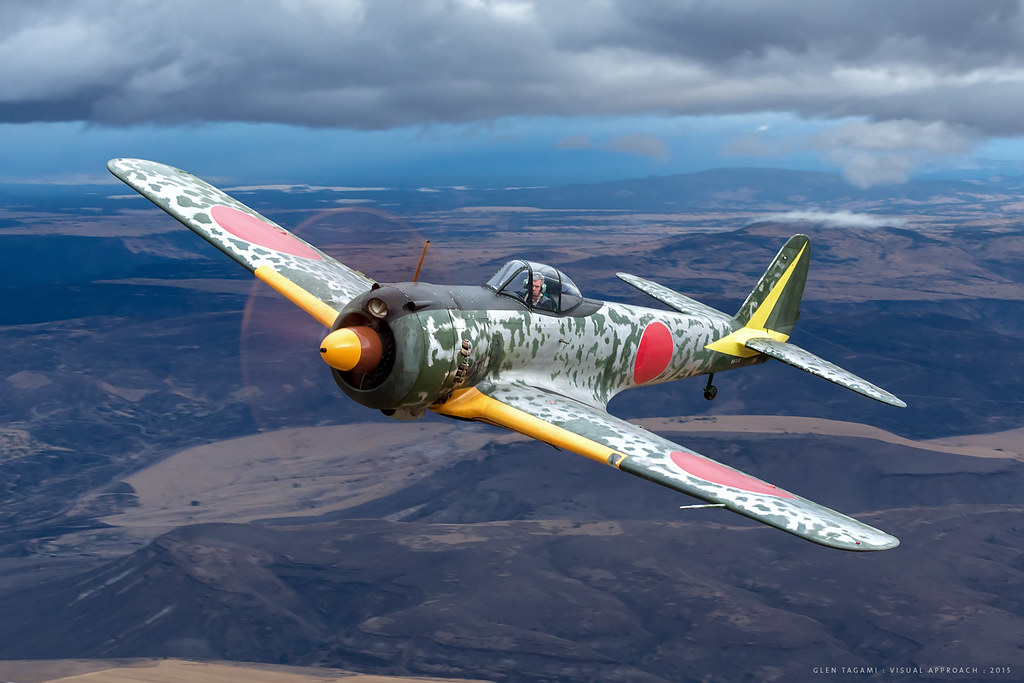
Having run out of navy birds, I'll switch to IJAAF craft. Yes, I know, they don't have fly from carriers. Roll with it. There aren't many left worth noting. (And, yes, I also know that the J2M and J7W aren't carrier birds. Its okay.) Anyway, the A-9 Vigilance would be the Ki-43 "Oscar," while the I-7 Howlrunner would be the Ki-44 "Tojo."
A Y-Wing would be an SBD Dauntless, while the B-Wing would be a TBM Avenger. The X-Wing would be the F6F Hellcat. And yes, the F4U, P-38, P-40, and P-51 all would make perfect stand-ins. But three of those don't operate from the deck and one is too temperamental to be the T-65. That one, the Corsair, would make a great E-Wing. The F8F Bearcat would have to be the A-Wing, even through the Grumman bird was late for the show. Another bird that missed the fight, the AD-1 (later A-1) Skyraider, would be the K-Wing. The Seafire would have to be the Naboo starfighter.
So, USS Enterprise going toe-to-toe against an Implacable-class and a Saipan-class crewed by the best from the Galaxy far, far away. One-on-one.
What's the battle look like, and who wins?
CV-6. In all her glory.
Now, since there are actual fighters and such in Star Wars, and tactics to go with them, the fight gets more challenging than the previous one with that silly flying saucer.
Against the Imperials on the Saipan-class carrier with Japanese fighters, the score is victory for the Big E 9 times out of 10.
Against the Rebels on the Implacable-class with American fighters (and a Brit), the score is victory for the Big E 8.5 times out of 10.
Now, why? Especially when neither ship is known as a gunship, like the cruiser stand-in for Starship Enterprise was. And that is exactly why. Without onboard offensive weapons, the fight boils down to the air wing and tactics. There, its a case of just looking at history for how well the various aircraft performed in their missions. Where it all comes down to is tactics.
Let's start with the Imperials. The idea of "throw away ships" is fitting with Japanese doctrine, though the Japanese held their pilots in greater value. They just didn't rotate them enough, or at all. However, since the Imperials preferred using big-gun ships, their fighter support doctrine was even more lacking. Expect Kates, flying in Vee formation, escorted by Claudes while a few Zeroes fly top-cover to be the best efforts the Imps can muster for attack. Most of the Zeros, as well as the Oscars, Tojos, and Jacks, will be attempting to either find the American aircraft or defending their ship.
If this is 1942, chances are 50/50 that the Imperials will get to the Enterprise. However, with only Kates, they won't have enough firepower. They'll hit with torpedoes, which the Big E was able to dodge plenty of times. Assuming they even make it past the combat air patrol, which will decimate the formation.
If this is 1944, forget it. With F6F Hellcats and F4U Corsairs flying defense few attackers will get through, and even fewer will be able to fend off the Big E's dive and torpedo bombers when they attack the Imp carrier.
"Scratch one flattop!"
Now it gets interesting. The crown jewel of the US Navy fleet in World War 2 against a US Navy equipped Rebel Alliance/New Republic. Everyone's flying the same stuff, so who is really "#1?"
First thing's first, who to include in the Rebel air wing? Do I allow Rogue and Wraith Squadrons to take part? Because that does effect the outcome quite a bit. They are both force multipliers. Wraith would be the equivalent of having the OSS own fighters. Rogue Squadron is the whole TOPGUN program as a unit.
For kicks and giggles, I'll include both renown squadrons. Likewise, I'll allow Defender wing on board. However, that pretty much fills out the wing, with just enough space for some of Pash Cracken's A-Wings or Knave Squadron's E-Wings. Since the F8F (ersatz A-Wing) didn't reach the fleet in time, we'll use the F4U (representing the E-Wing). We'll let Defender wing have two squadrons of SBDs and a squadron of TBMs.
So, the Rebels have almost a full squadron more on their ship, plus a squadron of OSS agents in Hellcats. Not that it'll do too much good, since forced boarding of a ship via aircraft, other than helicopters, really doesn't work well. But I'd argue Wraith is the "ace up their sleeve." Even being able to land two operatives on the Big E would allow for a severe disruption on tactics, forcing more fighters be dedicated for CAP.
With so much of the Rebel fighters' success in the GFFA being contingent on shields and droids, being placed in "humble" piston fighters is quite the downgrade in operations, from a certain point of view. More damaging is the lack of guided missile to represent proton torpedoes. But there are rockets.
"Holy Moses!"
So how come the Rebels don't do better than eight and a half out of ten? Unity. While the Imperials don't try to have any inter-service cooperation, the New Reps do, to a degree. But not enough. By 1943 the idea of "combined arms" with airstrikes became a thing. Later called "alpha strike," the Navy would throw their whole air group at a target, with all squadrons working together, unlike what happened at Midway.
No, not that midway...
At the Battle of Midway, the US Navy got lucky, in a way. Their strikes were not coordinated properly, but they worked out, since it drew the attention toward the torpedo bombers and away from the dive bombers. The way they flew and fought at that battle is how the New Reps fight. It relies too much on luck and random chance (and the Force), and not enough on talent, training, and discipline.
The question is which air group finds the opposing carrier first. Due to how the US Navy performed searches, and how frequently they broke enemy codes, this allowed them to lead their opponents by the nose.
The US bombers will do better than the Rebel birds. The fighters, though, will have their work cut out for them, depending on who has the altitude. Both sides have the attitude.
But, since the US Navy had better teamwork than the Rebel Alliance/New Republic frequently displayed, getting the first look is key. Granted, in reality, between submarines, spotter scout planes, and roving gunships like cruisers, the US Navy will win most frequently. Then its down to skill and teamwork.
And this is why the F6F Hellcat was one of the top fighters of the War. Even better than the Mustang.
End result, though, is probably 50% losses for the Big E, and near total for the Rebels. That's regardless of who wins. Remember, "winning" is determined by sinking the flattop. And most of the time, the Big E wins.
Which she did. A lot. And would do against both major factions of the "classic" Star Wars universe.
And, no, Trekkies, the real one. The famous one. The legend. Not the goofy looking flying saucer.
But have any of you ever wondered which would win in a battle?
I have no doubt that fans of Star Trek have discussed (nay, argued) over which incarnation of their show's flagship is best. I know that there are debates on who the best captain is. And I know that fans of a galaxy far far away trade shots back and forth about which ship wins. I don't mean any of that.
I mean which would win: the USS Enterprise (CV-6) or the starship Enterprise?
Yeah, I'm positing a slugging match between a Yorktown-class aircraft carrier and a starship from the 23rd century. Maybe that's not possible. At least, not without some modifications.
Buckle up, kids.
First, some "housekeeping." Obviously, these two would not be able to meet in combat, nor are they designed for similar missions. One is an Earth-bound ship built for war. The other is a space ship constructed for long-term exploration. Not only are their eras different, but the reason they exist is like night and day. Then why am I pitting them toe-to-toe?
The reason is simple. Since 1945, the name "Enterprise" has been inseparably connected with combat as the keystone of a fleet. The fame she earned in the Second World War is why it was an appropriate name for a ship in a sci fi television series. Familiarity. Just like what Ford did with the name "Mustang."
Now, I rather like the reboot Star Trek films. And I can understand the appeal of the original series and the spin-offs. But I've never appreciated how they treated the name "Enterprise." It is not a name for a ship of peace, sent out to explore and be a mobile diplomatic post. A ship named Enterprise is a vessel meant to do one thing: win. Think of this as similar to the stuff that EckhartsLadder does when comparing two ships. So who wins?
To accomplish this, the two opponents must be able to meet. I'm going to ignore any potential ability of the starship to "fly" in an atmosphere and basically "bomb" the ship. Mostly because that changes the starship from a "ship" to more like a B-52 bomber or AC-130 gunship. The way you fight with those is different. And, incidentally, the right way when given a platform like the starship Enterprise. No, for this the two need to meet as near equals.
That means either "transforming" the starship into an ocean-going warship or "morphing" the carrier into a star-craft.
Because there does not seem to be a comparable collection of small ships in the Star Trek universe, I'll be bringing the starship into WW2 as a "classic" warship. If there are things similar to fighters, dive bombers, and such, then moving the Big E to space may be possible. (If this was Star Wars, then it is easier to do. Maybe next time.)
But what is the starship Enterprise similar to in the US Navy in the 1940s? Cruisers.
USS Louisville (CA-28), a Northampton-class cruiser. My grandfather served aboard her.
This makes sense, so follow along for a moment while I explain. The cruiser is, historically, designed to be a long-range ship capable of independent operations. Now, doesn't that sound like "5 year voyage" and "boldly going?" Cruisers are decently armed, able to take on anything at their weight class and lighter. Some were even up armed (or up armored, if your's is German) to be able to go against battleships (allegedly... maybe). Fast and agile, these were the ships that gain the fame. Ships like the Graf Spee, the SMS Emden, and the USS Constitution. And, yes, technically "Old Ironsides" is a frigate, but in mission, and concept, she is the very definition of a cruiser or battlecruiser.
By the 1930s, cruisers were fitted with 8 inch or 10 inch guns for main weapons. At least a half dozen lighter guns (5 inch, usually), and dozen or so light cannon and machine guns would round out the firearms. Torpedoes would also be a common arm. Cruisers often carried a few scouting floatplanes, both for finding targets far off, and for directing shots. Later in the war, the planes would aid in rescuing downed aircrew or sailors stranded after their ship sank.
Cruisers have been the mainstay of fleets since the 1860s. Battleships are the backbone, sure, and destroyers bring utility and numbers, but the cruiser is the jack-of-all-trades. Even today, with the Ticonderoga-class, cruisers are the primary independent ships for navies that can afford to use them. They are the jack-of-all-trades. The Tico cruisers carry a couple advanced 5 inch guns, a few machine guns and auto-cannon, a pair of torpedo launchers, and 130 missiles.
I think it's a fair parallel for the design and purpose of ships from Star Trek. Especially if you imagine a Northampton-class (or comparable from another navy) being used by NOAA or the USCG. A ship of exploration and outreach able to defend itself from just about any threat.
But what of the flattop.
Isn't she pretty?
Now, carriers were initially (at least in the US) based on cruiser or battlecruiser hulls. Lexington and Saratoga were laid down as battlecruisers, while the Yorktown-class had a similar sized and shaped hull. Even the HMS Furious transitioned from battlecruiser to flattop, in such an incremental way to show the process that lead to the Big E.
This meant that aircraft carriers were relatively fast. Still are, in fact. The Iowa-class had to be fast enough to keep up with the carrier task force. The first nuclear carrier, named Enterprise, outran her escorts during trials. The new Ford-class is able to hit at least 35 knots, which is darn fast for a quarter mile of steel.
But compared to the cruisers of World War 2, carriers were pretty lightly gunned. The biggest guns were 5 inchers, with 40 mm, 20 mm, and machine guns all around. Initially the Lex and Sara had a few of the original cruiser guns, but once aircraft proved viable, the guns were removed to make space for more planes. Later on there would be dozens of anti-aircraft guns all over. Today carriers have no offensive fixed armament, just some anti-air guns and missiles. Like in WW2, the defense of the carrier is dependent on her escorts.
The strong arm of the carrier is her air wing. Back in the day, that was a squadron of fighters, two squadrons of dive bombers, and a squadron of torpedo bombers. Initially the dive bombers were SBD Dauntless, but later replaced by the SB2C Helldiver. The TBD Devastator torpedo bomber was, thankfully, replaced by TBM Avengers. The fighters were F4F Wildcats at first, then later the F6F Hellcat or F4U Corsair. One of the two dive bomber squadrons was the "scouting" squadron, tasked with forward recon to find targets.
So, in a one-on-one fight, based on this scenario, who wins?
The aircraft carrier Enterprise, I'd say wins 9.95 times out of 10. Now, if the cruiser-version of starship Enterprise can get within gun range, and the aircraft can't stop it soon enough, it will win. But that will be a rare occurrence.
So lets make it interesting. Lets take the Enterprise from the original series, the Next Generation, the 2001 TV series, and the reboot film version. So that's four "cruisers" against a carrier. Now its 9.8 out of 10 in favor of the Big E.
What gives? Being outnumbered 4 to 1, and outgunned at least 20 to 1, yet the flattop beats the gunships?
Why does an aircraft carrier beat a cruiser?
Now, there is an answer from history, a current answer, and the sci fi answer that Atomic Rockets disagrees with. That being said, the Atomic Rockets website is full of great sci fi writing info. And it leans "hard" sci fi, so much of the stuff they posit is either doable, or potentially doable, in the next couple centuries.
The answer is twofold: "stand-off capability" and "growth potential."
After Pearl Harbor and Taranto, the navies of the world quickly realized that the day of the battleship was near the end. What good is a multi-million dollar warship able to shoot targets twenty miles away when it can be sunk by a single dive bomber launched from a thousand miles away? Now, there is plenty of use for the "gunship," and hopefully they come back, somehow. But that was the key: range.
In the Battle of the Coral Sea (4-8 May, 1942), Japanese and American fleets fought each other via airpower alone. It was the first time in history that two fleets engaged each other without being able to see each other directly. None of the ships met and traded shots. Only aircraft. And with the advent of jets post-war, and later inflight refueling, the range of strike aircraft increased. Aircraft carriers are major power projectors. Just one can tip a campaign, if used correctly.
For no other reason than it is a good show.
Now, the sci fi fan here would argue, correctly, that space faring warships can be maneuvered in such a way that fighters as we know it are unnecessary. But I'll get back to that. Right after I explain why the battleship died logistically.
Consider, you are the commander of a navy, and your president/king/dictator/whatever wants the fleet to be able to "hit harder, faster, and farther." And not in another five or six years, after the first of a new class of ship is launched, but pretty much now. You have battleships and aircraft carriers. Which do you upgrade?
The battleship has 16 inch guns in three triple turrets. The carrier has three hydraulic catapults and houses 47 aircraft with 1000 mile combat radiuses. (Numbers are rough conjecture, not official. Don't believe me, just rummage through Wiki pages on ships that underwent upgrades and watch the creep.)
To replace the guns on the battleship, one-to-one, requires a lot of work. The guns themselves are heavier, due to thicker breeches and longer barrels. The elevation mechanisms are larger too. Because of this, the turrets must be larger, so as to house the new guns and their loading equipment, which is larger as well. More crew is needed per gun, since they are larger. And ammo storage is less, since each round is larger. The choice is either carry less ammo per gun, or have less overall space to carry the same amount of shots as before. With larger turrets, though, comes greater weight, which the motors used to rotate the turret must cope with. Larger motors take up space and add weight. New barbettes, upon which the turret sits, are needed to support this weight. The hull, frame, and keel will need strengthening to handle the weight, too. And the engines will need to be improved to maintain speed, which requires both larger engines and more fuel carried. More engineering crew will be needed to maintain the devices. On top of all this, new fire control is needed to accurately lay shots, which adds weight, complexity, and crew.
At the end of the day, just to replace one turret, we're looking at an estimated 100 tons added of material, and around 80+ crew added. Just for three guns that will increase hit power no more than 50% and range no more than 20%. This refit will take at least a full year in the yard.
To get the carrier up to spec requires fitting new catapults. Steam catapults are more powerful than hydraulic, and don't require the large fluid reservoir, only steam from the boilers. More catapult crew is not needed, though training will be. This will allow for at least 20% increase in aircraft launch weight.
The aircraft will have an upper limit on footprint and weight, but so long as they can carry the right ordinance, this is not a limiting factor. Getting then next mark of strike craft with 25% more range will not require any modifications to the carrier. In fact, very little work on the carrier is needed to greatly increase aircraft capability. So long as there is space in the hangar, and space for the aircrew and support crew, the plane can deploy.
Net result: less than 20 tons added overall, not including weight of embarked aircraft, and likely no more than two dozen crew added. Hit power increased 50+% and strike range increased 20+%. And the best part, this upgrade can be done again every couple years in just a few months.
Now, reshaping the deck with an angle to accommodate jets will be more costly, but after that, the growth curve resets.
A variety pack of Essex-class, post war. Flavors include long, short, straight deck, angled deck, and bridle catches.
That's the beauty of the aircraft carrier. Think back to the HMS Dreadnought. When she was launched in 1906, all other battleships were obsolete. But by 1919, the trendsetter herself was obsolete. Less than fifteen years of cutting edge for 1.7 million pounds (1906 rate). That's not "bargain."
On the other hand, a large number (22 out of 24) of the Essex-class were able to be upgraded for handling jets post-war, as were their replacements, the Midway-class. In fact, Midway served from 1945 to 1992.
Midway at commissioning, 1945.
Midway en route to southeast Asia, 1972.
Deck evolution of Midway. 1945, 1957, 1970.
And here is the thing that Atomic Rockets, and many "hard sci fi" fans seem to ignore when discussing the validity of "fighters" in science fiction: versatility.
Now, I'm not saying I think the assessment that "a small one-man fighter" is a bit out of place in realistic sci fi is wrong. But that doesn't mean a "tactical craft" is stupid.
Ditch the idea of the X-Wing, Colonial Viper, and Starfury for a moment. Think like a space-going mix between the AC-130 Spooky gunship, the AH-64 Apache, and the torpedo boat. Small crew, lots of guns and missiles, small size, plenty of agility and speed. Now have a ship designed to carry, launch, support, and service about thirty to sixty of these "damned bats***." Now have three of these ships sneak up on a battleship centered fleet. The results should speak for themselves.
Now, maybe a bit of that is bias. And I'm okay with that, because I'm teasing those thoughts out on my own time, and I think it is possible. And clearly David Weber (author of the Honorverse) agrees. Granted, most of the combat in that series is "gunship," like a sci fi Napoleonic war, but there are "torpedo boat" stand-ins.
Don't forget, right as the HMS Dreadnought was being launched, many navies were also playing around with 100ft long (or less) torpedo boats. These little things carried two or more ship-killing torpedos, and maybe a light gun or two. Their armor was speed; about 30+ knots early on. By WW2, its was more like 50 knots. The idea of small, lightweight, heavy hitting ships is a viable one. Especially for a navy that does not have the resources to build even a small fleet of cruisers, let alone battleships.
Which brings me back to Star Trek. I could go and look at the best ships from the whole universe and transfer them to WW2, but I don't think that's possible. There really is no equivalent to the Borg cube that I know of, for example.
But I can create a hypothetical transfer for the USS Enterprise into space.
So, lets start with Ralph McQuarrie's concept art, and assume that it is a carrier. After all, that aft opening could be a landing bay.
Some really good artwork based on this found here.
Now, I know I'm biased, but I think that looks better than most incarnations of starship Enterprise. Regardless, there's our ship. And lets say she carries 25-30 of these gunship/torpedo boats. Now, is there any question who wins against the "standard" starship Enterprise?
If you are thinking "well, all it takes is the other ship to warp in close and start laying waste," you've forgotten about the Combat Air Patrol. Escort aircraft in flight above the carrier just to ward off attacking planes. Not to mention the alert craft on the catapults for the moment enemies show up. Maybe not enough to guarantee keeping an attacker from catching someone with their pants down, but its better than nothing but finicky shields and an exposed bridge.
At the end of the day, my beef with Star Trek is still the same: The name "Enterprise" belongs on a carrier. Please, please...
(For the record, I wrote this a few weeks ago, before the move. And, yes, I intend on paring the Big E against something from Star Wars. Because I can.)
Finally, on the last day of 2017 I saw "The Last Jedi."
And I liked it.
Sure, there's stuff I didn't like about it, but, as "Part 2" of the Sequel Trilogy, and as part of Star Wars overall, I very much enjoyed it and thought it was quite good.
Why?
Because I remember.
I remember when the newly victorious Rebel Alliance fought side-by-side with Imperial forces against an invading race of aliens from a star cluster just outside the galactic edge.
I remember when Wedge Antilles reformed Rogue Squadron with the mission of, not only becoming the best fighter squadron in the galaxy, but retaking Coruscant.
I remember when Han Solo kidnapped Princess Leia to convince her to marry him.
I remember when Grand Admiral Thrawn nearly tore the New Republic apart with his most artistic campaign.
I remember when Luke Skywalker founded the New Jedi Order on Yavin IV with a class of twelve students.
I remember when Kyp Durron stole the Sun Crusher and destroyed an entire star system.
I remember when a race of genocidal and racist aliens attacked the New Republic with a fleet led by a Super Star Destroyer.
I remember when the Galactic Civil War ended with the surrender of the Imperial Remnant.
I remember when the Yuuzhan Vong race invaded the galaxy, killing Chewbacca, destroying thousands of worlds, and terraforming Coruscant before being defeated.
I remember.
And that is why I liked "The Last Jedi."
I'll admit, I don't like DJ. Not because he was a bad character, but because I don't think he was necessary. There is a long history of smugglers, slicers, thieves, and other "scoundrels" in Star Wars, but the ones DJ is most like are not "good guys."
I don't like Holdo. I don't like commanders who are too cheerful in the face of long odds, and who don't tell people the plan or part of the plan. She's too much like a Bothan in that regard. (Those of you familiar with the Thrawn Trilogy or Rogue Squadron know exactly what I mean. And I'll leave it at that.)
And its true that there were visuals and film style choices that I disagree with. They're not what I would have used if it was me. A few didn't feel "Star Wars," in my opinion. The scene where Holdo rams the Raddus into Snoke's ship is one of them. Epic to watch, and kuddos, but it looked more like something out of a live-action "Big Hero 6." Not bad, just not what I'd expected.
So, enough of why I didn't like it. How about I explain why I liked it, since I doubt my list makes it clear, and there is apparently a lot of polarized viewpoints on this episode.
I'm going to start with a theory. My theory, with my terms.
There are only three kinds of Star Wars fans:
Those who are "minimalist" and only familiar with the movies and perhaps aware of the Expanded Universe;
Those who are "Post-Prequel fans" that grew up with the Prequels as the most recent additions, are familiar with materials that cover events before Episode IV, and are sympathetic to the clones and the "old" Jedi Order;
Those who are "Rebellion-Era fans" that grew up with the Original Trilogy and the Expanded Universe that only described events post-Endor, with the exception of a few bits of Old Republic history.
"Minimalists" are not going to care either way with this movie. All they will think is "yay, more Star Wars."
"Post-Prequel fans," though, are going to be less than pleased with it. The "old" Jedi Order is called out as all but a failure in this, and the First Order is just the Grand Army of the Republic and the Empire taken to logical conclusion, but unashamedly villains. Its really hard to be sympathetic to the designated bad guys. None of the "fan theories" (or, if you prefer "fan fiction") survived, and the fan fiction phenomenon is primarily a Post-Prequel thing (though there is some old EU stuff, all of which is superior.) None of the "approved" Mary Sue style characters are there: such as expies of Anakin. Most of all, "The Force Awakens" and "The Last Jedi" are too much like the Original Trilogy and the old Rebellion era "Expanded Universe" for their comfort. Its just not what they are used to.
"Rebellion-Era fans" should be happy with this film. Why? Consider:
We get to see an expy of Wedge get into the type of trouble expected of an ace snubfighter pilot, only he has to suffer the consequences that Wedge always seemed to avoid.
(Then again, we all knew he was the new Wedge when he had this bit of snark.)
We see an expy of Borsk Fey'lya in the guise of Vice Admiral Holdo. Yes, I'll be so bold to say it. Mostly because I didn't see her act as a military leader so much as a politician. And its not because she was wrong. Quite the opposite. Her plan was the right one. But she should have told her people what the plan was instead of a pretty "cheerleader" speech. Maybe the comparison with Fey'lya isn't fair then, though she does go out in very similar fashion. And I can respect that. If only she'd been a leader, not a cheerleader.
(Arrogance, thy name is Borsk.)
We almost see Talon Karrde or Booster Terrik show up in the form of DJ, except he isn't as honest or skilled as either, and neither of them are slicers. Niles Ferrier or Huff Darklighter would be the potential inspiration more than either of the former, but the former is incompetent, and the latter apathetic. Even Dengar or Boba Fett would have been more upstanding that that. And the best slicer in the galaxy, one Zakarisz Ghent, would never be so backstabbing (mostly 'cause he's naive). Maybe DJ's actually Fey'lya's expy...
(For the record, our slicer Ghent is on the far right. If you can't identify the rest, then go re-read the Thrawn Trilogy.)
(From left to right: Tycho Celchu, Winter, C-3PO, R2-D2, Luke, Leia, Han, Chewie, Lando, Talon Karrde, Shada D'ukal, Mara Jade, Zakarisz Ghent)
We get to see more types of starfighters instead of just the "same old stuff." Now, before all you "Post-Prequel fans" get upset with me, I do recall and appreciate the grand variety of ships from Episodes 1-3. And many of them were good. But we've never had a "heavy" onscreen. Sure, the Y-Wing was officially a bomber, but it was a very light one. The bomber from "The Last Jedi" reminded me of the K-Wing. The Star Wars universe has always had a bit of a gap when it comes to its light craft. Having a bomber is a good thing. (And, yes, for the record, I know the B-Wing should count, but we don't see them onscreen enough.)
(The BTL-S8 K-Wing - for when you really want that Star Destroyer to go away.)
But I can hear someone complaining already: "How'd the First Order build all those big ships? Aren't they suppose to be a secret group out in the Unknown Regions? Where'd they get the stuff to build that ludicrously large ship, let alone Starkiller Base?" All good questions.
Who cares?
No, but seriously, we're talking about the remnants of the Empire, with a large portion of the old resources, running unchecked in a third of the galaxy likely filled with all sorts of resources, running arms deals and such. Gaining capital and equipment to fund such projects isn't all that far fetched. And besides, the Empire expended much more on much less. (Torpedo spheres, anyone?)
Go ahead an check out the old Expanded Universe. Back in the day portions of it were known as "The Super-weapon Of The Month Club" for good reason. Sun Crusher, World Devastators, the Eye of Palpatine, the Darksaber, Eclipse-class dreadnoughts, and a few others. All built by the Empire (except Darksaber, which was by the Hutts). Building weapons is extremely lucrative business.
Remember, we're talking about a government in a universe known for building space stations the size of moons all for moving black holes from half-way across the galaxy. (Seriously, that's what Centerpoint Station was built for. Check it out sometime.) Construction of this scale isn't that insane. Wasteful and stupid, perhaps, but not insane. Consider the planet-sprawling city of Coruscant. Each of those buildings has to take a lot of time, effort, planing, money, and material to assemble. And each one could have been used to build a ship the size of a Star Destroyer. Remember, Coruscant has 5,000 levels. That's a lot of metals and other material.
The only thing I'm left with that I don't get is "who's the villain now?" The only reason I ask is the ending feels like a set-up for more than just a single movie. The Resistance has to rebuild from the ground up. Luke is dead, and Rey is minimally trained (though the latter may be a good thing). Snoke is dead, though that doesn't mean he's gone (Force ghost?). The First Order lost a lot of material, and Kylo Ren is in charge. The war will continue, but its clear that Kylo isn't stable as a villain yet. There's got to be more of a threat remaining to drive things.
Maybe Snoke's still influencing Kylo, or worse, ghosts from history (Palpatine?).
And what about Rey? Luke said the Jedi would continue. I'm glad to be right in my theory that we're resetting to a more Taoist than Buddhist style of Jedi. Clearly the writers are familiar with the Unifying Force theory, the Living Force theory, and Luke's New Jedi Order. And for all you "Post-Prequel fans" out there, no matter what you may think, Luke's Jedi are leaps and bounds better than the old Order. Why?
Balance.
That was the goal. And that's what Luke's Jedi were better at reaching. But the EU writers gave Luke some really good students, and some good materials to work from, including artifacts from before the Ruusan reformation, which is what led to the "classic" Jedi Order of the Prequels.
It shouldn't be a surprise to anyone. The trailer featured the voice of Bendu, a creature that existed "in the middle." Listen carefully, right around the minute mark.
The original Jedi were supposed to balance the Force. Its not good, or evil. Just power, and choices have consequences either good or evil. Its a philosophy that on one hand is right at home in today's society, while being completely foreign.
But I'm not here to discuss the nuances of a sci-fi series based worldview. Maybe some other day. No, I'm just giving everyone my reasons for why I liked Star Wars Episode VIII "The Last Jedi."
Can't wait for the next one. But, until then, I'll reacquaint myself with the legendary Expanded Universe, filled with greats like Thrawn, Karrde, Horn, Kre'fey, Durron, Pellaeon, and so many others. And perhaps, that's the most interesting thing I'm taking from this installment.
With "The Force Awakens" I felt a bit of loss as the old Expanded Universe was swept away. That's where I grew up as a fan of Star Wars. To have it be, essentially, erased was disappointing. But its still there, much like how the old Greek myths are still there. I can still read them even if they are relegated to dusty bookshelves. This new Trilogy ushers in a new style, inspired by the old but uniquely its own. I can have both and be happy with them for what they are.
So if you liked the movie, that's great. And if you didn't, that's okay too. But as for me, there was no doubt that it was the "right" movie, a Star Wars movie, when the opening crawl faded and the camera panned down to show the Resistance ships evacuating, just before the First Order arrived.
Now I've just got to wait and see if the Han Solo stand-alone is any good.
Aaaand Twitter exploded with people opposing the removal of "net neutrality." Or in support. Or maybe just posting lolcats.
Whatever.
I'd completely ignore all this if not for noticing a particular comment from the more animated of the two original Mythbusters.
Now, I'm all for free access to communication methods, with as little "control" as possible. Notice, I don't mean no oversight at all, especially within said methods. Ham radio operators have to get certified and registered. Cellphones operate through a tower system, the access of which is via a contract. Even letters require proper documentation and payment. Are there limits to who can do these things? No, and there really shouldn't be.
(And, yes, there are age limits, which there should be, for things like cellphones. Its a safety think, like driving.)
What has been said that I'm interested in is the notion that internet usage is a "civil right." That I disagree with. I know, I know, everyone automatically thinks its a "free speech" issue. Yes, but is that all there is to this? No. There is safety.
Anyone can walk into a grocery store and purchase things. However, if you want to buy alcohol, you will need to be of proper age. This is fair.
But doesn't that infringe on "civil rights" since it is limiting access to products? No.
Does that answer the issue of should/should not "net neutrality" remain? I've no idea, since I'm not very well informed regarding the actual content of the regulations. I'm all for reducing regulations that are not in place to defend users from harm.
If removing "net neutrality" means getting access to porn is much more difficult, I'm all for it.
If removing "net neutrality" means getting access to Grumpy Cat is much more difficult, then I'm not for it.
Is there a middle ground? Of course. And without any actual idea what what being done before and after, I can't say more. This all is just a "gut reaction" to a handful of quick comments.
That and its been a while since I wrote about nothing "serious." Granted, limiting of communications is a serious issue, especially when I want to use various platforms to speak the Truth. So, I guess I'm going to have to do a little research.
As if I don't have enough, what with an ongoing attempt to establish a podcast on Christian history. More on that when and if I get closer to a launch date.
Just testing to see if I can upload unmodified audio files to the blog. If necessary I'll have to pair this with an image or video, so as to appease the Google machine, but I'll jump off that bridge if I get there.
If this works, enjoy. If it doesn't, I'll try again with a "video" version. If that doesn't work, it'll get pulled before the end of the day, and never spoken of again.
(So, I'll be honest, researching the history of Rome is taking longer than I thought. Don't know why I imagined it would be relatively easy. I must be delusional. Probably gonna be later this week, but I can't guarantee it. Until then, there's this...)
Growing up, my family owned a convenience store, so my siblings and I got to be very familiar with a variety of snacks. Among these were soft drinks (a.k.a.: soda, pop).
The Sioux City Sodas were among our favorites, with Sarsaparilla and Orange Cream Soda being tops. Root beer has always been a go-to in the family, which led to us determining which of the "big 3" were best. We've come to the conclusion that Barq's is best for straight drinking, and A&W was best for floats. But, for me at least, two of the "curiosities" are among my favorites.
Squirt.
I have no idea why, or how, but there isn't anything better than a cold Squirt on a hot day. Nothing else must be said about this oddball.
Fanta.
This one deserves greater mention, for a number of reasons. One, the running gag regarding DAR, a coworker of mine. I owe him a Fanta, in a glass bottle if I can manage. My "forgetfulness" regarding bringing one has become a bit of a joke.
I had grown up enjoying orange sodas (with Sioux City Orange Cream being #1), so finding out that my wife like them too was great. In fact, it was one of the few things we enjoyed about the resort during our trip to Jamaica. The beach/resort scene just wasn't for us. We had a great time with our friends, who were getting married, we just prefer "simpler." But, we found that we both like orange sodas, and learned of a fun tv show.
The soda was Fanta, the tv show was Top Gear.
A few weeks ago I saw a review from a gun channel on the YouTubes. These guys have a good grasp on the history, and make it entertaining. But, in celebration of 75th years of Fanta, they tasted Fanta Klassik, using the original recipe.
Here's the thing, Fanta is a Coca-Cola product. Coke's been around for a long while, and had/has factories worldwide. For very obvious reasons importing the Coke recipe was not possible in the 40s (if you don't know why... we may need to have a talk). You see, Coke is a secret recipe, to the point where even if you know the ingredients, the guys at the bottling factory don't know the amounts of what's what. They just pour "ingredient mix A" into vat with "ingredient mix B" and ta-da. (Okay, so I don't actually know, but that's the gist.)
Anyway, the factory in Germany wanted to keep bottling soft drinks, so they made their own. After the war, they presented their product to the Coke execs and kept bottling it.
Watch the In Range TV taste testing. And if you want, watch their mud tests as well. AK-47 vs. AR-15 is the best. Lots of interesting hands on history, same with Forgotten Weapons and Hickok45's channels.
(Today, in lieu of a theology related post, please enjoy this random rant on aircraft while I finish refreshing myself on the history of Rome. We will return to our irregularly scheduled shenanigans soon.)
By now everyone should know I might be a bit mental when it comes to World War 2 aircraft. Especially regarding my opinions.
Well, get ready for a doozy.
If I had been a pilot in WW2 for the Army, I'd have picked the Curtiss P-40 over the P-51. (Obviously, if I'd have been Navy, I would have picked something better.)
Don't mind me, I'll show my self out to find the nearest straight jacket.
(An original Curtiss P-40B, in original colors. If I remember right, this one was at Pearl that fateful Sunday.)
Seriously, though, you can't tell me that the Hawk doesn't look good. On looks alone she beats the Mustang. Now, I'm not bashing the P-51 (I already wrote about her, and she's great). But thanks to hindsight, and knowing where I'd prefer to serve, the P-40 is better (and more readily available).
Mustangs were late to the Med, the Pacific, China, and India - all more "fun" and interesting that Europe in my opinion. Who wants to babysit thirteen guys in a truck from Seattle anyway?
(A bit of a study in anachronism. A later model Warhawk, with early US roundel. It looks like a "K" or "M" due to the longer looking tail, though it might be an "E." Probably should look up the tail number and find out officially.)
Compared to the Mustang, the P-40 was a brute. And looked ready for a fight, even without the teeth. With them... you get an iconic image no one forgets. But the legend didn't start so boldly.
(The Seversky P-35 [well, technically an AT-12 trainer] and the Curtiss P-36 Hawk in period colors.)
The Army was looking for new fighters in the mid-30s. They wanted something more European: monoplane, retractable landing gear, enclosed canopy. Curtiss and Seversky both submitted aircraft. The P-35 was more expensive and underpowered, yet the Army bought almost 80 of them. But the Army also ordered 210 Curtiss P-36 Hawks by 1937.
The P-36 (sometimes called the Mohawk), had a very low wing loading: 23.9 pounds per square foot. In comparison the Spitfire Mk.V had 27 pounds, the Bf 109G had 40 pounds, and the Dewoitine D.520 had 34 pounds. This meant the little Hawk, while still a bit underpowered, could out turn the best Europe could field in 1939. (By comparison, the P-40 had 35 pounds and the P-51 had 39 pounds.)
Michale Bay, I really hope you read this post, 'cause you got it so very wrong.
The French ordered a bunch of the new Hawks, model number 75, and rather liked them. They had range, firepower, armor, and agility. The only complaint was they were a little short on power. The Brits felt the same way. So Curtiss looked to fit a V-type engine to their plane.
Now, it may seem kinda dumb to do this, simply swap an engine to improve a plane, especially when parts of the plane are still canvas and "old school" building styles. But they did that with the Mustang. And the Wildcat. And cloth-covered control surfaces were the norm until late war.
The first attempts to fight the Allison V-1710 lead to a futuristic looking XP-37.
(Hmm... slick. Paint it black and let Batman fly it.)
Putting the radiator behind the engine, next to a turbocharger, both of which are feed by air scoops on the nose did not work very well. But work led to a successful fighter: Curtiss model number 81.
From the firewall aft the plane was identical to the P-36. This was smart, since it would allow Curtiss to get to capacity quicker. The nose was brand new and fitted with the V-1710 and the radiators in a chin scoop. Originally this was beneath the wing, but was moved forward to allow better airflow based on NACA findings (though I heard a rumor that the marketing department suggested it, whichever you want to believe).
(They just can't get the nose right.)
Curtiss started cranking them out. While the Allison didn't have the higher altitude power the Rolls Royce or the Daimler-Benz had, it was more than sufficient at low and medium altitude. And having inherited the P-36's wing loading (though a bit higher thanks to more weight) the P-40 could out turn most opponents in all theaters except the Pacific. There, her speed, firepower, and armor were of more use, since most of her opponents there had no armor, carried only two guns, and topped out between 300 and 350 mph.
The Warhawk (or Tomahawk or Kittyhawk, depending which Brit version was there) had a very high dive speed, and was considered a plane with "almost no vices" according to the top ace in the type Clive Caldwell. The P-40 was designed to be rugged. Its five-spar wing could take a beating, including mid-air collisions. She was optimal for rough field operations, such as North Africa, Russia, and the Pacific islands, places where maintenance was limited. Even transporting the plane was easy, since Curtiss made it easy (relatively speaking) to break down and put back together.
The P-40 did have a somewhat narrow landing gear, which due to being of rear-retracting design was a little flimsy. The long nose was difficult to see past on the ground, leading to a number of accidents. But, this was the best plane the US could field in any substantial number in 1941, and she was adequate to the task. The P-40 wouldn't remain that way, and was probably produced for too long without substantial improvement, but planes were needed. And a dozen P-40s on the front were better than a couple of P-51s at the factory.
The P-40s were part of America's first response to the attack on Pearl Harbor, with George Welch and Kenneth Taylor being the most notable. They were also the plane of choice for the American Volunteer Group.
(The "old man" himself - Col. Clair Lee Chennault, commander of the AVG.)
The American Volunteer Group, under leadership of Clair Chennault, was "officially" in China to train pilots to fight Japan. In reality, they took command of one hundred P-40B and P-40C fighters originally meant for the RAF. The "B" wasn't too well liked for a number of reasons, including a lack of radio, no external tank, no bomb racks. The "C" had the external tank, but was the slowest of the Hawks. Chennault didn't like the liquid cooled, non-supercharged engine. Worst of all, spare parts were not available. But the Tomahawks of the AVG were rugged, faster than the Imperial Japanese Army Air Force fighters, better armed, and had better rate of roll.
In a slow speed dogfight (low end of 200-300 mph) the P-40 could not out maneuver the Nakajima Ki-27 "Nate" or Ki-43 Hayabusa "Oscar" favored by the IJAAF in China. The same was true against the Mitsubishi A6M Reisen "Zero."
(The Nakajima Ki-43 - one of the many prey of the Flying Tigers. Technical specs here.)
But at higher speeds, the Warhawk could outmaneuver them. The problem was convincing the Japanese to play a game where they were at a disadvantage. This is what hamstrung US pilots for a few years. Americans kept trying to fight a "classic" turning dogfight a low speeds against aircraft sometimes half their weight. In fact, the rigid 3-ship formation and slow turning dogfight was standard taught.
They were playing the other guy's game.
That's why P-39s were seen as lemons. Why the P-38 was seen as too big for the job of day dogfighter. Why the F4F was seen as unable to outturn a cloud on a windless day. Why were we playing to the strengths of the other guys?
Chennault realized this, before the war even started, and his view was reinforced once he got to observe the Japanese in their attacks in China. What he taught, and what got him in some hot water with the Army a few years before, was the diving attack. British test pilot Eric Brown had this as one of his marks of a good fighter. The tactic is simple: get above the enemy, dive and shoot, speed away, repeat. Sometimes called "boom-and-zoom" tactics, this method worked in World War 1 and works even today.
"Never dogfight with a Zero."
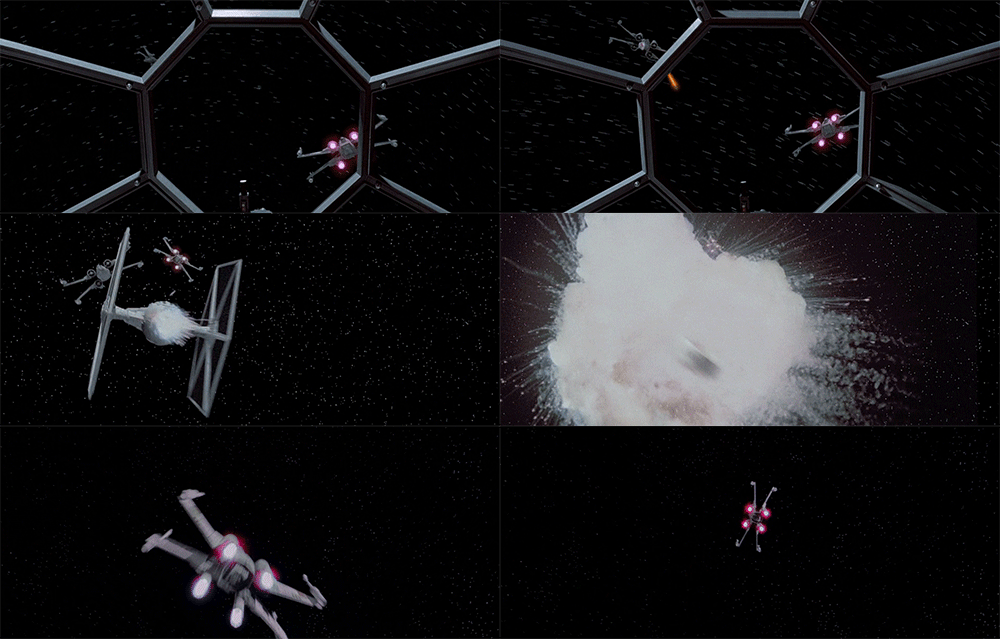
(Or a Tie fighter, as Wedge Antilles demonstrates.)
Play to your strengths.
The P-40 would be an exceptional craft in a number of "lower profile" theaters, such as the Mediterranean. There the Warhawk would do battle against Bf 109s and various Italian craft, such as the Fiat CR.42 and the Macchi MC.202. Against these she was a fox in a chicken coop. The rugged design lent itself to the forward operations of the Desert Air Force. Sometimes I wonder what would have happened if the British had sent P-40s to Malta instead of Hurricanes or Spitfires. (Maybe I'll write that story someday.)
Throughout the Pacific, the P-40 did yeoman's work, especially in the China-Burma-India theater. Again, the rough conditions (jungles, swamps, lots of heat and humidity) didn't overwhelm the P-40. Operating from cut-jungle strips and coral runways were no big deal.
The P-40 (or at least her reputation) ended up being on the chopping block of Congress after the war. Truman's investigation rightfully questioned Curtiss's practices during the war, and for reasons like that, people started viewing the P-40 as less than stellar. After all, who thinks recycling a ten year old design is a good idea. (Remember, the P-36 was two years old when WW2 broke out.) Her abilities compared with late war craft was less than stellar, but that's like comparing a present day Ford Mustang with one from the 1970s. The new one should be much better. So, yes, things like the P-51, the F4U, and others were superior. But we needed planes, and a decent plane is better than no plane.
The air war in 1939 or 1940 was nothing like what it was in 1944 and 1945. Of course, the P-40 would not have survived the legendary attack on Y-29, nor would it have been able to escort B-29s over Japan. But her inability to serve in the more vicious environment later in the war should not detract from her success earlier.
That would be like comparing the F-4 Phantom to the F-22 Raptor and saying the former must have always been a "lemon" and how could they fly those things in Vietnam? In the 1960s, the Phantom was cutting edge. Today, she's been passed by thanks to better designs. As it should be. The Mustang wasn't king of the sky forever. Not even five years after the war, the P-51 had to bow out and let the F-86 take the throne. That's how progress works.
Yet some of us still think fondly back to simpler times, when you didn't need all the fancy bells and whistles. When grit and guts meant more than graphs and algorithms. A time when tenacity beat technology.
That's what the P-40 represents for me, and why she's my first choice for USAAF if I'd been there.
Granted, the Lockheed P-38 Lightning is a very close second. Next time.


:origin()/pre00/18e3/th/pre/i/2016/211/2/7/k_wing_01_by_ravendeviant-dabyt38.jpg)


.jpg)