Just a place for an amateur internet archeologist, part-time mad scientist, full-time father and husband, pathfinder and theologian by trade (and insanity) to speak his mind in the struggle to be more outgoing.
And now for something relatively controversial. But its okay, since its been long enough since the event, and I don't care about offending anyone regarding this topic.
Hugh Hefner ruined sex.
*mic drop*
(Good game everybody.)
Don't believe me? Well consider how his life's goal was to make it so young men (boys, really) didn't have to grow up. He built an empire on making sex meaningless. Seriously. How else do you describe "self-centered pleasure without any form of connection?" He made sex a commodity that people could buy. He disconnected it from the relationship.
By making sex meaningless, Hefner made sex pointless.
What's the point of sex if it is nothing but a physical attraction and an enjoyable release? Hefner sought this, like a starving man at an all-you-can-eat buffet. But his empire, its legacy, and those who've built upon it, have lead millions to be unable to slake their thirst.
Anyone remember the first Pirate of the Caribbean movie? Specifically when Barbossa is explaining the curse? How he and his crew are constantly seeking but unable to be satisfied. Whether that be in lifting the curse or enjoying something as simple as an apple. What Hefner did is exploit that natural (and understandable) hunger to make money.
In a way, Hefner (and those in the same "business") are like a water salesman in the desert who keeps giving people salt water. He knows you are dying of thirst, and willing to pay anything to quench it, but he also knows that what he sells will leave you thirstier and coming back for more in a vain attempt at satisfaction.
Many think sex is just about the "fun." And don't get me wrong, sex is fun. Or, to be as specific (and appropriate) as possible: sex between a man and woman who are married is fun. If it wasn't, do you really think there'd be such a preoccupation with it in our society?
And before you say otherwise, yes, America is overly fascinated by sex. Between Hefner's work, the bikini, increasingly risque shows and moves, whole shops filled with contrivances meant for pleasure, and an industrialization of making the "consequences" go away, the only time we don't talk about sex in this country is when we're complaining about football or politics.
So then what is the point of sex? Scientifically the primary purpose of sex is procreation. Children. One man and one woman contribute a half-set of DNA for the making of a new human. (And, yes, the conventional way to "build" a new person is the tried-and-true method.)
Or, in other words, the point of sex is for a husband and wife to be intimate. Intimate, as in so close they are "one flesh." Literally. A part of each of them so close it will never be separated.
(I'll wait patiently for you to pick up the debris from the mind blown moment there.)
Now, I am being a little "over the top" since the reality is more involved. I dare not say complicated, since life is complicated regardless. Intimacy is more than just children. Usually people mean "sex" when they say "intimacy," but even that is overly simplified. Intimacy in a broader sense is a husband and wife being as close as any two people can be. Like I said earlier, that means kids, but its more than that.
There are facets of me that my parents don't know (or don't know very well), and there are sides of me that my coworkers never see. But my wife? She knows me better than me. That's what sex is about.
Almost like that's how God planned it. (Take that, Hef.)
Want some more to chew on? Check out a recent episode from Issues ETC: Rethinking Consent-Based Sexual Morality (listen here).
For no reason at all, I am going to give my opinion of the aircraft match up no one asked for. Why? Because I like planes, and it was somewhat fun comparing the Star Wars craft earlier. And comparing actual aircraft is both easier and harder, since there are real stats and accounts to consider.
I'm going to compare the best plane of World War 2 with the one most think is the best.
The Vought F4U Corsair (top) and the North American P-51 Mustang (bottom).
(fittingly placed)
Now, maybe I'm biased since I prefer Navy, but I think I can back up my opinion with fact. So, at the risk of alienating numerous aviations buffs, here goes...
The Vought F4U Corsair was the best single seat piston fighter of World War 2 overall.
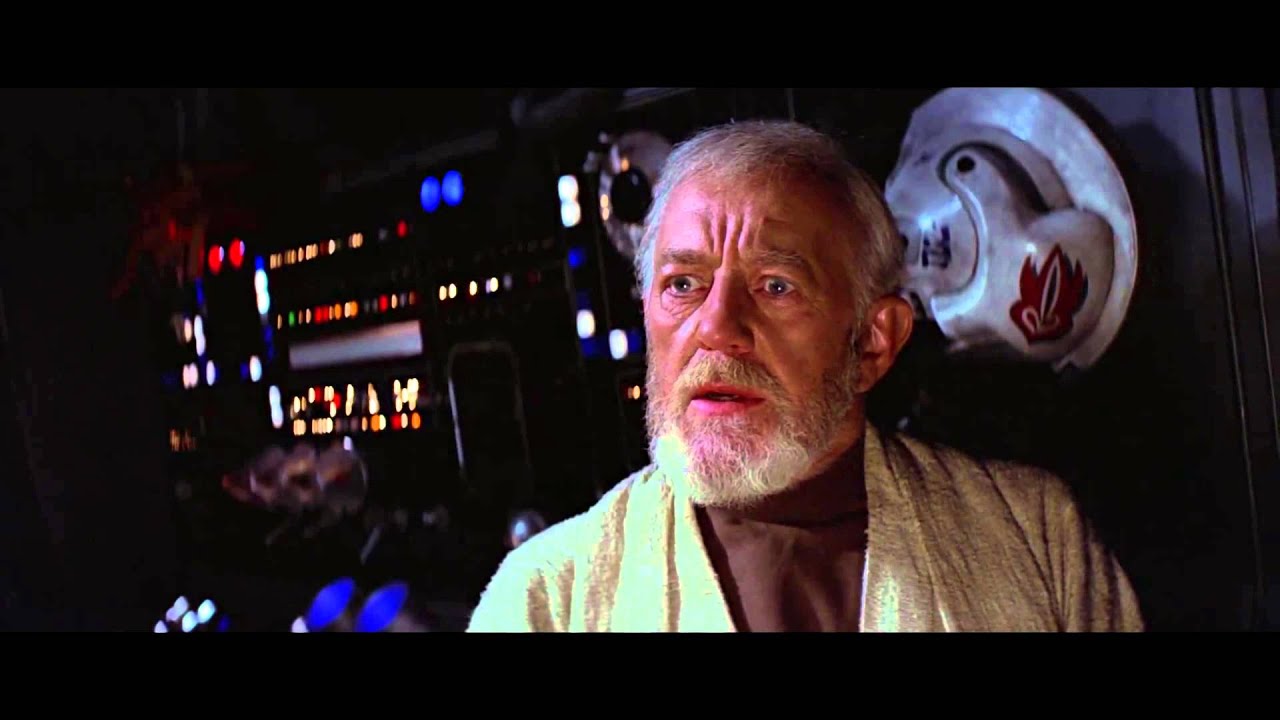
For those of you who are reacting like our Jedi friend here, let me explain.
First, please note, I said "overall." Not "fastest," or "most firepower," or "most agile," or "best of 1939/1940/1941/1942/1943/1944/1945." I wasn't specific which nation, or military, or theater. Because that is the problem with comparing aircraft, especially from '39-'45: context matters.
Let me ask a test question: what was the best British plane?
Obvious answer is "Spitfire," but is that correct? The Spit wasn't their best bomber, that would be the Lancaster (for the heavy work) or the Mosquito (for everything else). And regarding naval work, the Brits really didn't have an optimal carrier based fighter.
So, back to the best overall. Remember, WW2 was an extremely dynamic conflict that was everywhere. A weapon or vehicle that was sufficient in Europe may not perform as well in the Pacific.
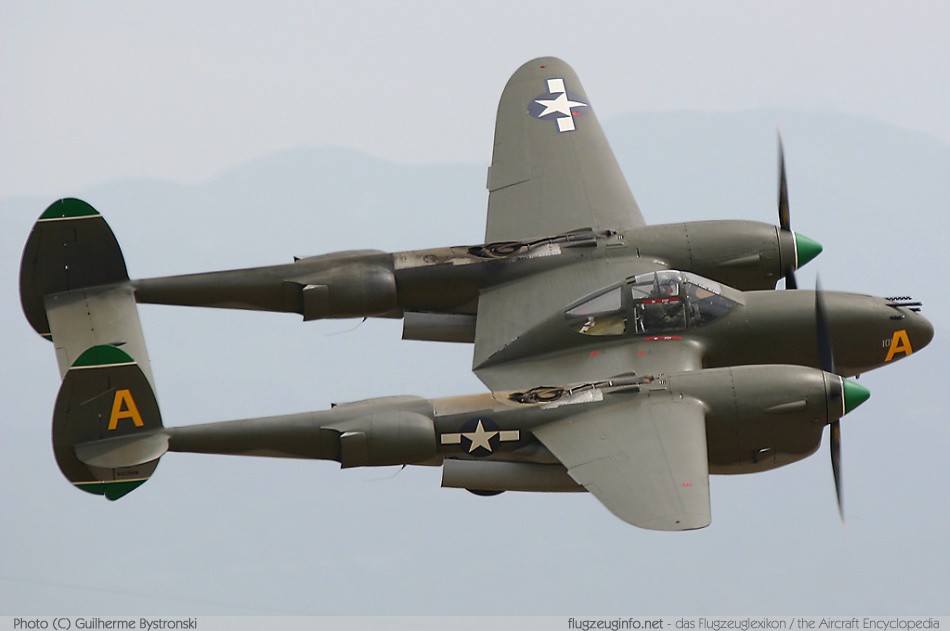
Case in point: the Lockheed P38 Lightning.
("Two planes, one pilot.")
She was an exceptional interceptor and heavy fighter. Even a good fighter-bomber and recon bird. But in Europe, her delicate turbochargers caused trouble. The Lightning never quite lived up to expectations there, at least never fully. But in the Mediterranean and Pacific regions, she was superb. The warmer air didn't play heck with her engines, and the opposition was more manageable. Not that the P-38 couldn't go toe-to-toe with the BF 190 or FW 190, but she was a fox among chickens with Italian and Japanese craft.
Even more complex is how each nation had a "best" at various points. The best the US could field in 1940 was the P-40 Hawk, a bird that deserves greater respect than it is given.
(Ain't nothing prettier than an early P-40 Hawk.)
In comparison, though, the Brits had the Spitfire and the Germans the Bf 109, both of which could out-fight the Warhawk. In part due to training and experience, but in part due to design. The Warhawk was more rugged, and had better range than her European counterparts. Even better firepower, in general. But she couldn't climb as high, and wasn't as fast in straight line acceleration. And since combat above Europe was determined by altitude performance and acceleration, the P-40 was deemed "lack luster." But in China, the AVG ran wild with them.
So the concept of "best" is a little subjective. Which makes "best overall" difficult to nail down. Which requires a few requisites. I'll defer to experts for some of this. To call any aircraft "best overall" would require it to be a "game changer."
Certainly some battles were influenced by the abilities of an aircraft type. Without the Swordfish, the hunt for the Bismarck would've gone differently. No SBD Dauntless bombers changes the Battle of Midway. But this is "tactical" level. To be "best overall" the plane needs to be a game changer on "strategic" level. The Ilyushin Il-2 was such an example, though not a fighter. This flying-tank of a ground attack bird was so produced that it still holds the record for most military aircraft built; over 36,000 for the Il-2 version, with a grand total of 42,000+ when you include the improved model.
(Ugly mug, ain't she?)
Same holds true with the B-17, the C-47, the Ju 88, the Mosquito, and more. In niche roles, at specific times, and in various theaters, some planes were superior. The most noteworthy were those that changed strategies. The only three in the fighter world to ever hold this distinction were the P-51, the F6F Hellcat, and the A6M Zero. Their range is what made the most difference, combined with numbers built, firepower, and utility.
And yet I pick the F4U "ensign killer" over the classic Mustang? Am I mad?
No, not at all. Just taking a more "holistic" approach to the topic.
Here's the issue. The three "obvious" answers are not best "overall." The Zero was not rugged enough for the type of fighting going on power '43, nor for ground attack. The Hellcat was, but wasn't "hot" enough (this would be fixed with the F8F Bearcat), though she wasn't a slouch. The Mustang was a "hot ship," and had great range, but could be a bit of a glass cannon or fragile speedster in the ground attack arena. Enough hits to the radiator and the engine overheats.
So, the P-51 is top-billing for "overall" of the previous three, due to being best at the majority of abilities (speed, range) or equal (firepower). And she had plenty of uses and variants, like a recon bird and a dive bomber. There was even talk of a navy version.
But what about other options?
The P-38? Too temperamental with her engines, too complex to build in numbers.
The P-47? Got the muscle, but can't dance.
The P-40? Not enough growth potential.
The F4F? Can't get enough engine in her.
The Spitfire? Short legged, weak landing gear, not enough bomb-toting skill.
The Typhoon? Sluggish and buggy.
The Yak-3? A bit weak structurally and underarmed for attack.
The Ki-61? Faulty engine build.
The Ki-84? Not enough, low quality.
Italian? Too few and flimsy, often without enough gun.
Bf 109? Short range, cramped canopy, too light.
FW 190? Never given priority.
The Me 262? Buggy with engines that catch on fire.
What's that leave us with? The Corsair.
Over 12,500 build from '42-'53. Able to hit almost 450 mph. Armed with six guns (or four cannon) and up to two tons of bombs. A naval craft with a huge engine, huge wings, and muscle to spare, the Corsair was part of the last war to use piston engined fighters.
Granted, the Mustang was in that war, too. And like the Corsair, served in Korea and with a number of air forces post-war. Over 15,000 Mustangs were built (that number includes the A-36A and early models). It served everywhere (like the F4U) in WW2. Topped out at 440 mph, and carried six guns and 1000 pounds of ordinance. A number were even modded post-war with turboprop engines and used as ground attackers.
And in the "Football War" of 1969, one of the only three confirmed aircraft kills was a Mustang. A pilot from Honduras shot down two Salvadoran Corsairs and a Mustang. He was flying a Corsair.
Checkmate.
Now, obviously its more complex even than that. The Mustang has a better kill/loss ratio than the Corsair, and produced more aces. (Though the Hellcat beats both. Even the "lemon" F2A Buffalo has a better win/loss in the hands of the Finns. But that's for another time.) Part of why the P-51 did better is environment. Escorting bombers and waiting for bad guys to show up means more targets.
Skill is a big factor, and one that means nothing comparing these two. Like I mentioned, the Finns used the Buffalo very well against the Russians. And the Soviets loved the equally maligned P-39 Airacobra. The Flying Tigers were phenomenal with the P-40. And a quartet of Gladiator biplanes defended Malta against the entire Italian air force. Skill matters.
But so does range, visibility, speed, rate of turn, rate of climb, etc. If you need to, go back to my post on the X-Wing v. ARC-170 and see what high-time pilot Eric Brown, FAA, thought was needed for the best fighter. Then, compare the two yourself. Wiki's got good articles on them both here and here. Which one checks more of Brown's boxes?
Does that mean its better, objectively? Maybe. The way I read and interpret it, the F4U Corsair is superior to the P-51 Mustang. (Though I'll always prefer the look of the early Mustangs, but that's for another day.)
Now, I'm going to finish my Fanta and get back to working on a controversial post hoping to drop on y'all later this week.
So, at church during the sermon, I had an "ah-ha" moment. How or what brought it on, I'm not entirely sure (especially since I'm typing this sentence at 9:50 pm, local after a long day). The doctrine of the Trinity can be explained with the doctrine of vocation.
Don't believe me, lets ask St. Patrick...
Okay, so maybe that wasn't clear. (Or maybe it was, but just snarky.) But what I realized what that the Trinity is describing the vocations of God.
Now, if any who are in a position of officialness in the LC-MS read and see I've somehow wondered off the path, please call me out. But I think I'm looking at this rationally (and hopefully Biblically). So, first, some background, and since I gave a whole week describing issues of vocation, we'll look at the brain-bender.
The Trinity.
The "classic" Trinity shield. In the center is God (Deus). At the top is the Father (P, for Pater), on the bottom right is the Son (F, for Filius), and the bottom left is the Holy Spirit (SS, for Spiritus Sanctus).
[By the way, if you ever listen to some self-proclaimed evangelist/apostle/prophet/preacher/used-car salesman say something like "the power of holy spirit" or "I was told by holy ghost" but never uses the definite article, he/she is not talking about God.]
Now, I know the shield is in Latin, and most of us don't speak Latin, but its pretty easy to figure out. The lines between the Three Persons (Father, Son, Holy Spirit) leading to God note that each Person is God. (The Father is [est] God, etc.) Around the shield it denotes the differences between the Persons. (The Son is not [non est] the Holy Spirit, etc.)
For lack of better word at the moment, the different persons of the Trinity are different roles of God. However, they are not mutually exclusive, nor are they situationally monopolizing. Consider, I have the vocations of husband, father, and son.
The savvy among you will have already noted that I'm edging dangerously close to Modalism. But, please remember, I'm trying to use human language to explain a concept that is a logical as a blind man explaining 4-D psychedelic patterns.
How then can I dare use what looks to be Modalism to explain the Trinity? Well, remember what I wrote regarding vocation (if you need to, go back and read it, part 5 should be most applicable). Vocations are not like suits. When I am at home watching my children, I am still a husband, and still a son. There are times when a specific vocation is "lead," but I will never truly put off a vocation. I will always be a son (even after my parents have gone home), and I will always be a father (even after my children move out). My vocations are concurrent.
The same is true with the Trinity (though even bigger, and less linear). There is never a time when God is not the Father, the Son, or the Holy Spirit. God has always been all three. But there are times where His interaction with us is dominated (for lack of better word) by one Person or another.
At Creation all Three are present.
At the meeting with Abraham to discuss the upcoming birth of Isaac, God physically meets with his servant. I'm pretty sure that's the Son, pre-incarnate.
Throughout Christ's life He interacted with us as the Son, though the Father and Spirit were evidently present at the baptism.
At Pentecost the Holy Spirit was in the driver's seat, given the Apostles the words to speak.
At no time in any of these events is God divided. Even on the Cross, as Christ The Son of God is killed, all three Persons are there. All we see is the Son, because that's all we can see right now. Our mind cannot comprehend it, at least not fully, and not without the danger of messing up.
So then why did I dare to write about the Trinity when the chance of running into heresy is high? Because I thought my "ah-ha" was worth sharing. Think about it. Looking at the Trinity as vocational, at least for me, takes away some of the division that we as humans automatically assume is there. And we do assume, since we are told there are three Persons, so clearly there must be some kind of distinction. There is, and I believe that the doctrine of vocation is one lens by which to see it.
That is at times how doctrine works. Different perspectives (as in a fresh set of eyes, not necessarily a different philosophy) can sometimes provide clarity. Is what I said the "last word?" Of course not. But perhaps it will help you understand a non-linear concept a little better.
Why do I call the doctrine of the Trinity "non-linear?" Human logic and reason (which are good tools to use to understand) see things as "A + B = C." There is a consistent and rational explanation for things.
If I pick up a hot plate without an oven mitt I will burn my hand.
If I do not take and umbrella or coat I run the risk of getting rained on.
If I mail my bill payments on time I will not be charged a late fee.
But God does not operate within human logic and reason unless He wants to. He's outside our context. He's not bound by the limits of natural order. He created everything by simply speaking. To demand God operate in a way limited by our pathetic understanding of the universe is insulting to God.
Yep, you heard that right. I just said guys like deGrasse Tyson, Nye, Dawkins are all arrogant and dumb for wanting to force God to submit to something their limited brain capacity can understand. But, they are coming from a worldview that has no hope, and refuses to accept the possibility that there is an all powerful deity.
Hilariously, the counterpoint for their argument that "God cannot exist" is from 1078.
"If it is even possible that God does exist, than if follows logically that God does exist." -Anselm of Canterbury
Anselm's Ontological Argument (ontology is the study of the nature of existence and being) is pretty simple, though, I'll admit, it does require a bit of a presupposition. It assumes it is possible for God. That is not a position that can be "scientifically" rationalized, which is why the dodos* can't accept it as a rational argument.
And yet they can't understand why some of us cannot except the argument of the Big Bang, which has the same presupposition. What they conveniently forget is that the idea of the existence of a deity is one all humans seem to gravitate toward. If that were not the case, then there would not be so many different religions worldwide. But I'll let Anselm's argument speak for itself.
Now, I've strayed from the Trinity, but the existence of God, and His nature of Perfect, is necessary for understanding. Morality is among these, and the maker of the previous video has one on the Moral Argument (with the dodos love too). But if there is not God, there is no objective morality, no right and wrong, and no reason for reason for someone to say I'm wrong with I say I don't believe what the dodos believe.
Bazinga.
Now, we're quickly spinning down a rabbit hole I wasn't planning on meeting, so I'll stop now. And will undoubtedly deal with this topic again. And again. And again. Hopefully this has helped someone wrap their brains around the idea of the Trinity. If not, just read the Athanasian Creed.
Whosoever will be saved, before all things it is necessary that he hold the catholic faith. Which faith except every one do keep whole and undefiled; without doubt he shall perish everlastingly. And the catholic faith is this: That we worship one God in Trinity, and Trinity in Unity; Neither confounding the Persons; nor dividing the Essence. For there is one Person of the Father; another of the Son; and another of the Holy Ghost. But the Godhead of the Father, of the Son, and of the Holy Ghost, is all one; the Glory equal, the Majesty coeternal. Such as the Father is; such is the Son; and such is the Holy Ghost. The Father uncreated; the Son uncreated; and the Holy Ghost uncreated. The Father unlimited; the Son unlimited; and the Holy Ghost unlimited. The Father eternal; the Son eternal; and the Holy Ghost eternal. And yet they are not three eternals; but one eternal. As also there are not three uncreated; nor three infinites, but one uncreated; and one infinite. So likewise the Father is Almighty; the Son Almighty; and the Holy Ghost Almighty. And yet they are not three Almighties; but one Almighty. So the Father is God; the Son is God; and the Holy Ghost is God. And yet they are not three Gods; but one God. So likewise the Father is Lord; the Son Lord; and the Holy Ghost Lord. And yet not three Lords; but one Lord. For like as we are compelled by the Christian verity; to acknowledge every Person by himself to be God and Lord; So are we forbidden by the catholic religion; to say, There are three Gods, or three Lords. The Father is made of none; neither created, nor begotten. The Son is of the Father alone; not made, nor created; but begotten. The Holy Ghost is of the Father and of the Son; neither made, nor created, nor begotten; but proceeding. So there is one Father, not three Fathers; one Son, not three Sons; one Holy Ghost, not three Holy Ghosts. And in this Trinity none is before, or after another; none is greater, or less than another. But the whole three Persons are coeternal, and coequal. So that in all things, as aforesaid; the Unity in Trinity, and the Trinity in Unity, is to be worshipped. He therefore that will be saved, let him thus think of the Trinity.
Furthermore, it is necessary to everlasting salvation; that he also believe faithfully the Incarnation of our Lord Jesus Christ. For the right Faith is, that we believe and confess; that our Lord Jesus Christ, the Son of God, is God and Man; God, of the Substance of the Father; begotten before the worlds; and Man, of the Substance of his Mother, born in the world. Perfect God; and perfect Man, of a reasonable soul and human flesh subsisting. Equal to the Father, as touching his Godhead; and inferior to the Father as touching his Manhood. Who although he is God and Man; yet he is not two, but one Christ. One; not by conversion of the Godhead into flesh; but by assumption of the Manhood into God. One altogether; not by confusion of Substance; but by unity of Person. For as the reasonable soul and flesh is one man; so God and Man is one Christ; Who suffered for our salvation; descended into hell; rose again the third day from the dead. He ascended into heaven, he sitteth on the right hand of God the Father Almighty, from whence he will come to judge the living and the dead. At whose coming all men will rise again with their bodies; And shall give account for their own works. And they that have done good shall go into life everlasting; and they that have done evil, into everlasting fire. This is the catholic faith; which except a man believe truly and firmly, he cannot be saved.
(Celtic knots are so cool.)
In the meantime, I'm going to keep fiddling with a few things. Working on my story, playing with the concepts of the Armor of God, might write on heresies, probably should get some Fanta, and looking forward to the 500th anniversary of the posting of the 95 Theses. Going to have to do something for that.
*And, yes, I called Neil deGrasse Tyson, Bill Nye, and Richard Dawkins "dodos." Serves them right.
Hmm... this week has been suspiciously absent of theological babbling. Probably a result of not drinking enough Fanta (right DAR?). Maybe tomorrow.
But today is Friday the 13th.
*dun, dun, DUH!*
*classic Hitchcock scream*
Ah... Friday the 13th. The day when being a mystic is perfectly acceptable, and even considered sane. Its a time when people will perform strange and even silly ritual magic to ward of "bad luck" or to garner "good luck."
As a wise philosopher once said:
(And yes, I do see the irony of quoting a magic power wielding mystic as a refutation of mysticism.)
So, everyone is still talking about how "The Force Awakens" was just a remake/reboot of "A New Hope," and how it looks like the sequel will be a carbon-copy of the original sequel.
But is it?
And if it is, is that bad?
And if it isn't, is that good?
No, no/kinda, maybe.
I will start with the second question. "Is that bad (that TLJ is a remake/reboot of ESB)?" No. Or kinda. Or both. How can it be both? Mythology.
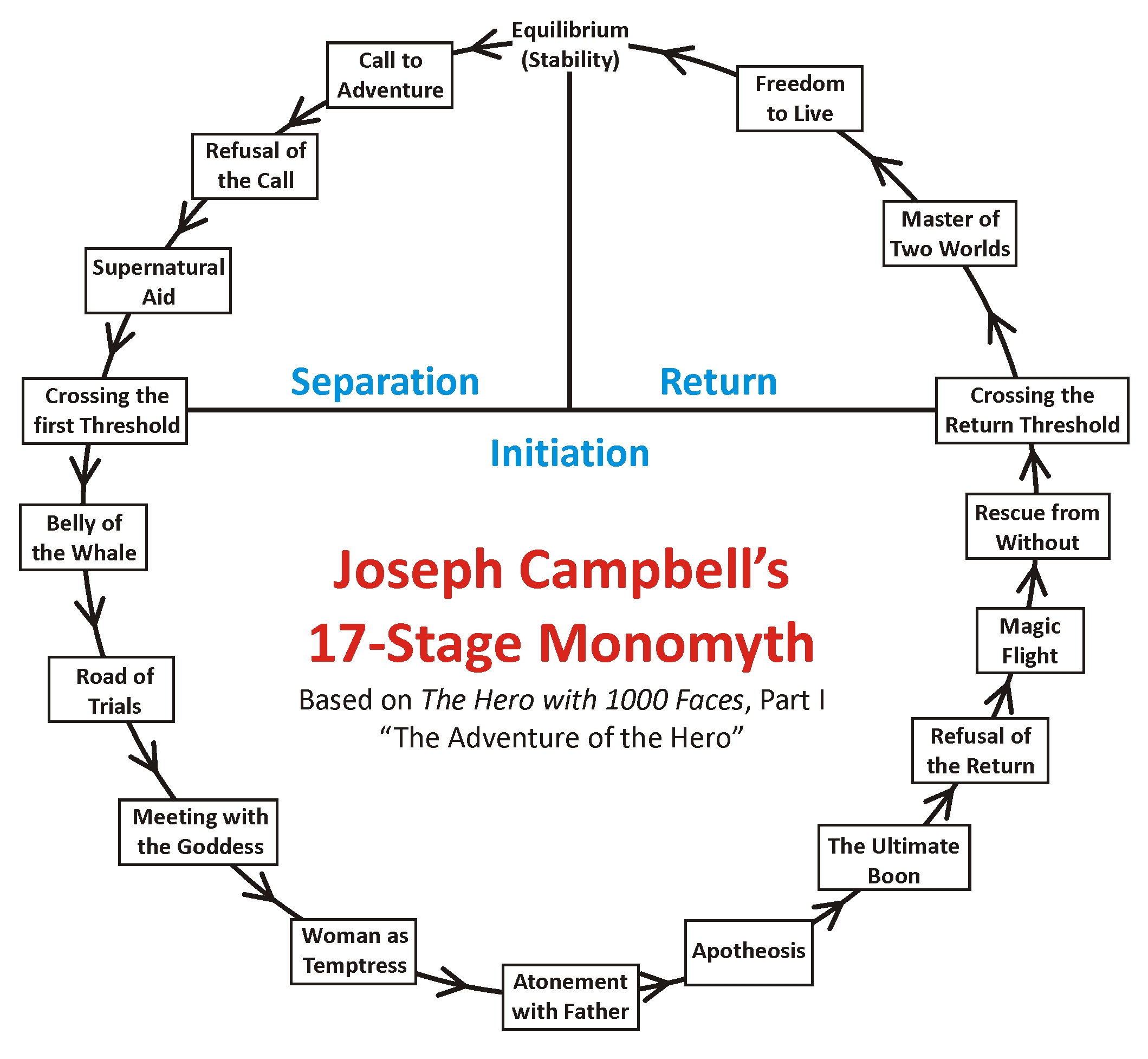
If you look about at the classic myths (Greece, Rome, Norse, etc) you will see similar stories, heroic types, monsters, and themes. Joseph Campbell, who studied mythologies, noticed these common items and wrote a book about it: The Hero With A Thousand Faces. In it he describes the "monomyth" (sometimes also called "the hero's journey"). Not all "saga-type" stories adhere to all the parts, and not all follow in the prescribed order, but stories that feature these archetypes tend to feel big and epic. Campell's work influenced a number of storytellers.
Including an innovative film maker in the 1970s with a story he called "Star Wars."
While wiki may be be a "better" way to learn about this, the TV Tropes site has a good article too. (Right here -> The Hero's Journey) There are seventeen steps.
The gist is this:
Act 1 - Departure - the hero leaves the familiar world behind
Act 2 - Initiation - the hero learns to navigate the unfamiliar world of adventure
Act 3 - Return - the hero returns to the familiar world
I could sum these three up with quotes from the original Star Wars trilogy.
"You must learn about the Force, if you are to come with me to Alderaan." "There you will learn from Yoda, the Jedi master who instructed me." "No more training, do you require. Already know you that which you need."
The original trilogy follows Luke, and his plot adheres to the Monomyth cycle quite nicely. You want examples? Very well.
Miraculous or circumstances surrounding hero's conception/birth: He's a twin. (Granted, we don't know this initially, but his being an orphan counts sort of as half point here.)
A herald brings The Call to adventure: R2 and the message from the princess. This leads directly to...
Refusing The Call:its not that he likes the Empire, but there's nothing he can do about it.
Crossing the first threshold: Could be the destruction of the homestead, or the flight from Tatooine. Either way, its a rapid and violent break from the "safe" place he was in.
There are many more categories, and even subcategories. They aren't needed for a good story, but many good stories do have some aspects of the cycle.
Now I fully believe that the guys and gals at Lucasfilm are on the right track emulating the original trilogy. Why? 'Cause it works. And since they are operating out of the monomyth cycle playbook, and in the Star Wars universe to boot, things will look very similar. Hence the answer to my third question, "is that good," because it might be.
Now, I think it is, and am willing to give them the benefit of the doubt (for now). But, let's see if they really are adhering to the cycle. Let's examine if the main character is on the Hero's Journey, based only on TFA.
The Call to Adventure - BB-8 shows up on Jakku and needs help from Rey. At Niima Outpost they run into Finn.
Refusal of the Call - Rey is hesitant to assist BB-8, and especially unhappy to work with Finn (initially). After hijacking the Falcon she wants to go back to Jakku.
Supernatural Aid - BB-8, Finn, Han Solo, Maz Kanata all could count. The Force, most obviously.
Crossing the First Threshold - Hijacking the Falcon during the attack.
Belly of the Whale - The vision with the Skywalker Lightsaber. The torture Rey endured from Kylo Ren, including her ability to turn it around. Somewhat literally would be the Falcon being taken aboard Han and Chewie's new ship, and the subsequent "adventure" with rathtars.
The Road of Trials - Rey first "tapping" into her powers, but reverse-interrogating Kylo Ren.
Meeting with the Goddess/Love - Both Finn and Han showing her that they care. In the former regarding her safety. With the latter regarding offering her a job. Both willingly go to save her.
Temptation - The desire to return to Jakku is one, but so is Kylo Ren's offer to train Rey.
Atonement with the Hero’s Father- Rey hasn't experienced this yet, I think.
Peace and Fulfillment Before the Hero’s Return - Rey coming to accept that whoever she's been waiting for on Jakku won't be back.
The Ultimate Boon - If the lightsaber fight didn't prove she's gonna be a Jedi...
Refusal of the Return - She doesn't go back to Jakku, but travels to Ahch-To to train with Luke.
Magic Flight- Escaping from the cell using a Jedi mind trick.
Rescue from Without- The Falcon showing up to rescue Rey and Finn after the lightsaber fight.
Return - Viewing the map at the Resistance base.
Master of Two Worlds - Not yet.
Freedom to Live - Moving forward after losing her home, her father figure, and almost losing her best friend.
Now, this is just me, being a nerd. It isn't official, and I may be wrong, but since I see the similarities, especially in the storytelling methods, as strengths, it makes the story more enjoyable. That's one advantage of writing fiction. I have grown a greater appreciation for the craft, the art, the science of storytelling.
So, no, The Last Jedi isn't a "remake/reboot" of The Empire Strikes Back. There will be many similarities, in part because it has been a considerable time since the originals came out. And since the First Order is the heir of the Empire, it makes sense they'd use similar but improved methods and weapons. To complain about the "Death Star 3" and such would be like complaining that a movie on tanks in Desert Storm was just a ripoff of a movie on the Battle of the Bulge because the tanks are obviously just "bigger" versions of the old ones, used in basically the same way.
Sounds silly because it is.
Besides, at the end of the day, if you're still feeling salty about it, just repeat the Mystery Science Theater 3000 mantra:
Until Dec. 15, remember to keep calm and carry on, and enjoy an ice cold Fanta... on me, of course.
So, the trailer for The Last Jedi (a.k.a.: Episode VII) dropped last night. If you have been living off the grid and/or protest the NFL so hard you didn't dare watch it during "haph-thyme" here it be.
(Caution: Proper safety measures should be employed before watching. Failure to take appropriate precautions could result injuries including, but not limited to: bruising on chin from jaw drop, electrical shock from short circuiting computer during spit-take, and concussion from rapid and repeated application of face palm maneuver. The faculty and staff of "In The Loop" blog is not responsible for any and all injuries sustained during consumption of postings.)
Before I do anything else, two points must be made.
1) For the record, I don't like having a sports entity using the popularity of Star War to attempt to gain viewership. I know, I know, this was planned before the most recent downturn in professional handegg viewership, but the point still stands.
2) There will be many theories, regarding all scenarios and characters, but I must make a clear statement before I dive head first into the rabbit hole:
That's not to say I don't have a Snoke theory (or theories), or have read a few I think are pretty good. But I'll stand by the "official" statement.
First, what we can be sure (or at least decently sure) of. Luke is hesitant to train Rey, who is seriously talented. Snoke saw something more than just power in Kylo/Ben. The Resistance and the First Order have more equipment that before. For the former that might include the remains of the Republic fleet.
Now, allow me to put on my tin-foil hat.
All of Luke's lines in the trailer are directed at Rey. All of Rey's lines are directed at Luke.
So far, fan theory seems to point to Rey asking Kylo Ren at the end to train her. I don't believe so. Why? Her clothes don't appear to be the gray colored ones, but the lighter ones she's seen training in on Ahch-To. My theory: Rey asks for him to show her where she belongs. Luke has a vision of the destruction of the academy (the fire with him next to R2, him crawling out of rubble). He agrees to train her, only to find how much potential she has. She presses, which leads to a more "intense" training, akin to Dagobah. This is supported by her in the pool and Luke on shore, soaked, saying it "this is not going to go the way you think." My guess is she lashed out at his methods.
I think that, despite having reached whatever "dark" goal he had previously, Kylo/Ben will be closer to rejecting the Dark Side than last time. Notice, he smashes his helmet. Not in a "tantrum" way, like when he redecorated the interrogation room. It seems more in a "I hate this" way. His apparent hesitation to fire on the bridge of the Resistance ship supports this, as well as talking about being rid of the past. If Leia dies here, I'm guessing it isn't Kylo/Ben who pulls the trigger.
At some point Team Good Guys will be on a planet with crystals (note the Falcon flying through what looks like a geode tunnel full of red, kybur?, crystals). Material for new big guns?
Star War's fan wiki claims that the Resistance evacuates their base from the first film. Similar to Ep. V, but how similar remains to be seen. But they're also on some sort of desert-like planet, which according to the wiki is home to the Resistance base. So, two attacks on Resistance bases in one movie. And unless Leia escapes the space battle (which I'm assuming is concurrent with the evac) there's little chance he fired on the bridge of that ship, since Leia is standing on that arid planet with the weird red dust.
It also claims Finn is part of an operation that infiltrates the First Order. Why? I bet in part to rescue Rey. That's what leads to him fighting with Phasma. And why we see Kylo/Ben standing with something burning behind him. He's there during the major fight at the end.
Lastly, somewhere along the line Rey gets captured again by the First Order or is part of infiltration mission. She ends up squaring off with Snoke, who taunts, torments, and tortures her.
Things unanswered: Who is Snoke? Who is Rey? Who is Finn? What are those books? What is a porg? Will DAR ever get his Fanta?
(Am I the only one who wants to see Luke purposelessly punt a precocious pseudo-penguin?)
We won't know any of these things (including how off base I likely am) until December 15th. Until then, may the Force be with you.
So, yeah, after a week of daily posts about vocation et al, I've got nothing truly worth posting (or at least not ready).
What I do have is a random discussion from last week at work. Why? Because we're all nostalgic millennials who occasionally discuss alternate history in such a way as to destroy the world. Or conquer it. As long as you remember to not invade Poland. Or Russia when winter is coming.
What was I saying?
Right- our discussion of complete randomness.
If you could remake the Back To The Future movies, what car would you use to replace the DeLorean?
(Get in the time machine. We'll explain earlier.)
Yep. That's it. We came up with a few, such as a Ford Model T, or the Toyota pickup Marty drives (it would be nigh indestructible). What do you think? Comment, or bug your friends, family, and coworkers with this pointless discussion.